Eastern Philosophy: What Does Kintsugi Teach Us About Imperfection?
TL;DR
Kintsugi teaches that damage should be treated with care and transformed into a visible part of an object’s beauty rather than hidden or discarded. Meaning “join with gold,” the Zen ceramic tradition repairs broken pieces using lacquer mixed with gold powder, creating strong, prominent fault lines. Its connection to Wabi Sabi extends this respect to what is aged, scarred, and imperfect, including ourselves, making its deeper lessons worth exploring.
Transcript
Though we may keep a little quiet about this, especially when young, we tend deep down to be rather hopeful that we will eventually manage to find perfection in a number of areas. We dream of one day securing an ideally harmonious relationship; deeply fulfilling work, a happy family life, and the respect of others. But life has a habit of dealing u... Read More
Key Insights
- 😌 Kintsugi teaches that beauty lies in the history of objects and experiences, highlighting that each imperfection adds value.
- 🫡 The idea of repairing instead of discarding broken items promotes sustainability and respect for resources, an important lesson in today's consumer culture.
- 💅 Zen philosophy encourages mindfulness, urging us to appreciate the present moment and the beauty of our surroundings, regardless of their perceived flaws.
- 🥰 Through the act of repairing, Kintsugi shifts the narrative of loss into one of creation and transformation, applicable in both art and life.
- 😡 The aesthetic principles of Wabi Sabi remind us to cherish the ordinary and the aged, often overlooked in modern society’s pursuit of perfection.
- 🫡 By respecting damaged items and celebrating their healing process, Kintsugi offers a therapeutic perspective that can be applied to mental health and emotional healing.
- 🛟 The story of Sen No Rikyu illustrates the importance of valuing simplicity over materialism, encouraging deeper appreciation for life's everyday moments.
Install to Summarize YouTube Videos and Get Transcripts
Explore YouTube Video Summarizer or Get YouTube Transcript Extractor
Questions & Answers
Q: What is Kintsugi, and what does it teach about imperfection?
Kintsugi is a Japanese tradition of repairing broken ceramics by joining the pieces with lacquer mixed with gold powder. Instead of concealing the damage, it makes the fault lines beautiful and strong, teaching that what is damaged, scarred, or imperfect still deserves care and respect.
Q: What does the word Kintsugi mean?
The transcript breaks the word into “Kin,” meaning golden, and “Tsugi,” meaning joinery. Kintsugi therefore means, quite literally, “join with gold.”
Q: How are broken ceramics repaired through Kintsugi?
The broken pieces are carefully collected, reassembled, and glued together with lacquer infused with expensive gold powder. The repair remains clearly visible because its purpose is to emphasize the breaks rather than disguise them.
Q: How did the practice of Kintsugi originate?
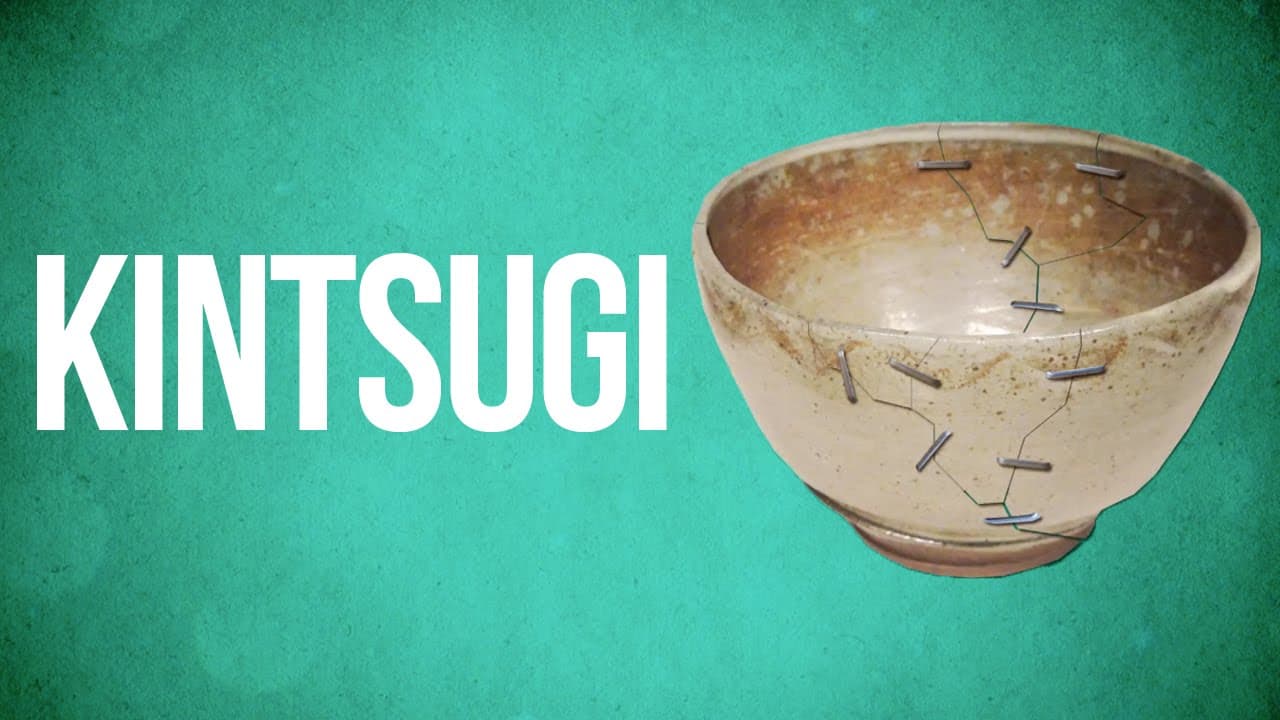
Its origins are placed in the Muromachi Period, when Japanese shogun Ashikaga Yoshimitsu sent his broken favorite tea bowl to China for repair. Displeased by the ugly metal staples used on it, he asked his craftsmen for a better solution, and they created a method that made the damage artful instead of hiding it.
Q: How is Kintsugi connected to Zen philosophy?
Zen masters argued that damaged pots, cups, and bowls should not be neglected or discarded but repaired with enormous care. Kintsugi symbolizes reconciliation with flaws and the accidents of time, while its golden fault lines suggest that breaks possess philosophical merit of their own.
Q: What is Wabi Sabi, and how does it relate to Kintsugi?
Wabi Sabi is a Zen ideal that cherishes what is simple, unpretentious, and aged, especially when it has a rustic or weathered quality. Kintsugi reflects this ideal by preserving a damaged object and making its history part of its beauty.
Q: What does the story of Sen No Rikyu illustrate about Kintsugi?
Sen No Rikyu ignored an elaborate antique tea jar and instead admired a branch moving in the breeze, leading the disappointed host to smash the jar. After other guests repaired it through Kintsugi, Rikyu later called it magnificent, showing how damage and thoughtful repair can give an object greater significance.
Q: How can the philosophy of Kintsugi apply to our lives?
Kintsugi suggests that care and love should be devoted to shattered pieces rather than reserving respect only for youth, perfection, and the new. Applied to people, it encourages respect for what is damaged, scarred, vulnerable, and imperfect in ourselves and those around us.
Summary & Key Takeaways
-
The concept of Kintsugi involves repairing broken ceramics with gold, embracing flaws as part of their beauty and history. This method encourages respect for imperfections in both objects and life.
-
Rooted in Zen philosophy, Kintsugi symbolizes the reconciliation of brokenness, aligning with ideals of Wabi Sabi that cherish simplicity and age over conventional beauty.
-
The story of Sen No Rikyu illustrates the value of appreciating the journey of imperfections, reinforcing that what is damaged can become even more beautiful when cared for properly.
Read in Other Languages (beta)
Share This Summary 📚
Summarize YouTube Videos and Get Video Transcripts with 1-Click
Try YouTube Summary with ChatGPT & Claude or YouTube Transcript Generator