How Should You Invest Before the Fed’s September 17 Rate-Cut Decision?
TL;DR
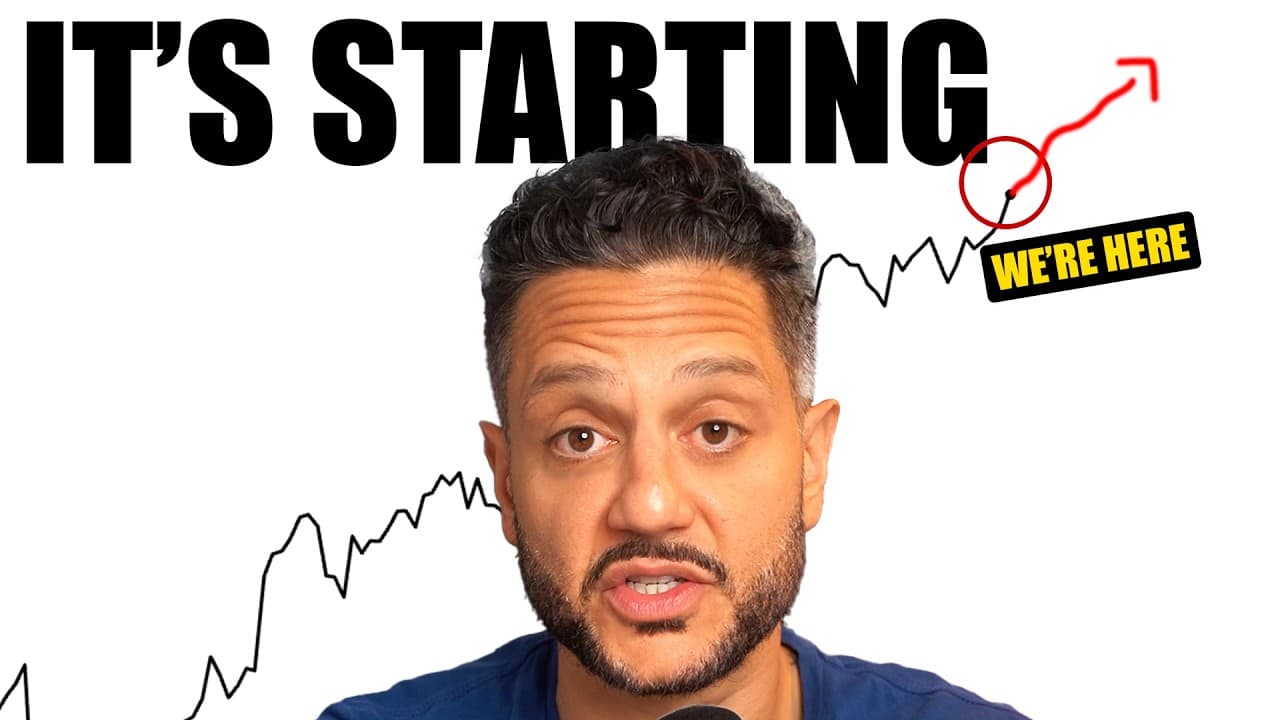
Investors with a strong risk tolerance should consider buying pullbacks rather than chasing prices before the Fed’s September 17 decision. A widely expected 25-basis-point cut could trigger a sell-the-news decline, while a surprise 50-basis-point cut could add liquidity and extend the rally. With the S&P 500’s forward P/E around 23, read on to understand the scenarios, historical precedents, and valuation risks.
Transcript
What is going on traders? What I want you guys to do is just listen here because what I'm about to say is really important and hasn't happened that many times. So obviously we've had a wave of inflation data this week, right? But PPI came in negative, meaning much less than expected and CPI year-over-year came in in line. But once again, we had une... Read More
Key Insights
- Labor-market weakness is increasing pressure on the Federal Reserve because unemployment claims came in above expectations after other poor employment reports, while payroll growth over the previous year was revised down by 911,000 jobs.
- A 50-basis-point cut had a stated probability of 7%, up from zero one week earlier, while a 25-basis-point reduction remained the dominant expectation at 93% before the September 17 FOMC meeting.
- Historical reactions to unexpectedly large cuts are inconsistent because the September 2024 cut preceded a sustained rally, while the November 2002 cut occurred during a bear market and was followed by another 15% decline before a lasting bottom.
- The S&P 500 forward price-to-earnings ratio is around 23, more than one standard deviation above its 30-year average, and the cited valuation analysis associates that level with annualized 10-year returns between negative 2% and positive 2%.
- High valuations can coexist with strong individual years because the late 1990s market remained in an expensive range for several years, supporting the argument that an overvalued bull market could continue before its long-term return problem becomes decisive.
- A 25-basis-point cut could trigger a sell-the-news reaction because markets had already rallied after Jerome Powell suggested a possible policy shift at Jackson Hole, meaning enthusiasm for the expected reduction may already be reflected in prices.
- Lower interest rates can support risk assets by reducing mortgage costs, encouraging refinancing, and making bonds less attractive, especially if the 10-year yield falls below four and moves toward the mid-threes as discussed in the transcript.
- Buying pullbacks is the preferred approach only for investors who can withstand risk because current valuations make broad long-term investing difficult, even though additional liquidity and modest rate cuts could allow the bull market to continue for another year or two.
Install to Summarize YouTube Videos and Get Transcripts
Explore YouTube Video Summarizer or Get YouTube Transcript Extractor
Questions & Answers
Q: How should investors prepare for the Fed’s September 17 rate-cut decision?
Investors with a strong tolerance for risk can consider buying market pullbacks rather than chasing prices before the decision. A 25-basis-point cut could produce a sell-the-news decline, while a 50-basis-point cut could add liquidity and extend the rally. The S&P 500’s elevated valuation makes investing at current levels especially risky over the long term.
Q: What could happen if the Federal Reserve cuts rates by 50 basis points?
A 50-basis-point cut could create a stronger liquidity impulse than the market expects and cause stocks to keep rising. Lower rates may reduce mortgage costs, encourage refinancing, and make bonds less attractive than equities and other risk assets. However, the contrasting market outcomes following large cuts in 2024 and 2002 show that a rally is not assured.
Q: Why could a 25-basis-point rate cut cause stocks to fall?
The market had already rallied after Jerome Powell suggested a possible policy shift at Jackson Hole, so enthusiasm for a 25-basis-point cut may already be reflected in prices. Because that cut carried a 93% stated probability, the announcement could prompt profit-taking through a sell-the-news reaction. Such a decline would also align with the weak September and October seasonality discussed on the page.
Q: What do the September 2024 and November 2002 rate cuts reveal about market reactions?
After the September 18, 2024 decision, the S&P 500 was flat that day, opened almost 2% higher the next day, and continued rallying through February. In November 2002, the economy was already in a bear market, and stocks fell another 15% before reaching a lasting bottom. These examples suggest that the market’s broader condition matters more than the size of the cut alone.
Q: Why are current S&P 500 valuations considered risky?
The S&P 500’s forward price-to-earnings ratio is around 23, more than one standard deviation above its 30-year average. At or near that valuation, the cited analysis associates annualized 10-year returns with a range of negative 2% to positive 2%. Strong individual years remain possible even when long-term expected returns appear constrained.
Q: How do weak employment numbers affect the rate-cut outlook?
Higher-than-expected unemployment claims and other weak employment reports could pressure the Federal Reserve to act before unemployment deteriorates further. Payroll growth over the previous year was also revised down by 911,000 jobs. These developments helped raise the stated probability of a 50-basis-point cut from zero one week earlier to 7%.
Q: How could lower mortgage and bond rates support stocks?
Lower rates may reduce mortgage costs and encourage homeowners to refinance, potentially putting more home equity into people’s hands. Falling yields can also make bonds less attractive to investors seeking returns. The page argues that some of this capital could move toward equities and other risk assets.
Q: Can an overvalued bull market continue after rate cuts begin?
Yes, high valuations can coexist with strong individual years, as illustrated by the late 1990s market remaining expensive for several years. The page suggests that modest cuts, rather than a major cutting cycle like those in 2001 or 2007, could allow the current bull market to continue for another year or two. That possibility does not remove the risk of weak long-term returns.
Summary & Key Takeaways
-
Inflation and labor data created uncertainty before the September 17 FOMC meeting. Producer prices were negative, consumer inflation matched expectations, unemployment claims exceeded expectations, and prior payroll estimates were revised down by 911,000 jobs. These developments raised the stated probability of a 50-basis-point rate cut from zero to 7%.
-
Historical comparisons produce conflicting signals. A surprise 50-basis-point cut in September 2024 preceded a rally that continued through February, while a similar event in November 2002 occurred during a bear market and preceded another 15% decline. The market's broader condition, not merely the size of the cut, therefore matters.
-
The proposed strategy is to buy pullbacks only with a strong tolerance for risk. A 25-basis-point cut may already be reflected in prices and could trigger profit-taking, while a 50-basis-point cut might increase refinancing, reduce bonds' appeal, and direct more liquidity toward equities and other risk assets despite elevated valuations.
Read in Other Languages (beta)
Share This Summary 📚
Summarize YouTube Videos and Get Video Transcripts with 1-Click
Try YouTube Summary with ChatGPT & Claude or YouTube Transcript Generator
Explore More Summaries from The Traveling Trader 📚






Summarize YouTube Videos and Get Video Transcripts with 1-Click
Try YouTube Summary with ChatGPT & Claude or YouTube Transcript Generator