Why Fed Independence Matters to Stock Traders
TL;DR
Federal Reserve independence supports confidence in US markets, and bank executives warned that undermining it could damage the economy and unsettle the bond market. With stocks near record highs and volatility low, Tom Sosnoff favors relatively boring opportunities such as bonds and Nvidia while watching for turbulence around the transition to the next Fed chair.
Transcript
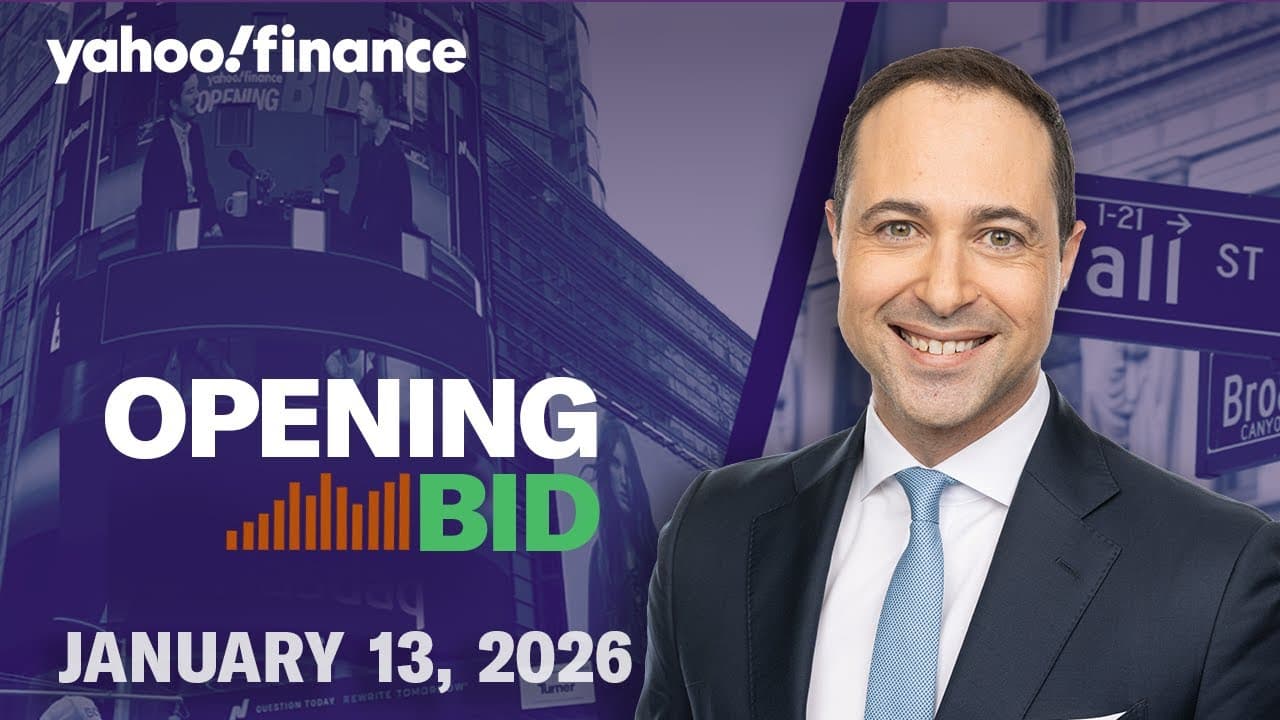
Good Tuesday morning and welcome back to opening bid. I shouldn't say welcome back cuz I was just here yesterday. I am Yao Finance executive editor Brian Sazi. There is so much going on in markets today. I don't even know where to begin for you but begin I must. So here's what's on my mind right now. Big bank execs send a message to team Trump with... Read More
Key Insights
- Federal Reserve independence is a foundation of market confidence, according to major bank executives. Jamie Dimon said a challenge to that independence would harm the US economy, while Robin Vince warned that shaking this foundation would work against the administration's stated economic objectives.
- Meme stock traders support Jerome Powell because equity markets have performed well during his tenure. Their Daddy Powell nickname reflects affection for an unlikely institutional figure who has overseen a broadly rising market despite making some policy mistakes along the way.
- Current market behavior indicates limited immediate fear about political pressure on the Fed. Stocks remain near record highs, volatility is at a multiyear low, and investors quickly reversed an initial decline rather than sustaining a broad retreat from risk assets.
- The bond market has barely reacted to the controversy surrounding Federal Reserve independence. Sosnoff described long bonds and Treasury notes as unusually stagnant, making bonds one of the few markets that may look inexpensive amid the political and monetary policy debate.
- Bonds could benefit from a flight to quality if volatility increases during the Fed leadership transition. Sosnoff suggested beginning to build a long bond position before the transition because investors may seek safer assets if uncertainty disrupts equity markets.
- A politically dependent Fed chair could be negative for stocks. Sosnoff argued that investors would respond poorly if Powell's successor were viewed as being in President Trump's pocket rather than capable of making monetary policy decisions independently.
- Commodity markets are sharply divided between weak soft commodities and soaring metals. Gold and silver have experienced parabolic moves, and the discussion connected some of the metals strength to concerns about Federal Reserve independence and confidence in monetary policy.
- Delta's premium revenue suggests that higher-income consumers continue to spend on travel experiences. Strong demand for premium cabins contrasts with pressure on lower-income consumers, reinforcing the panel's description of a K-shaped economy with sharply different consumer outcomes.
Install to Summarize YouTube Videos and Get Transcripts
Explore YouTube Video Summarizer or Get YouTube Transcript Extractor
Questions & Answers
Q: Why does Federal Reserve independence matter to markets?
Federal Reserve independence matters because major financial institutions view it as a foundation of confidence in the US economy and bond market. Jamie Dimon said that challenging the Fed's independence would be bad for the economy. BNY's Robin Vince similarly argued that weakening this foundation would not help the administration achieve its goal of lowering costs.
Q: Why are meme stock traders supporting Jerome Powell?
Meme stock traders are supporting Jerome Powell because markets have generally risen during his time as Federal Reserve chair, putting money into the accounts of many younger participants. The panel also described Powell as an unlikely underdog facing political pressure, which fits the community's instincts. Supporters have affectionately adopted the nickname Daddy Powell on social media.
Q: How are markets reacting to pressure on the Federal Reserve?
Markets are showing little immediate panic about the pressure on the Federal Reserve. Stocks initially declined but reversed higher, equities remain near record levels, and volatility is at a multiyear low. The bond market has also barely moved. These conditions suggest investors recognize the issue's importance but are currently focused on earnings and other market opportunities.
Q: Why might bonds be an attractive investment during a Fed transition?
Bonds may be attractive because they have barely moved while equities and some commodities have climbed sharply. Sosnoff suggested that a rise in volatility could trigger a flight to quality, which could support bond prices. He therefore viewed the period before the Federal Reserve leadership transition as a potentially interesting time to begin taking a long bond position.
Q: What risk could the next Federal Reserve chair pose to stocks?
The next Federal Reserve chair could create risk if investors believe the appointee lacks independence and is politically aligned with President Trump. Sosnoff said such a perception would be a bad sign for equity markets because investors would not welcome monetary policy that appeared politically controlled. A disorderly leadership transition could also increase volatility and demand for safer assets.
Q: What does low volatility imply about current investor sentiment?
Low volatility implies that fear is currently limited, even as investors discuss political pressure on the Federal Reserve and an eventual leadership change. Sosnoff noted that volatility is at a multiyear low while the stock market is near record highs. That combination does not indicate a broadly nervous market, although conditions could change as the Fed transition approaches.
Q: What are traders watching in commodity markets?
Traders are watching a major divergence between weak soft commodities and extremely strong metals. Sosnoff said metals had moved into the stratosphere while some soft commodities were in the toilet, and he joined traders betting against silver. The panel also cited a bullish bank forecast for gold and silver and linked metals demand partly to Fed independence concerns.
Q: What do Delta's results reveal about consumer spending?
Delta's results suggest that higher-income consumers remain willing to spend on premium travel while lower-income consumers face continued pressure. Premium revenue outperformed the main cabin, showing demand for first-class and Delta One experiences. The panel said rewards points and premium credit cards may also support this spending, reinforcing the persistence of a K-shaped consumer economy.
Summary & Key Takeaways
-
Bank leaders defended Federal Reserve independence as the Trump administration intensified pressure on Jerome Powell. Jamie Dimon warned that challenging the Fed would hurt the US economy, while BNY's Robin Vince described independence as a foundation of the US bond market that should not be shaken.
-
Meme stock traders rallied behind Powell, whom they call Daddy Powell, because markets have performed strongly during his tenure. The panel viewed their support as an unusual underdog story, with a central banker becoming an unlikely hero to younger traders who have largely experienced rising markets.
-
Sosnoff characterized current conditions as calm, with equities at record highs, fear low, and bonds barely moving. He suggested bonds could benefit from a flight to quality if volatility rises, while warning that markets may react poorly if Powell's successor appears politically dependent on the Trump administration.
Read in Other Languages (beta)
Share This Summary 📚
Summarize YouTube Videos and Get Video Transcripts with 1-Click
Try YouTube Summary with ChatGPT & Claude or YouTube Transcript Generator
Explore More Summaries from Yahoo Finance 📚




Summarize YouTube Videos and Get Video Transcripts with 1-Click
Try YouTube Summary with ChatGPT & Claude or YouTube Transcript Generator