How Could Allies Secure the Strait of Hormuz?
TL;DR
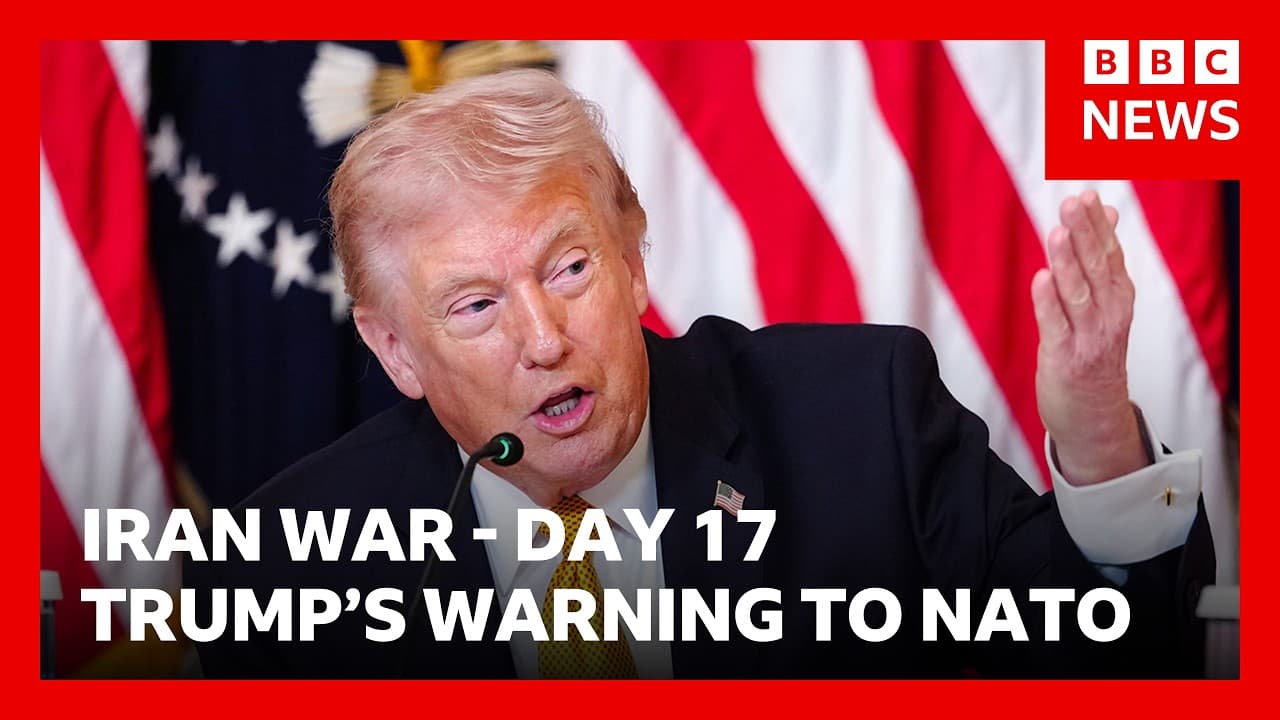
Securing the Strait of Hormuz could require minesweepers, tanker escorts, and defenses against fast boats and drones, but participating warships could become targets themselves. Trump is pressing allies to help, while Britain and Germany reject a NATO mission and seek to separate reopening the waterway from broader involvement in the US-Israel war with Iran.
Transcript
Hello, I'm Marian Masheri live from the Qatari capital Doha. It's day 17 of the USIsrael war with Iran. Over the next 10 minutes or so, we'll bring you our special program looking at the key developments from today. Well, after a wave of attacks on shipping in the Gulf, President Trump warns NATO faces a very bad future if allies do not help secure... Read More
Key Insights
- Securing the Strait of Hormuz is a costly and risky mission that could involve clearing mines, escorting commercial tankers, and protecting vessels from small fast boats and drones while keeping the waterway open for shipping.
- Trump's pressure on allies is presented as a test of loyalty, because he says the United States does not need their military assistance but wants to see whether countries protected by America will respond enthusiastically when asked.
- Britain and Germany oppose making the operation a NATO mission, and UK Prime Minister Keir Starmer says cooperation to reopen the strait must not draw Britain into a wider war with Iran.
- Iranian mines are a potential danger to commercial shipping, with reports suggesting some may have been deployed in the strait, although BBC Verify says it could not independently confirm those reports.
- The Royal Navy has eight ships capable of sweeping mines, and its Type 45 destroyers can defend against drones, but British ships involved in escort operations could become targets themselves.
- Iran's retaliatory attacks are affecting Gulf countries tied to the United States, with Qatar reporting intercepted missiles and the UAE experiencing incidents at Fujairah and near Dubai International Airport.
- The humanitarian toll is extensive, with more than 3,000 people reported killed in Iran, 886 killed in Lebanon, and millions displaced across Iran and Lebanon during the first 17 days.
- Gulf governments are concerned about long-term economic and reputational damage, particularly in the UAE, where attacks challenge Dubai's image as a safe center for tourism, expatriate life, and commerce.
Install to Summarize YouTube Videos and Get Transcripts
Explore YouTube Video Summarizer or Get YouTube Transcript Extractor
Questions & Answers
Q: How could allies secure the Strait of Hormuz?
Allies could combine minesweeping vessels, tanker escorts, and warships capable of defending against drones. The operation would also need to address attacks by small fast boats. Britain has eight ships able to sweep mines, while Royal Navy Type 45 destroyers can counter drones. The central difficulty is that ships protecting commercial traffic could become targets themselves.
Q: Why is Trump pressuring allies to help in the Strait of Hormuz?
Trump is treating allied participation as a test of loyalty as well as a military question. He says the United States is strong enough not to need assistance, but wants countries that have benefited from American protection to respond when asked. He has expressed particular frustration about allies whose support appeared delayed, limited, or insufficiently enthusiastic.
Q: Will securing the Strait of Hormuz become a NATO mission?
Britain and Germany ruled out NATO involvement in attempts to reopen the Strait of Hormuz. Keir Starmer said Britain was working with individual allies on a credible plan to restore shipping and passage, but stated that a NATO mission had never been envisaged. Germany likewise argued that allies were not consulted about the wider war and did not consider it their war.
Q: What threats would naval forces face in the Strait of Hormuz?
Naval forces could face sea mines, small fast boats, and drones. Iran possesses mines designed to sit below the waterline and detonate after contact with passing ships. Reports suggest mines may already have been deployed, though BBC Verify could not confirm that claim independently. Escorting tankers could reduce some risks, but the escorting warships might also be attacked.
Q: What role could the Royal Navy play near the Strait of Hormuz?
The Royal Navy could contribute minesweeping and drone defense capabilities. Britain has eight ships able to sweep mines, and Type 45 destroyers such as HMS Defender can defend against drones. These assets could support efforts to clear hazards or escort tankers. However, direct participation would expose British vessels to possible Iranian attacks and risk deeper involvement in the conflict.
Q: How has the war affected the UAE and other Gulf states?
Gulf states have reported Iranian attacks or interceptions as the war spreads beyond Iran and Israel. The UAE experienced a strike at Fujairah, its major port and oil storage facility, and a drone-related fuel tank fire near Dubai International Airport. Qatar reported intercepting missiles, while Saudi Arabia, Iraq, and Kuwait also reported attacks or interceptions.
Q: What humanitarian impact was reported after 17 days of war?
The report says thousands had been killed and millions displaced across the region. More than 3,000 people were reported killed in Iran, including at least 206 children, while the United Nations said 3.2 million people were internally displaced. Lebanon reported 886 deaths and more than one million displaced, while Israel reported 12 civilian deaths and more than 2,000 displaced.
Q: Why are Gulf leaders worried about attacks on Dubai and Fujairah?
Gulf leaders fear that repeated attacks could undermine the UAE's carefully built reputation for safety and security. Dubai depends heavily on confidence among residents, expatriates, tourists, and businesses, while Fujairah contains major port and oil storage infrastructure. Fires, missile incidents, and a civilian death therefore create concerns about lasting damage to the country's image and economy.
Summary & Key Takeaways
-
Trump criticized allies that appeared reluctant to help secure the Strait of Hormuz, framing their response as a test of loyalty after years of American protection. Britain and Germany rejected NATO involvement, while UK Prime Minister Keir Starmer said Britain was working with individual partners on a credible plan to reopen shipping safely.
-
Any operation in the strait would confront several threats, including possible Iranian sea mines, small fast boats, and drones. Britain has eight ships capable of minesweeping, while Type 45 destroyers can defend against drones. The United States has suggested naval escorts for tankers, but participating vessels could themselves become targets.
-
The conflict has spread across Iran, Lebanon, Israel, and Gulf states. Iran continued retaliatory attacks, while incidents affected Fujairah and Dubai International Airport. Thousands have been killed, millions displaced, and Gulf governments are worried that repeated attacks could damage their reputations for safety, security, tourism, mediation, and economic stability.
Read in Other Languages (beta)
Share This Summary 📚
Summarize YouTube Videos and Get Video Transcripts with 1-Click
Try YouTube Summary with ChatGPT & Claude or YouTube Transcript Generator
Explore More Summaries from BBC News 📚




Summarize YouTube Videos and Get Video Transcripts with 1-Click
Try YouTube Summary with ChatGPT & Claude or YouTube Transcript Generator