What Is Political Violence and Why Is It Misunderstood?
TL;DR
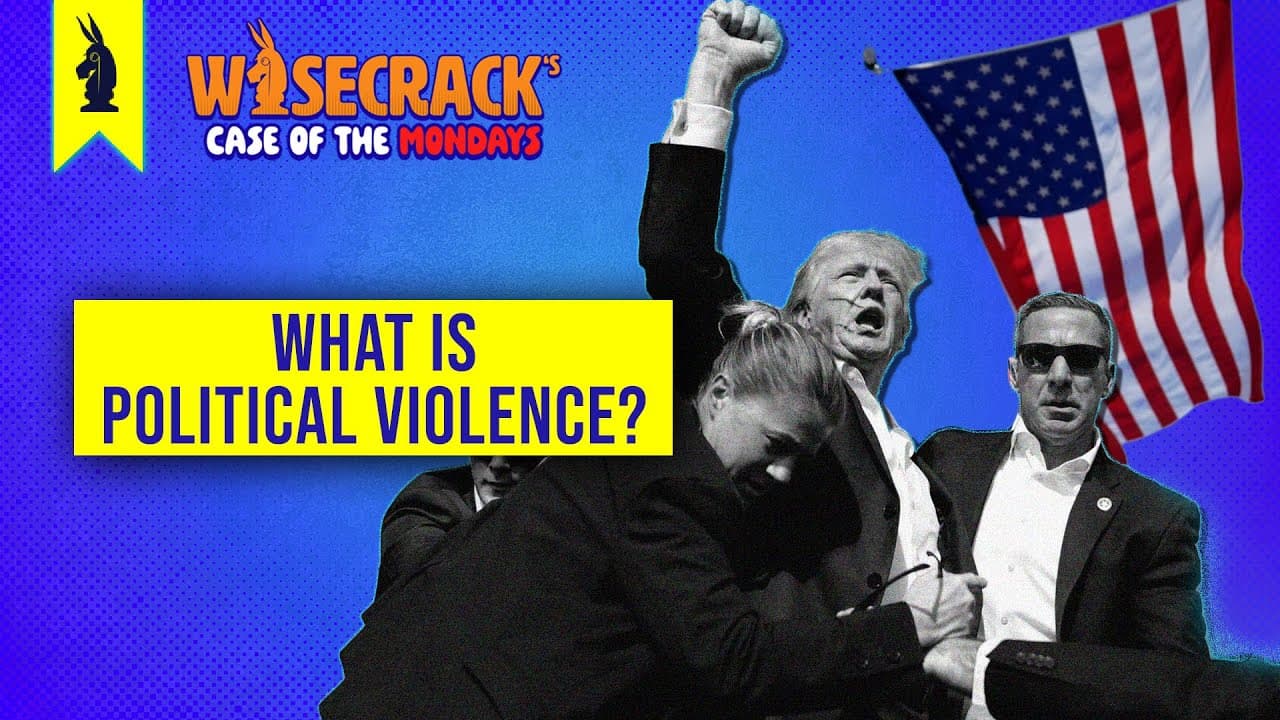
Political violence refers to violence executed to achieve political ends, which differs from general acts of violence against political figures. Mislabeling events, such as an assassination attempt, as political violence can obscure the reality of systemic issues and the true nature of power dynamics. Understanding this distinction is critical to engaging meaningfully with contemporary political discourse.
Transcript
welcome back wise chat it's Monday July 15th uh I I don't know if anything uh I I need to ask Michael what happened this weekend he'll be on to uh talk about current events in just a few get comfy lick the stem and uh we'll be right with you hey it's WIS crack live um it's Monday it's morning in America uh it's it's Monday July 15th 11 days removed... Read More
Key Insights
- 🥳 The personal narrative of a birthday party illustrates how ordinary life contrasts sharply with significant political events, creating emotional dissonance in public discourse.
- 🧑🏭 Political violence is a term that necessitates rigorous analysis; it should not be used interchangeably with all acts of violence against political figures.
- 🥺 A mischaracterization of political violence can lead to inadequate responses to systemic issues, preserving existing power structures instead of prompting change.
- 🔨 The historical context provided by theorists like Arendt and Fanon enriches our understanding of violence as a tool for both oppression and liberation.
- 🗂️ Effective political engagement relies on accurate language; emotional and sensational rhetoric can exacerbate divides.
- 😑 The speaker highlights that a void in collective power awareness may drive some towards violent responses as an expression of desperation.
- 🤪 The cultural and systemic violence inherent in political systems often goes unacknowledged, affecting perceptions and reactions toward politically motivated violence.
Install to Summarize YouTube Videos and Get Transcripts
Explore YouTube Video Summarizer or Get YouTube Transcript Extractor
Questions & Answers
Q: What happened over the weekend that sparked discussion about political violence?
Over the weekend, there was an assassination attempt on Donald Trump, which prompted widespread media coverage and discussion about the implications of political violence during a time when civil unrest is prevalent across the globe.
Q: How does the speaker define political violence?
Political violence is defined as violence that is perpetrated to achieve political goals. It is important to recognize that not all violent acts against political figures or systems fall under this definition; context plays a crucial role in understanding such actions.
Q: What role did personal experiences play in the discussion?
The speaker reflected on his daughter's birthday party to juxtapose a personal celebration against the backdrop of a significant political incident. This comparison highlighted the emotional impact of rapidly shifting narratives in the political landscape.
Q: Why does the speaker stress the importance of language surrounding political violence?
The speaker suggests that language matters because it shapes public perception. Misrepresenting violent acts can obscure the realities of systemic political violence that many groups face, diluting the meaning of critical terms in political discourse.
Q: What insights does the speaker draw from theorists like Arendt and Fanon?
The speaker refers to Arendt's ideas separating power from violence and Fanon's perspective on colonial violence as a means of liberation, to illustrate the multifaceted nature of political violence and the dangers of mislabeling political actions in contemporary discourse.
Q: How does the speaker view mainstream media’s approach to political violence?
The speaker critiques mainstream media for utilizing sensational language around political violence without proper context, suggesting this can lead to dangerous misinterpretations and incite further violence or polarize public opinion.
Q: Why does the speaker think misunderstandings about political violence are dangerous?
Misunderstanding political violence can lead to trivializing true violence against marginalized groups while amplifying negative consequences for our discourse, as people may react defensively or aggressively to perceived attacks on their political identities.
Q: What future implications does the speaker foresee regarding political violence and civil unrest?
The speaker warns that current social tensions may lead to increased calls for violence under the guise of political action. Understanding the distinctions and implications of political violence is essential to mitigating rising tensions and avoiding real harm.
Summary & Key Takeaways
-
The video recaps a recent weekend event involving an assassination attempt on a political figure, contrasting it with a personal celebration of a first birthday party.
-
It emphasizes the importance of correctly understanding terms like "political violence" in the context of political discourse, cautioning against misusing such definitions in media narratives.
-
The discussion references various political theorists, notably Arendt and Fanon, to elucidate the implications of violence in political contexts and the nuanced relationship between power and political aggression.
Read in Other Languages (beta)
Share This Summary 📚
Summarize YouTube Videos and Get Video Transcripts with 1-Click
Try YouTube Summary with ChatGPT & Claude or YouTube Transcript Generator