Why Are Media Reports on Residential Schools Distrusted?
TL;DR
Media reports on residential schools are often distrusted due to sensationalism and lack of verification, leading to misinformation. Journalists must prioritize factual accuracy and resist bias to restore credibility. Regaining public trust relies on a commitment to objectivity and transparency in reporting.
Transcript
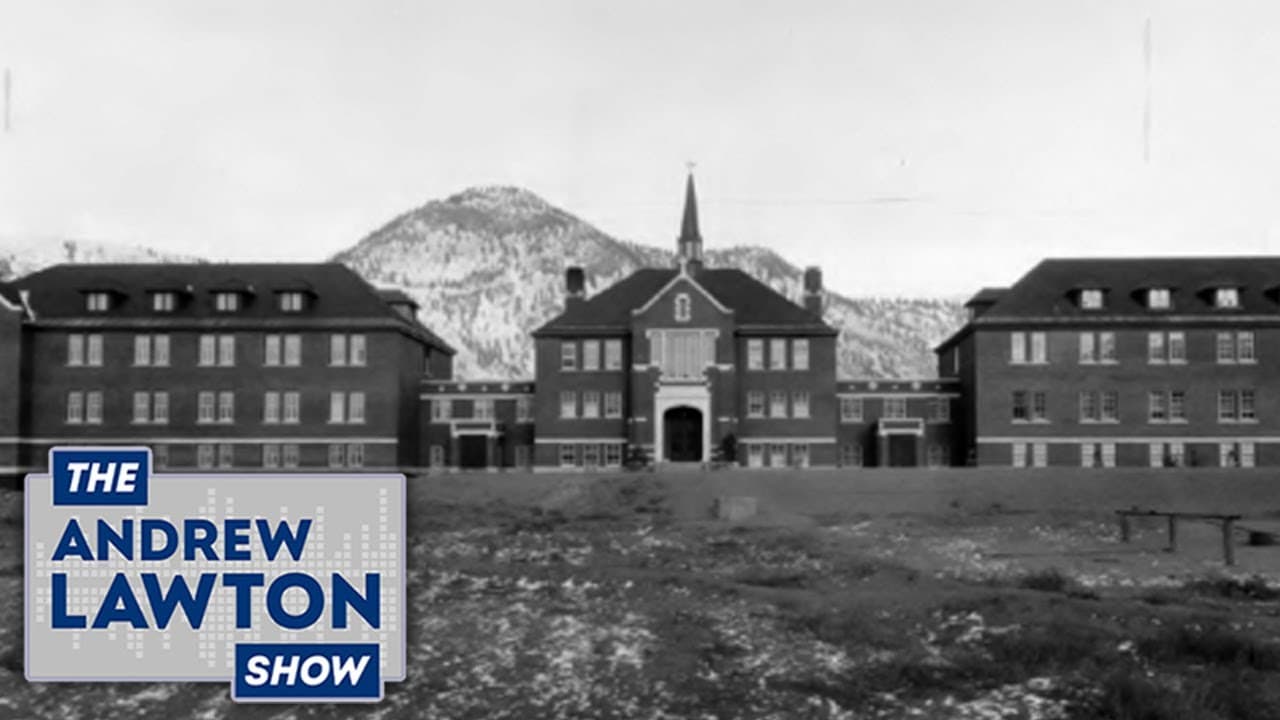
you're tuned in to the Andrew lton show I wanted to begin by delving into the media so last week and we talked about this on off the Record William McBeth Harrison Falkner and I uh City News Vancouver you may have seen had posted this uh rather distorted anniversary post on X about the announcement of unmarked Graves at the former cam loops Indian ... Read More
Key Insights
- 🔉 The inaccurate reporting by media outlets on residential school graves exemplifies a larger trend of sensationalism that risks media credibility.
- 🥺 Governments and organizations often exploit the media's reliance on unverified sources, particularly during emotionally charged issues, leading to misinformation.
- 🔉 The decline in public trust in media can be traced back to journalist negligence in verifying claims and assumptions.
- 🧑🎓 Journalism education may not always prepare students for objective reporting, putting further strain on journalistic integrity.
- 🗯️ Prioritizing the reader's right to information over biases or agendas is essential for ethical journalism.
- 🔉 The establishment of government funding mechanisms poses significant risks of media becoming a mouthpiece rather than an independent check on authority.
- ℹ️ Regaining trust in journalism will require consistent efforts to deliver unbiased, fact-checked news, proving to the audience that media can be a reliable source of information.
Install to Summarize YouTube Videos and Get Transcripts
Explore YouTube Video Summarizer or Get YouTube Transcript Extractor
Questions & Answers
Q: What was the main issue with the media's coverage of unmarked graves at residential schools?
The main issue was the sensationalist reporting that claimed bodies had been found without substantiation. The initial story was based on distorted claims and incorrect information, which led to significant public misinformation and a lack of rigorous checks on the information being reported.
Q: How did the local Indigenous band respond to the claims made about unmarked graves?
The Tk'emlúps te Secwe̓pemc band initially claimed that bodies had been discovered but later clarified that the ground-penetrating radar detected anomalies that could potentially be unmarked graves. This shift illustrates the media's tendency to overly simplify complex realities into sensational narratives.
Q: In what ways does Peter Menzies suggest the media can reinstate public trust?
Menzies suggests that the media should focus on objective, fact-based reporting without assumptions or bias. He argues for a commitment to journalistic integrity by verifying information rigorously and resisting the urge to align with any political or social narratives, thus prioritizing the reader's right to accurate information.
Q: What implications does the sensationalist reporting have on journalism as a whole, according to the discussion?
The implications include a growing trust deficit between media organizations and the public. Menzies indicates that such irresponsible reporting undermines the credibility of journalism, which could lead to a decline in audience engagement and ultimately threaten the sustainability of news organizations if not addressed.
Q: How does the concept of "allyship" play into the media's approach to truth and reporting?
Menzies argues that journalists should not take sides or assume positions of allyship with any group but should instead focus solely on the truth. The push for media to adopt social justice and activist positions may compromise journalistic integrity and objectivity, which are essential for trust and accountability.
Q: Why does Menzies argue that objectivity is essential in journalism?
Menzies argues that objectivity is crucial because it ensures that journalism serves its role of informing the public accurately and comprehensively. Without striving for objectivity, journalism risks becoming biased and untrustworthy, failing to provide the necessary context for audiences to understand complex issues.
Q: What do Menzies and the host believe about the future of journalism if current practices continue?
They express concern that without a commitment to factual reporting and integrity, journalism may face a decline, leading to a loss of audience trust and potentially resulting in the industry's collapse. They argue that journalism needs to adapt and reconstruct itself based on foundational principles of truth and effective communication.
Summary & Key Takeaways
-
The content discusses the media's inaccurate reporting regarding residential schools and unmarked graves, highlighting how initial claims were sensationalized and later walked back by involved parties, revealing a significant lack of diligence in journalism.
-
Peter Menzies emphasizes the importance of journalistic integrity and the obligation to verify facts, arguing that unchecked assumptions and bias can lead to misinformation, which betrays the trust of the public and undermines the media's credibility.
-
The conversation also addresses challenges facing journalism today, including the influence of government funding and an education system that often undermines objective reporting, calling for a commitment to truth as the essential guiding principle for journalists.
Read in Other Languages (beta)
Share This Summary 📚
Summarize YouTube Videos and Get Video Transcripts with 1-Click
Try YouTube Summary with ChatGPT & Claude or YouTube Transcript Generator
Explore More Summaries from True North 📚





Summarize YouTube Videos and Get Video Transcripts with 1-Click
Try YouTube Summary with ChatGPT & Claude or YouTube Transcript Generator