Why Did India and Pakistan Split in 1947?
TL;DR
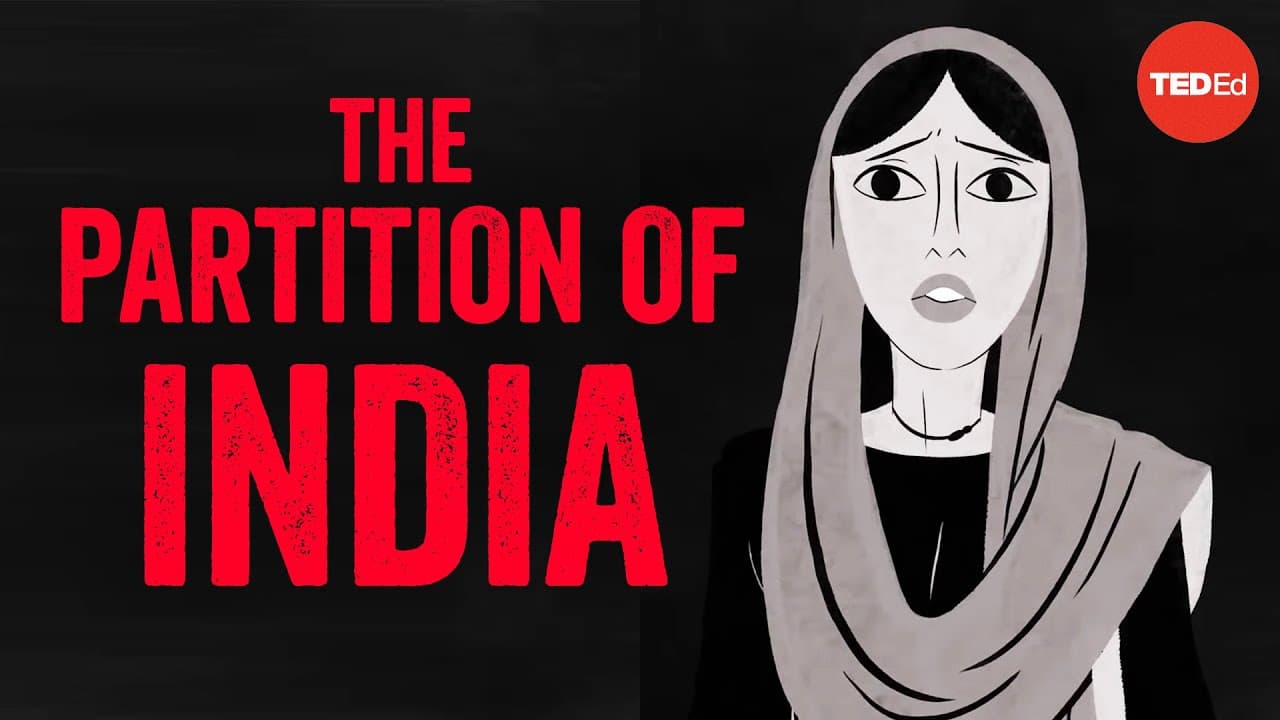
India was split into two countries in 1947 due to religious and political divisions exacerbated by British colonial rule. Hindu-majority India and Muslim-majority Pakistan emerged after violent riots and forced migrations following independence, resulting in approximately one million deaths and ongoing conflicts. The partition's legacies, including the unresolved Kashmir dispute, continue to affect the region today.
Transcript
In August 1947, India gained independence after 200 years of British rule. What followed was one of the largest and bloodiest forced migrations in history. An estimated one million people lost their lives. Before British colonization, the Indian subcontinent was a patchwork of regional kingdoms known as princely states populated by Hindus, Musli... Read More
Key Insights
- 🇮🇳 India's independence in 1947 was followed by the violent and deadly Partition, resulting in the division of the country into India and Pakistan.
- ➗ The British approach of categorizing Indians by religious identity created division and distrust between communities.
- 🙈 The legacy of the Partition is still evident in the subcontinent, seen in ongoing conflicts, refugee crises, and displacement.
- 🥺 The division of Bengal, Punjab, and Assam during the Partition led to mass migration and violence in these regions.
- 🧔♀️ The violence during the Partition disproportionately affected women, who suffered rape, mutilation, and forced marriages.
- 😚 The Partition also had long-lasting effects on the princely states, with many losing their sovereignty and having to choose which nation to join.
- 📁 The disputes over borders and the unresolved Kashmir issue between India and Pakistan are direct consequences of the Partition.
Install to Summarize YouTube Videos and Get Transcripts
Explore YouTube Video Summarizer or Get YouTube Transcript Extractor
Questions & Answers
Q: How did British colonization impact the diverse religious communities in India?
British colonization in India categorized Indians by religious identity, which sowed distrust between communities and led to the eventual division of the country during the Partition.
Q: What were the differing views of Indian political leaders regarding the independence and the future of India?
Mohandas Gandhi and Jawaharlal Nehru advocated for a united India, while Muhammad Ali Jinnah argued for a separate Muslim homeland called Pakistan due to the deep rifts created by colonization.
Q: How did the Partition affect the people living in the border regions?
Families were divided, and people moved to areas where they believed they would be part of the religious majority. Princely states on the border lost their sovereignty and had to choose which nation to join.
Q: What were the long-lasting effects of Partition?
Millions of people were displaced and violence erupted in the aftermath. The problems created by the Partition continue to this day, with ongoing border disputes and the unresolved issue of Kashmir.
Summary & Key Takeaways
-
India gained independence from British rule in August 1947, leading to one of the largest forced migrations in history and an estimated death toll of one million.
-
Prior to British colonization, India was a patchwork of princely states with diverse religious communities.
-
The British categorized Indians by religious identity, leading to distrust between communities, and eventually, the Partition divided India into Hindu-majority India and Muslim-majority Pakistan.
Read in Other Languages (beta)
Share This Summary 📚
Summarize YouTube Videos and Get Video Transcripts with 1-Click
Try YouTube Summary with ChatGPT & Claude or YouTube Transcript Generator
Explore More Summaries from TED-Ed 📚
Summarize YouTube Videos and Get Video Transcripts with 1-Click
Try YouTube Summary with ChatGPT & Claude or YouTube Transcript Generator