How Proxy Wars Shape Global Conflicts
TL;DR
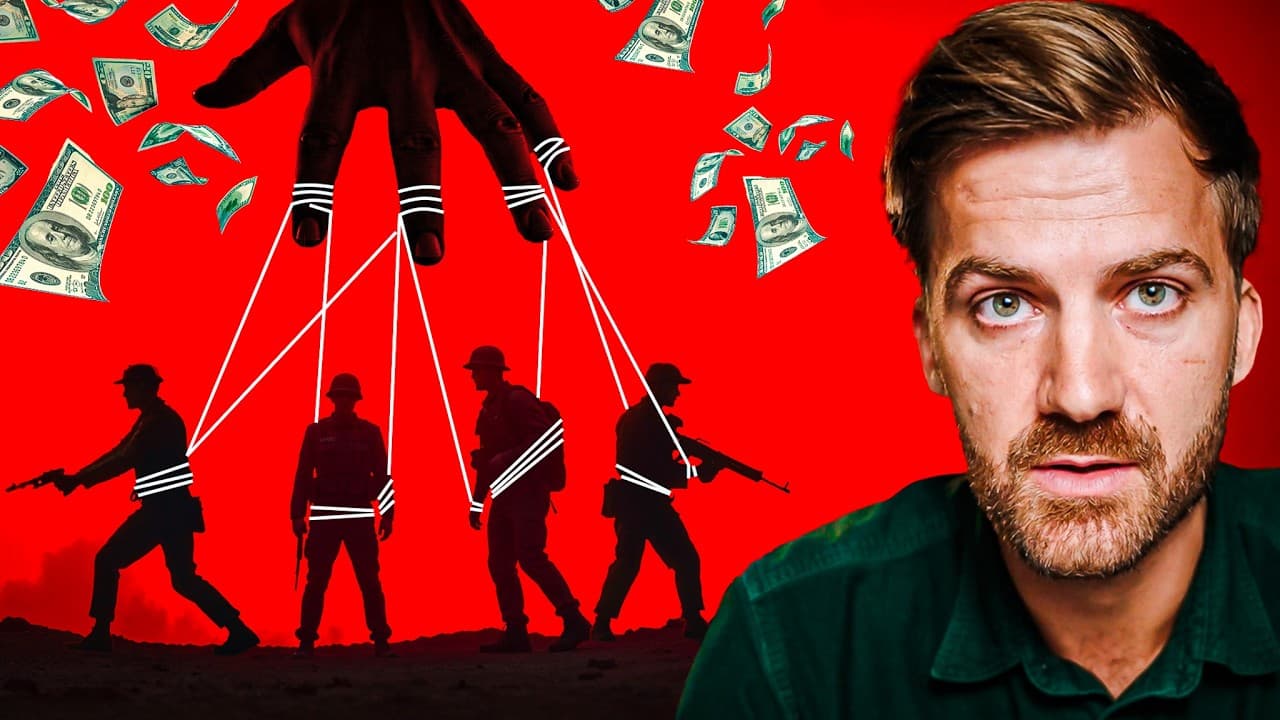
Proxy wars are increasingly common, allowing powerful countries to engage in conflicts indirectly by supporting local factions. These wars are deadlier and more resistant to peace, with multiple patrons prolonging conflicts. As global tensions rise, understanding the dynamics of proxy wars is crucial for grasping modern geopolitics.
Transcript
- The nature of war is changing, and I wanna show you how. (bright classical music) - [Reporter] Syria over the last decade. - Countries are increasingly using a new way to fight one another, and it's remaking the entire globe in the process. There's a really important chart that shows this that I want to show you. (bright classical music continues... Read More
Key Insights
- Proxy wars are conflicts where powerful nations support factions in other countries to fight indirectly.
- These wars have become more common since the Cold War, with multiple patrons involved.
- Proxy wars are deadlier and more resistant to peace due to external support prolonging conflicts.
- The Cold War saw the U.S. and Soviet Union using proxy wars to spread influence globally.
- Modern proxy wars involve multiple regional powers, complicating peace negotiations.
- Proxy wars are cost-effective for patrons, requiring minimal resources to sustain conflicts.
- China generally avoids engaging in proxy wars, preferring stability and non-interference.
- Ukraine's conflict illustrates a complex proxy war dynamic with direct involvement from Russia.
Install to Summarize YouTube Videos and Get Transcripts
Explore YouTube Video Summarizer or Get YouTube Transcript Extractor
Questions & Answers
Q: What is a proxy war?
A proxy war is a conflict where powerful nations support factions within other countries to engage in indirect combat. This allows them to influence the outcome without direct involvement, minimizing their own casualties and costs while prolonging the conflict for the local factions involved.
Q: How did proxy wars evolve during the Cold War?
During the Cold War, the U.S. and Soviet Union used proxy wars to spread their influence globally without engaging in direct conflict. They supported opposing factions in local conflicts, turning them into battlegrounds for their ideological and geopolitical rivalry, which prolonged and escalated these wars.
Q: Why are modern proxy wars more common?
Modern proxy wars are more common due to the emergence of multiple regional powers willing to act as patrons. This multipolar world allows for more complex dynamics, with various countries supporting different factions, making conflicts harder to resolve and more resistant to peace.
Q: What makes proxy wars deadlier?
Proxy wars are deadlier because external support prolongs conflicts, providing factions with resources and support to continue fighting. This external backing can escalate violence, complicate peace negotiations, and result in higher casualties and destruction in the affected regions.
Q: How does China approach proxy wars?
China generally avoids engaging in proxy wars, preferring stability and non-interference in other countries' internal affairs. This approach contrasts with the U.S. and Russia, who frequently engage in proxy wars to exert influence. However, China's stance may evolve as global dynamics change.
Q: What role do patrons play in proxy wars?
Patrons in proxy wars provide factions with weapons, funding, and training, allowing them to sustain conflicts and challenge their adversaries. This support can significantly alter the balance of power in a conflict, prolonging it and complicating efforts to achieve peace.
Q: How does the Ukraine conflict illustrate proxy war dynamics?
The Ukraine conflict illustrates complex proxy war dynamics, with Western nations supporting Ukraine against Russia, which is directly involved. This situation highlights the dangers of proxy wars involving nuclear powers and the potential for escalation beyond the initial conflict.
Q: Why do local factions accept external support in proxy wars?
Local factions accept external support in proxy wars to gain an advantage over their adversaries and ensure their survival. They often face opponents with similar backing, making external support crucial for sustaining their efforts and achieving their objectives in the conflict.
Summary & Key Takeaways
-
Proxy wars allow powerful countries to engage in conflicts indirectly by supporting local factions, making these wars deadlier and more resistant to peace. The Cold War era saw the U.S. and Soviet Union using proxy wars globally, a trend that has continued with more regional powers today.
-
Modern proxy wars are sustained by multiple patrons, complicating peace efforts and prolonging conflicts. Unlike the U.S. and Russia, China generally avoids proxy wars, preferring stability and non-interference, though this approach may be tested in future conflicts.
-
Ukraine's conflict highlights a unique proxy war dynamic, with direct Russian involvement and Western support for Ukraine, illustrating the complex and dangerous nature of modern proxy wars, especially with nuclear powers involved.
Read in Other Languages (beta)
Share This Summary 📚
Summarize YouTube Videos and Get Video Transcripts with 1-Click
Try YouTube Summary with ChatGPT & Claude or YouTube Transcript Generator
Explore More Summaries from Johnny Harris 📚





Summarize YouTube Videos and Get Video Transcripts with 1-Click
Try YouTube Summary with ChatGPT & Claude or YouTube Transcript Generator