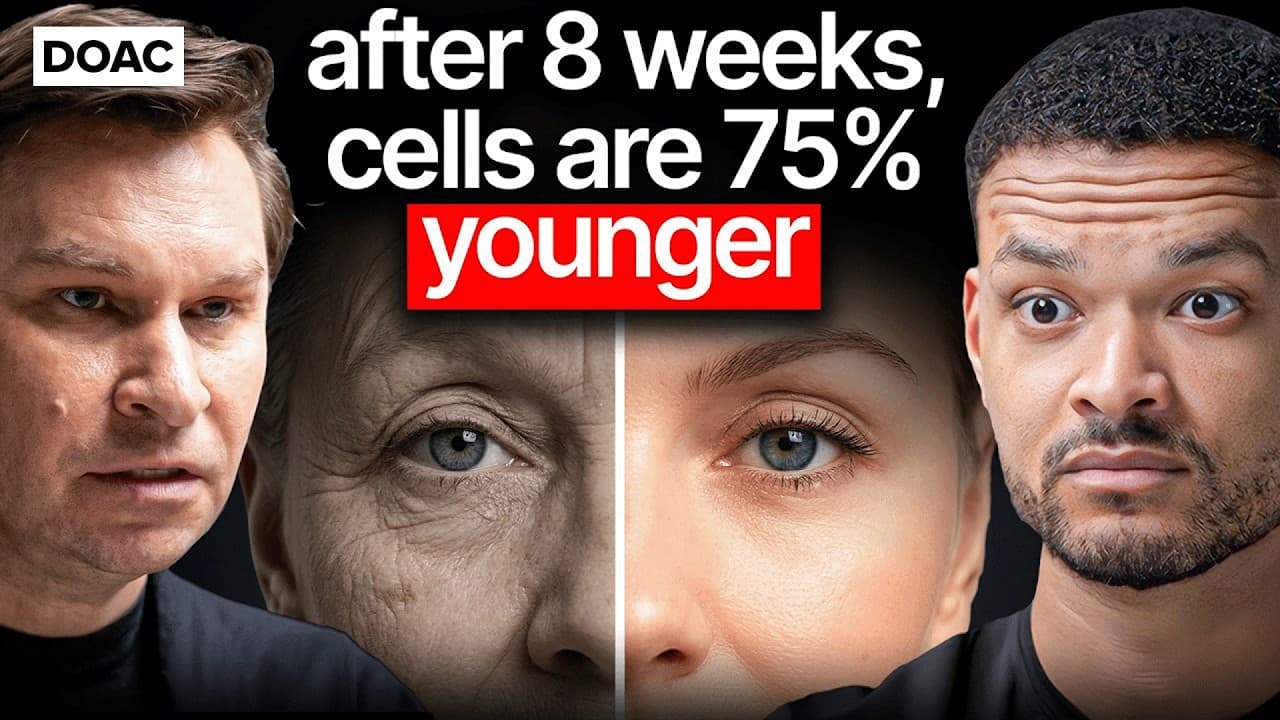
Dr. David Sinclair: Can Aging Be Reversed, and Did Cells Appear 75% Younger After 8 Weeks?
TL;DR
Dr. David Sinclair argues that aging can be reversed by resetting cells, much like reinstalling a computer’s software. Drawing on 30 years of studying aging, longevity, and age reversal, he says his lab can reverse the aging process and that smoking, excessive drinking, ultraprocessed foods, and frequent flying may accelerate it. Read on for his explanation of cellular aging, age-related disease, and practical longevity factors.
Transcript
This is very >> It's bad, right? >> It's hard. Yeah. >> That's what it's like to be old. And for far too long, we've [music] ignored it or accepted it as natural. And I reject the idea that aging just because it's natural is acceptable. Dying at 80 is not inevitable. Absolutely, that can be changed. So, if you're skeptical, I am a Harvard professor... Read More
Key Insights
- Aging can potentially be reversed by resetting the age of human cells.
- Dr. Sinclair's lab has developed technology that reverses aging in animal tissues.
- Human trials for reversing aging are expected to start soon, targeting conditions like blindness.
- Lifestyle factors such as smoking, poor diet, and lack of exercise accelerate aging.
- The body's aging process is likened to software that can be reinstalled to restore youth.
- Reversing aging could eliminate diseases driven by aging, such as Alzheimer's and cancer.
- Fasting and exercise activate cellular repair mechanisms, promoting longevity.
- Adversity, like fasting and exercise, triggers cellular defense mechanisms that slow aging.
Install to Summarize YouTube Videos and Get Transcripts
Explore YouTube Video Summarizer or Get YouTube Transcript Extractor
Questions & Answers
Q: Can aging be reversed according to Dr. David Sinclair?
Dr. David Sinclair says his laboratory has shown that the aging process can be reversed. He describes the body as a computer whose software can be reinstalled, presenting age reversal as a question of when rather than if.
Q: What appeared to happen to cells after eight weeks in Dr. Sinclair’s tests?
The original episode title reports that cells appeared 75% younger after eight weeks in tests. The provided transcript excerpt does not explain the test design or how that percentage was measured.
Q: Why does Dr. Sinclair reject aging as inevitable?
Sinclair argues that something being natural does not make it acceptable or unavoidable. He says dying at 80 is not inevitable and believes understanding, slowing, or reversing aging could have an enormous impact on human health.
Q: How long has Dr. David Sinclair studied aging and age reversal?
Sinclair says he is a Harvard professor who has studied aging, longevity, and age reversal for 30 years. He credits evidence from his laboratory for his confidence that reversing aging is possible.
Q: What does Dr. Sinclair mean by comparing the body to a computer?
He compares the body to a computer because he believes its cellular software can be reinstalled. In his explanation, restoring that information could reset cells and reverse aspects of aging.
Q: Which factors does Dr. Sinclair say can accelerate aging?
He lists smoking, X-rays, ultraprocessed foods, excessive drinking, frequent flying, and loud rock concerts. He explains that loud sound can make the ear’s hair cells age faster.
Q: How could reversing aging affect Alzheimer’s, cancer, and heart disease?
Sinclair says aging drives many cases of Alzheimer’s, cancer, and heart disease. He argues that reversing aging could therefore make those diseases go away or be cured, although the excerpt presents this as his claim rather than detailing clinical results.
Q: How much longer does Dr. Sinclair say people could live by taking the right actions?
Sinclair says the major actions he recommends can lengthen life by a decade. He also suggests that people who do all the right things could live into the 22nd century, but the excerpt does not yet describe those actions in detail.
Summary & Key Takeaways
-
Aging is not an inevitable process, and recent scientific advancements suggest it can be reversed. Dr. David Sinclair, a Harvard professor, has been at the forefront of this research, developing technologies that have successfully reversed aging in animal studies. Human trials are anticipated soon, with the potential to cure age-related diseases like Alzheimer's and cancer.
-
Lifestyle choices significantly impact the aging process. Factors like smoking, poor diet, and lack of exercise can accelerate aging, while practices such as fasting and regular exercise can activate cellular repair mechanisms that promote longevity. Dr. Sinclair emphasizes the importance of adversity in triggering these beneficial cellular responses.
-
The concept of aging as a reversible process is revolutionary, with the potential to transform human health. By resetting cellular age, diseases driven by aging could be eliminated. Dr. Sinclair's research suggests that the key to reversing aging lies in treating the body's cells like software that can be reinstalled to restore youth.
Read in Other Languages (beta)
Share This Summary 📚
Summarize YouTube Videos and Get Video Transcripts with 1-Click
Try YouTube Summary with ChatGPT & Claude or YouTube Transcript Generator
Explore More Summaries from The Diary Of A CEO 📚




Summarize YouTube Videos and Get Video Transcripts with 1-Click
Try YouTube Summary with ChatGPT & Claude or YouTube Transcript Generator