How to Build a Profitable Sales Funnel Strategy
TL;DR
Build a sales funnel as a sequence of pages, each with one clear purpose, then organize offers into a Value Ladder that delivers greater value at higher prices. Improve campaign solvency by using a relevant order bump and up to two complementary upsells, while tailoring each funnel’s message and pre-frame to hot, warm, or cold traffic.
Transcript
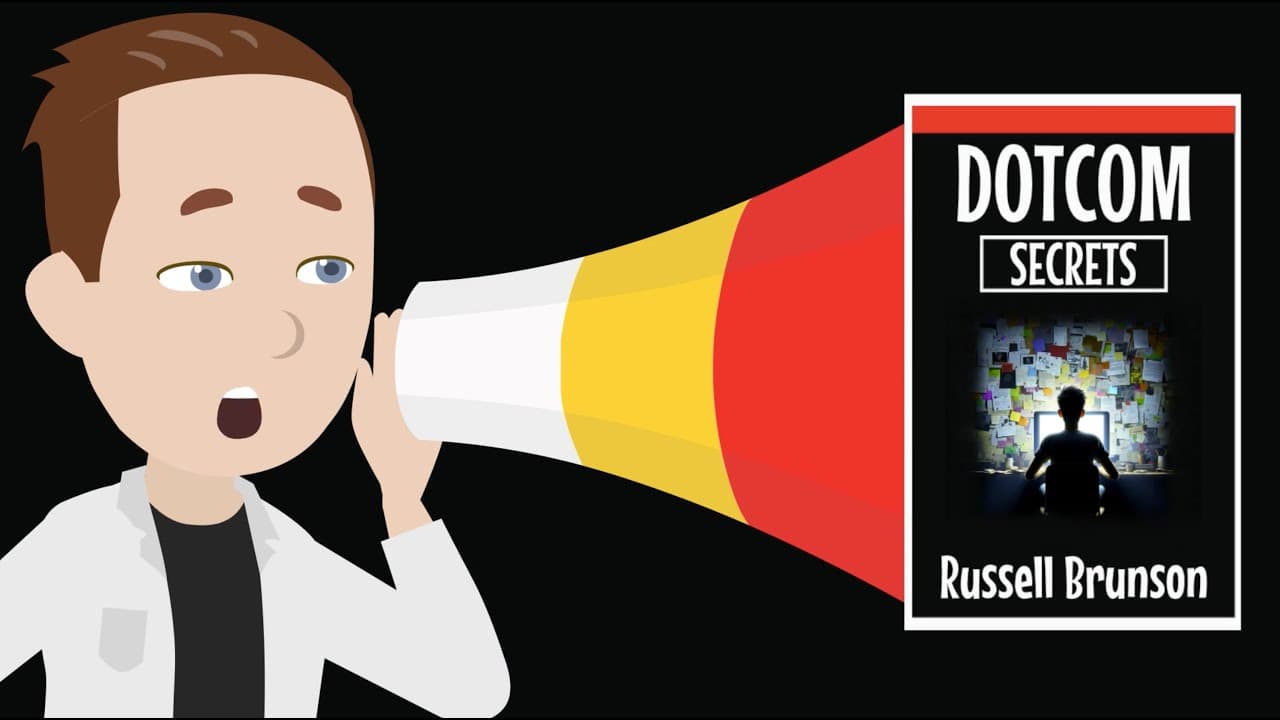
This is Russell Brunson and his amazing book contains the actual playbook and strategies he uses to transform both his businesses and those of his clients. He is famous for being 'the funnel guy’, and I'll share with you his overall sales funnel strategy that he has used to bring his company to 160 million dollars in revenue, but not only that. In ... Read More
Key Insights
- A sales funnel is a sequence of focused pages in which each page has one clear purpose, such as collecting an email address or completing a sale. The visitor either takes the intended action or leaves, giving the business greater control over the customer journey.
- A Value Ladder is a map of offers arranged from free or inexpensive resources to progressively more expensive products and services that provide greater customer value. Each level may require its own sales method, funnel structure, and set of relevant upsells.
- Campaign solvency is determined by comparing Cost per Acquisition with Average Cart Value. Cost per Acquisition equals promotional spending divided by customers acquired, while Average Cart Value is the average first-order spending, including accepted upsells. A funnel works when cart value exceeds acquisition cost.
- Upsells can transform an unprofitable promotion by increasing average order value. Brunson’s potato-gun campaign moved from losing $13 per day to earning $52 per day after adding a $197 materials kit that saved buyers time and was accepted by one in three customers.
- The recommended purchase sequence is one order bump followed by two upsells. This structure aims to increase sales without overwhelming customers with excessive promotions that could damage the long-term relationship for the sake of an additional short-term transaction.
- A good order bump is simple, relevant, and reasonably priced compared with the primary purchase. Examples include a 50-cent chocolate added to a $5 purchase, a $3 audiobook paired with an $8 ebook, or an approximately $27 addition to a $97 course.
- An effective upsell is complementary to the initial purchase or solves the customer’s next likely problem. After selling instructions for developing a six-pack, for example, a maintenance-focused nutritional guide fits better than another product claiming to solve the same original problem.
- Traffic temperature determines how a funnel should communicate. Hot traffic already knows the product and seller, warm traffic knows the desired outcome but not the specific product, and cold traffic recognizes a problem without knowing the product, desire, or seller. Colder traffic requires a longer pre-frame.
Install to Summarize YouTube Videos and Get Transcripts
Explore YouTube Video Summarizer or Get YouTube Transcript Extractor
Questions & Answers
Q: How does a sales funnel differ from a standard website?
A standard website functions like a brochure with many choices, which can confuse visitors and reduce purchases. A sales funnel instead uses a sequence of pages, each designed around one clear action, such as providing an email address or buying an offer. Visitors either complete that action or leave, allowing the business to guide the customer journey more deliberately.
Q: What is a Value Ladder in a sales funnel strategy?
A Value Ladder is a visual map of a business’s offers. Free or low-cost products and resources sit at the bottom, while more expensive products or services that provide increasing value occupy higher levels. Each step can use a distinct funnel, sales method, and upsell sequence, helping the business guide customers toward more premium solutions over time.
Q: How do you determine whether an advertising funnel is profitable?
Calculate Cost per Acquisition by dividing promotional spending by the number of customers acquired. Then calculate Average Cart Value, which is the average amount customers spend on their first order, including accepted upsells. If Average Cart Value is higher than Cost per Acquisition, the funnel works and can support additional investment. If it is lower, something must be adjusted.
Q: How can upsells improve campaign solvency?
Upsells improve solvency by increasing the average amount earned from each acquired customer. Brunson’s potato-gun DVD campaign initially earned $27 per day, then lost $13 per day after Google increased its prices. Adding a $197 materials-kit upsell, purchased by one in three buyers, raised the campaign’s result to a profit of $52 per day.
Q: What makes an effective order bump?
An effective order bump is easy to understand, directly relevant to the main purchase, and acceptably priced in relation to that purchase. It appears in the shopping cart as a small optional box the buyer can check. Examples include a 50-cent chocolate beside a $5 transaction or a $3 audiobook paired with an $8 ebook.
Q: How many upsells should a sales funnel include?
Brunson’s stated sweet spot is two upsells plus one order bump. After the buyer accepts or declines the order bump and completes the initial purchase, the first upsell appears. Accepting it leads to a second and final upsell, while declining may trigger an optional lower-priced downsell or end the sequence. The process concludes on a thank-you page.
Q: What should a business offer as an upsell?
An upsell should generally complement the primary purchase or solve the customer’s next likely problem, rather than repeat the solution they believe they have already bought. For example, after selling an ebook about developing a six-pack, the seller could offer a nutritional guide for maintaining it. Upsells should also feature advantageous pricing compared with their usual sale prices.
Q: How should funnels communicate with hot, warm, and cold traffic?
Hot traffic knows the desired product, the seller, and what the seller offers, so communication can focus directly on the product. Warm traffic understands the desired outcome but not the specific product, so messaging should begin with that desire. Cold traffic recognizes a problem but does not know the seller, product, or desire, so communication should start with the problem and use a longer pre-frame.
Summary & Key Takeaways
-
A sales funnel guides prospects through focused pages with one intended action, unlike a standard website that presents many choices. Because only some entrants become buyers and fewer accept every upsell, businesses should clearly identify their ideal customers and design the journey to move qualified prospects toward increasingly valuable offers.
-
The Value Ladder maps a company’s free or low-cost resources, core offers, and progressively more expensive products or services. Each step can have its own funnel and upsells. This structure helps businesses expand beyond a single offer, serve additional customer needs, and create immediate paths into the next funnel after purchase.
-
Campaign solvency depends on comparing Cost per Acquisition with Average Cart Value. Order bumps and complementary upsells can raise the amount earned from each new customer. The recommended purchase sequence includes an order bump, up to two upsells, an optional downsell, and a final thank-you page with instructions and a next-step offer.
Read in Other Languages (beta)
Share This Summary 📚
Summarize YouTube Videos and Get Video Transcripts with 1-Click
Try YouTube Summary with ChatGPT & Claude or YouTube Transcript Generator
Explore More Summaries from The Founders' Potential 📚


Summarize YouTube Videos and Get Video Transcripts with 1-Click
Try YouTube Summary with ChatGPT & Claude or YouTube Transcript Generator