How to Create Demand by Repositioning Your Offer
TL;DR
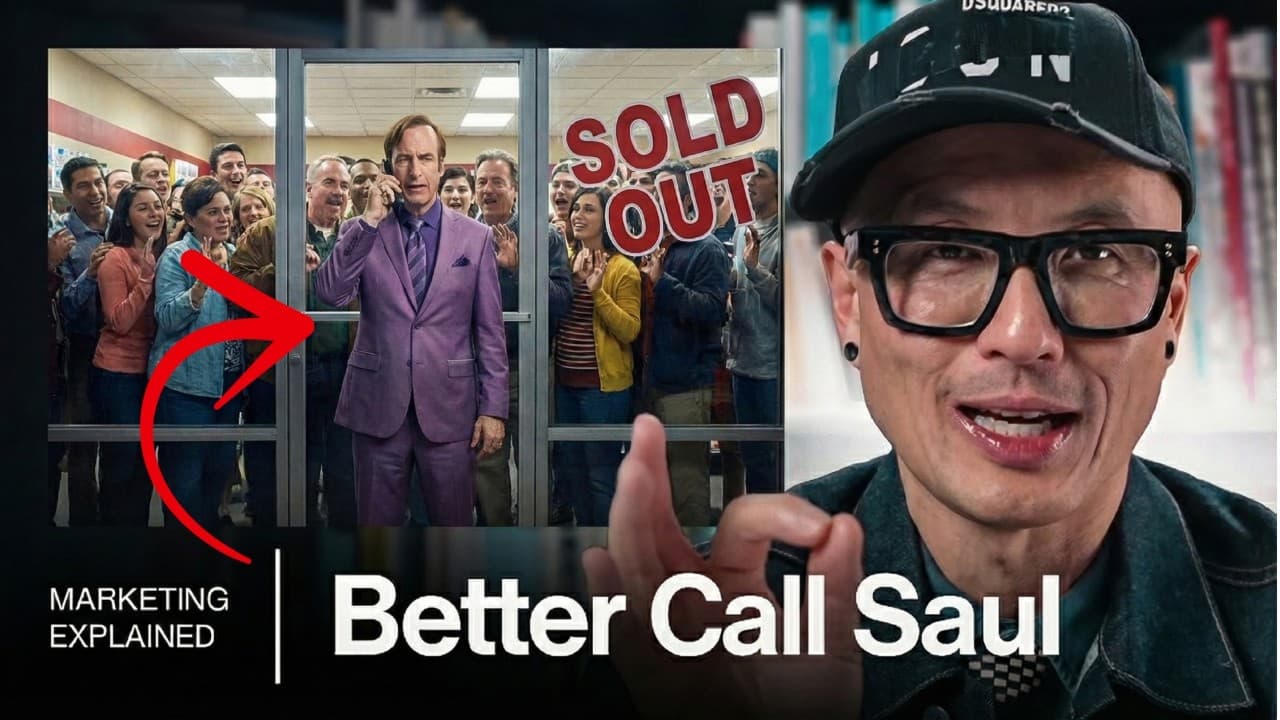
Create demand by positioning an existing offer around a specific customer problem instead of listing features. Identify an underserved audience, describe the pain in language they recognize, package the solution with a memorable concept, and present it where those customers already gather. The Better Call Saul example reframes ordinary cell phones as privacy tools, creating a distinct market without changing the underlying product.
Transcript
I'm going to teach you everything you need to know about positioning, marketing, and sales from an unexpected source. A TV series called Better Call Saw. Arguably the best TV show that's ever been created. So, I just wanted to listen up and just want to be careful here. There's no spoilers, so you don't have to worry. It should be spoiler-free. In ... Read More
Key Insights
- Positioning is the space an offer occupies in a customer's heart and mind relative to competitors. Jimmy changes that space by presenting cell phones as privacy solutions rather than communication technology, giving the same physical product a different meaning and a more urgent purpose.
- Customer creation is possible without changing the underlying product. A business can find a different category of buyer, connect the existing offer to that group's unmet problem, and build demand around a benefit that competing sellers are not emphasizing.
- Problem awareness can attract buyers before a direct sales conversation begins. The signs "Is the man listening?" and "Privacy sold here" introduce a concern, stimulate curiosity, and allow interested prospects to approach because they recognize a possible risk in their own behavior.
- Artificial scarcity can shape perceived demand. Jimmy stages a phone conversation in which another buyer cannot obtain every requested device, suggesting that the phones are popular and limited before the new prospect has even begun discussing a purchase.
- Demonstration makes an unfamiliar use case concrete. By breaking a new phone after the staged call, Jimmy shows the intended single-use behavior and creates curiosity, making the privacy proposition easier to understand than a feature-focused explanation would be.
- Memorable language can package both a problem and its solution. Jimmy calls his approach "information hygiene," turning the practice of controlling sensitive conversations into a named concept that sounds clear, repeatable, and relevant to the customer's concern.
- Trust depends partly on perception and packaging. When young prospects interpret Jimmy's professional appearance as evidence that he may be an undercover officer, he changes his clothing to resemble the audience and becomes more acceptable to the people he wants to serve.
- Distribution improves when sellers go where customers already are. Jimmy stops depending on occasional store traffic and brings the phones directly to likely buyers, reducing friction and increasing exposure. The same principle applies to choosing platforms where a target audience already spends attention.
Install to Summarize YouTube Videos and Get Transcripts
Explore YouTube Video Summarizer or Get YouTube Transcript Extractor
Questions & Answers
Q: How can a business create demand without changing its product?
A business can create demand by connecting an existing product to a different customer problem. Jimmy does not modify the cell phones. He changes their meaning from convenient communication devices to privacy tools for people worried about monitored conversations. This repositioning identifies a new category of buyer, emphasizes an urgent benefit, and creates a market that feature-based cell phone selling had not reached.
Q: What is positioning in marketing and sales?
Positioning is the space an offer occupies in the heart and mind of a customer relative to competing choices. Effective positioning links the offer to a problem the customer already recognizes and makes the solution feel particularly suitable. In the example, ordinary cell phones become privacy products, separating the offer from sellers focused on plans, roaming, access, or technical functions.
Q: Why should sales messaging focus on problems instead of features?
Problem-focused messaging gives customers a reason to care about an offer. Features such as data plans, roaming, and hands-free access did not attract enough traffic to the store. Privacy created a more pressing motive for a different audience. Once buyers recognized the risk of sensitive conversations being heard, the phone's value became easier to understand and the sales discussion required less feature explanation.
Q: How does Jimmy create curiosity around the cell phones?
Jimmy creates curiosity through signs, staged scarcity, and a physical demonstration. The signs ask whether someone is listening and promise privacy, prompting prospects to consider a hidden problem. He then pretends to limit another customer's order and destroys a phone after the call. These actions suggest demand while showing that the device is intended for disposable, single-use communication.
Q: What does "information hygiene" mean in the sales example?
"Information hygiene" is Jimmy's name for keeping sensitive information from reaching unwanted listeners. He uses the phrase to package the customer's privacy concern as a clear practice with an implied solution. Naming the idea makes it easier to discuss and remember. The phones are then presented as tools that support this practice when purchased with cash and used only once.
Q: Why does appearance affect trust in Jimmy's sales approach?
Appearance affects trust because prospects interpret visual cues before accepting the message. When Jimmy approaches young buyers while looking like his former professional self, they suspect that he is an undercover officer and reject him. He changes into clothing that better matches their environment, which alters their perception and helps him approach them as someone who appears to understand their world.
Q: Why should sellers go where their customers already are?
Going where customers already gather reduces the friction of discovery and purchase. The cell phone store receives little regular traffic, so waiting behind the counter produces few opportunities. Jimmy takes the phones directly to likely buyers and sells from his car. The lesson extends to services and content: choose channels such as TikTok, LinkedIn, or Instagram according to where the intended audience is active.
Q: How does blue ocean strategy relate to repositioning an offer?
Blue ocean strategy describes moving away from a crowded space where many competitors fight for the same business and entering a less-contested market. Jimmy stops competing mainly on conventional cell phone benefits and creates a privacy-focused category. The broader lesson is that weak sales may reflect the lane a business occupies, so changing the audience or problem can reveal demand with less direct competition.
Summary & Key Takeaways
-
Jimmy turns a quiet cell phone store into a sales opportunity by changing what the product represents. Instead of promoting technology, plans, roaming, or convenience, he presents phones as tools for privacy. The shift connects an unchanged product to customers with a more urgent and specific reason to purchase it.
-
The sales process combines problem awareness, curiosity, scarcity, demonstration, and customer language. Signs introduce the privacy problem, a staged call implies strong demand, a destroyed phone demonstrates single use, and the phrase "information hygiene" packages the solution. Vague prompts also encourage prospects to identify their own specific concerns.
-
Positioning improves further when Jimmy changes his appearance and takes the phones directly to likely buyers. He reduces distrust by resembling his audience, reduces purchasing friction by going where customers gather, and adapts his message to their existing pain. The broader lesson is to seek less-contested markets instead of fighting identical competitors.
Read in Other Languages (beta)
Share This Summary 📚
Summarize YouTube Videos and Get Video Transcripts with 1-Click
Try YouTube Summary with ChatGPT & Claude or YouTube Transcript Generator
Explore More Summaries from The Futur 📚


Summarize YouTube Videos and Get Video Transcripts with 1-Click
Try YouTube Summary with ChatGPT & Claude or YouTube Transcript Generator