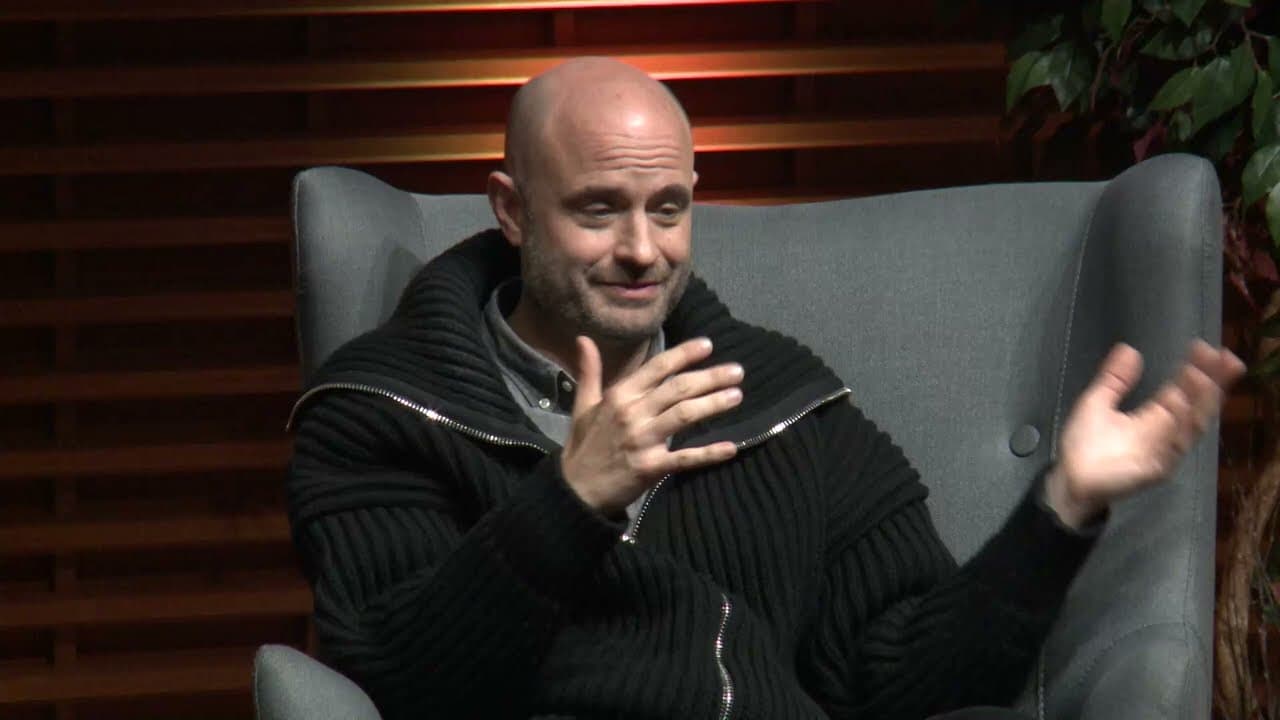
What Did Ed Fenster, MBA ’07, Share About His Entrepreneurial Journey in the Fireside Chat?
TL;DR
Ed Fenster, MBA ’07, explains how he and classmate Lynn Church founded Sunrun by removing the cost and complexity that kept homeowners from adopting solar power. Their model paid for installation and charged customers only for delivered energy at a rate below utility prices. Read on for the market logic, financing structure, early traction, leadership lessons, regulatory battles, and Sunrun’s direction in storage and electrification.
Transcript
[MUSIC] So Ed, if you don't mind, I would love to just briefly hear kind of the story of Sunrun, the initial idea for folks who may not be as familiar to give us some context before we go forward in this conversation. >> Yeah, sure. So rolling back to December 2006, I had a high school friend who had been in Afghanistan and when he came back, he wa... Read More
Key Insights
- Deployment was the overlooked layer: Fenster saw substantial investment flowing into solar technology while comparatively little attention went to putting that technology on homes. Sunrun therefore did not begin with a new solar invention. Its opportunity was to organize financing, marketing, and operations around deployment, turning established technology into a service residential customers could more readily adopt.
- Falling costs changed the premise: Fenster initially thought solar power made sense on satellites but not for terrestrial electricity generation. The combination of declining solar costs and California’s incentive program caused him to reconsider that assumption. Because the underlying technology had existed since the 1970s, he believed it worked and expected its economics to continue improving.
- The founders chose meaningful work: Fenster recalls Lynn Church contrasting the solar opportunity with their previous private equity experience. They could continue leveraging mattress companies and selling them among their acquaintances, or build the solar business. The remark captures why they found Sunrun compelling: it matched their financial experience while offering work they considered more engaging and consequential.
- Central generation looked less attractive: Companies pursuing centralized solar had to compete in wholesale power markets and respond to utility requests for proposals. Fenster describes utilities as excellent purchasing managers and the sales cycles as long and slow. Those conditions made centralized generation a difficult business compared with selling distributed power closer to the households that ultimately consumed it.
- Retail pricing created room: At Sunrun’s founding, monopoly utilities sold electricity to consumers for four or five times its wholesale cost. Fenster says that multiple later became eight to ten times across much of the country. Competing against the higher retail price gave residential solar more room to offer savings and made the model less dependent on subsidies.
- Customer dissatisfaction supported disruption: Sunrun’s founders viewed utilities as monopoly businesses that were generally disliked by their customers. Low satisfaction made the residential market appear ready for an alternative. The opportunity was not based only on producing electricity more cheaply, but also on placing a new provider between centralized generation and the people buying power.
- Attractive returns were insufficient: The available incentives could give a California homeowner approximately a 15% unlevered return on a solar installation. Even so, only about 35,000 homeowners had installed systems. That mismatch showed the founders that good financial returns alone did not create adoption when customers still faced a large purchase, uncertainty, and inconvenience.
- The upfront price blocked households: Spending $25,000 on rooftop solar was difficult to justify when homeowners already received electricity without making a comparable purchase. Sunrun responded by paying for the installation rather than asking customers to buy the system. Financing was therefore central to the product itself, not merely a supporting corporate function.
- Complexity delayed customer decisions: Prospective buyers had to judge equipment quality, select an installer, estimate actual power generation, understand product differences, and consider how long a system would last. The target customers included busy dual wage earners in their 50s with children. Even interested households could keep postponing a decision that never felt urgent.
- Payment depended on delivery: Sunrun’s pitch was that customers would pay only for the energy the company delivered. The electricity would be sold at a clearly lower rate than utility power, while Sunrun absorbed the installation cost. This structure addressed financial risk and technical uncertainty together, giving families a simpler reason to adopt solar.
- Early sales validated the theory: Fenster says market validation appeared quickly once Sunrun began selling its offer. The company became the fastest-growing solar business and soon the largest residential solar company. He also observed that participants across the ecosystem were making money, reinforcing the conclusion that the company had found product market fit.
- Adaptability extended beyond launch: Changing incentives in 2008 forced Sunrun to restart the company, and later growth brought financing, regulation, leadership, and cultural challenges. The existing account emphasizes executive self-awareness, changing roles, and bringing in new leaders where needed. Sunrun also used video production to help employees remain connected as the organization scaled.
Install to Summarize YouTube Videos and Get Transcripts
Explore YouTube Video Summarizer or Get YouTube Transcript Extractor
Questions & Answers
Q: What did Ed Fenster, MBA ’07, share about his entrepreneurial journey with Sunrun?
Ed Fenster described how a December 2006 conversation led him to examine falling solar costs and California’s incentive program. He and Stanford GSB classmate Lynn Church concluded that solar deployment, rather than solar technology itself, was the neglected opportunity. They built Sunrun around financing installations and selling delivered energy below utility rates, removing the homeowner’s $25,000 purchase decision. He also discussed product market fit, changing incentives, financing difficulties, utility resistance, leadership adaptation, company culture, energy storage, and electrification.
Q: How did Sunrun decide to enter the solar power market?
A high school friend who had returned from Afghanistan told Fenster that solar power was becoming cheaper and that California had introduced an incentive program. Fenster investigated and saw that technology developed in the 1970s was proven and likely to keep getting less expensive. He found that investors had focused upstream on technology while the process for deploying solar remained underdeveloped. Sunrun entered that gap because deployment required finance, marketing, and operations, areas Fenster and Church believed they could handle.
Q: Why did Sunrun focus on residential solar instead of centralized generation?
Centralized power generation was already highly competitive, with many wholesale producers pursuing utility requests for proposals. Utilities were strong purchasing managers, and their procurement cycles were long and slow. Residential electricity offered a larger pricing gap because utilities charged consumers four or five times wholesale cost at the time, according to Fenster. Selling distributed power against that higher retail price reduced subsidy dependence and let Sunrun compete in a market marked by low customer satisfaction.
Q: What prevented California homeowners from installing solar?
The economics alone appeared attractive because a homeowner could receive roughly a 15% unlevered return under the incentives then available. Nevertheless, only about 35,000 people had installed solar. Many homeowners did not want to spend $25,000 for a service they already obtained from their utility, and they could not easily evaluate the equipment, installer, output, or system life. These uncertainties made adoption a complicated decision that busy families could repeatedly postpone.
Q: How did Sunrun’s customer model remove those barriers?
Sunrun proposed paying for the solar installation instead of requiring the homeowner to fund it. The company would then sell the generated electricity at a rate that was clearly lower than the utility rate. Customers would pay only for energy actually delivered, which directly addressed uncertainty about system performance. The model made the offer easier to understand because the household received cheaper power and environmental benefits without the initial $25,000 expense.
Q: When did Sunrun know its business model was working?
Fenster says the founders could initially trust the theory because the underlying numbers worked, but customer selling supplied the practical evidence. The financing and energy-payment proposition began unlocking demand very quickly. Sunrun became the fastest-growing solar company and soon the largest residential solar company. Fenster also saw that everyone participating in the ecosystem was making money, which indicated product market fit rather than interest without a sustainable business.
Q: What early challenges did Sunrun face?
The company faced a major disruption when solar incentives changed in 2008, forcing it to restart. Financing was also difficult because investors struggled to understand the model and its long-term dynamics. Sunrun encountered regulatory resistance from utilities and responded through public litigation and media campaigns that emphasized distributed energy resources. These challenges required the founders to adapt while defending the economic and customer logic behind residential solar.
Q: How did Sunrun scale its leadership, culture, and future offering?
Sunrun’s leaders emphasized self-awareness so they could identify weaknesses and adjust their responsibilities as the company grew. Co-founder fit mattered because it influenced decisions and culture, while additional executives were brought in as needs changed. The company also used video production to keep employees connected and engaged during expansion. Its future direction includes storage, electrified heating and transportation, electric vehicles, backup power, and using customer batteries to support the grid.
Summary & Key Takeaways
-
Recognizing the deployment opportunity: Ed Fenster traces Sunrun’s origins to December 2006, when a high school friend returning from Afghanistan pointed out that solar power was becoming cheaper and California had passed an incentive program. Fenster initially associated solar with satellites rather than terrestrial power generation. Further examination convinced him that the established technology would keep declining in cost, while extensive upstream investment had left the practical challenge of deploying solar largely unresolved.
-
Choosing distributed residential solar: Fenster and Stanford GSB classmate Lynn Church founded Sunrun in 2007 around a business requiring finance, marketing, and operations, capabilities they believed they could provide. Instead of competing to build centralized power plants and answer slow utility requests for proposals, they focused on residential customers. Monopoly utilities sold retail power for four or five times its wholesale cost then, and Fenster says the gap later reached eight to ten times in much of the country.
-
Diagnosing barriers to adoption: California homeowners could earn roughly a 15% unlevered return by installing solar under the incentives available at the time, yet only about 35,000 people had done so. Fenster identified two obstacles. Many households did not want to spend $25,000 for something resembling electricity they already received. They also struggled to evaluate equipment, installers, expected generation, product differences, and system longevity, making solar an expensive and easily postponed decision.
-
Designing the customer proposition: Sunrun’s theory was that financing the installation could unlock residential demand. The company would sell electricity at an obvious discount to the utility rate and ask customers to pay only for the energy actually delivered. This proposition combined lower energy costs with environmental benefits while removing the homeowner’s large initial payment. Early selling showed that the approach worked, and Sunrun quickly became the fastest-growing solar company and the largest residential solar company.
-
Adapting through later challenges: Sunrun encountered bumps when incentives changed in 2008 and the company had to restart. Its broader journey also involved difficult financing, regulatory disputes with utilities, changes in executive responsibilities, and deliberate efforts to sustain company culture. Fenster describes self-awareness and co-founder fit as important to navigating those transitions. Looking forward, Sunrun’s direction includes energy storage, electrified heating and transportation, electric vehicles, backup energy, and using batteries to support the grid.
Read in Other Languages (beta)
Share This Summary 📚
Summarize YouTube Videos and Get Video Transcripts with 1-Click
Try YouTube Summary with ChatGPT & Claude or YouTube Transcript Generator
Explore More Summaries from Stanford Graduate School of Business 📚

Summarize YouTube Videos and Get Video Transcripts with 1-Click
Try YouTube Summary with ChatGPT & Claude or YouTube Transcript Generator