How Did the US Acquire the Panama Canal?
TL;DR
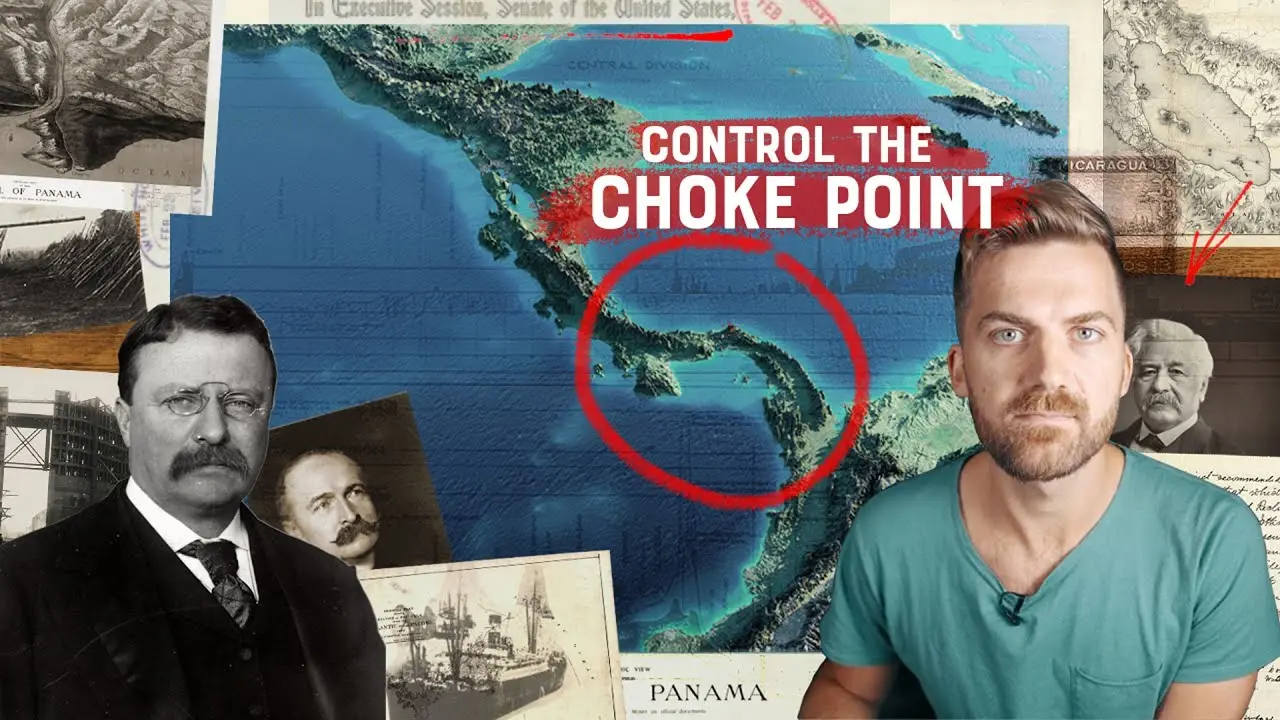
The Panama Canal, a crucial waterway connecting the Atlantic and Pacific Oceans, was built after a series of complex geopolitical maneuvers. Initially attempted by the French but failed, the US took over the project, influenced by a French engineer who orchestrated Panama's independence from Colombia, allowing the US to complete the canal and control the zone until the late 20th century.
Transcript
(clock ticking) - There's this one lake in Central America that, if you look closely enough, you're gonna see the tops of trees in the lake. And these, these are not islands. These are hilltops. This all used to be a dense jungle, not a lake. But then they built dams and all sorts of infrastructure to flood this forest, all in the name of solving a... Read More
Key Insights
- The Panama Canal connects the Atlantic and Pacific Oceans, significantly impacting global trade.
- Initial construction attempts by the French failed due to engineering challenges and diseases.
- Ferdinand de Lesseps's sea-level canal plan was impractical due to Panama's mountainous terrain.
- Philippe Bunau-Varilla, a French engineer, played a key role in the canal's eventual completion.
- Bunau-Varilla influenced US interest by exaggerating volcanic threats in Nicaragua.
- He orchestrated Panama's independence from Colombia to facilitate US control over the canal zone.
- The US adopted innovative engineering solutions, including locks to manage elevation differences.
- Panama regained control of the canal from the US in 1999 after decades of negotiations.
Install to Summarize YouTube Videos and Get Transcripts
Explore YouTube Video Summarizer or Get YouTube Transcript Extractor
Questions & Answers
Q: How did the US gain control over the Panama Canal?
The US gained control over the Panama Canal through strategic geopolitical maneuvers. Initially, a French engineer, Philippe Bunau-Varilla, influenced US interest by exaggerating volcanic threats in Nicaragua, prompting the US to consider Panama instead. He then orchestrated Panama's independence from Colombia, allowing the US to negotiate control over the canal zone, which they maintained until 1999.
Q: What challenges did the French face in building the Panama Canal?
The French faced significant challenges in building the Panama Canal, primarily due to the impractical plan of digging a sea-level canal through Panama's mountainous terrain. Additionally, the project was plagued by diseases such as malaria and yellow fever, which claimed thousands of lives. These challenges led to the project's abandonment in 1889 after substantial financial losses and a high death toll.
Q: Why did Philippe Bunau-Varilla influence US interest in the Panama Canal?
Philippe Bunau-Varilla influenced US interest in the Panama Canal to salvage the failed French project and protect his financial interests. By exaggerating volcanic threats in Nicaragua, he redirected US focus to Panama, where significant work had already been done. His efforts included orchestrating Panama's independence, ensuring the US could take over and complete the canal, thus securing his financial return.
Q: What engineering innovations did the US implement in the Panama Canal?
The US implemented several engineering innovations in the Panama Canal, most notably the use of locks to manage elevation differences. Instead of a sea-level canal, the US constructed a series of locks to raise ships 26 meters above sea level, allowing them to traverse the canal over the mountainous terrain. This approach significantly reduced excavation and mitigated the challenges faced by the French.
Q: When did Panama regain control of the canal from the US?
Panama regained control of the Panama Canal from the US on December 31, 1999. This transfer of control was the result of decades of negotiations and treaties, culminating in the Torrijos-Carter Treaties of 1977. These agreements outlined the gradual transfer of canal operations and sovereignty to Panama, marking a significant shift in regional power dynamics.
Q: Why did the US initially consider Nicaragua for the canal?
The US initially considered Nicaragua for the canal due to its geographical advantages, including a shorter land route and a large lake that would reduce excavation. However, Philippe Bunau-Varilla's campaign highlighting volcanic threats in Nicaragua, along with his lobbying efforts, ultimately swayed US decision-makers to choose Panama, where the French had already begun construction.
Q: How did Philippe Bunau-Varilla orchestrate Panama's independence?
Philippe Bunau-Varilla orchestrated Panama's independence by leveraging local dissatisfaction with Colombian rule and aligning with Panamanian separatists. He promised US naval support to prevent Colombian intervention, ensuring a successful uprising. As Panama's self-appointed ambassador, Bunau-Varilla negotiated a treaty with the US granting them control over the canal zone, facilitating the canal's completion.
Q: What impact did the Panama Canal have on global trade?
The Panama Canal had a profound impact on global trade by significantly reducing the travel distance between the Atlantic and Pacific Oceans. This shortcut allowed ships to avoid the long and treacherous journey around South America's Cape Horn, facilitating faster and more efficient movement of goods. The canal's strategic importance reshaped global trade routes and bolstered economic connectivity between continents.
Summary & Key Takeaways
-
The Panama Canal is an engineering marvel that connects the Atlantic and Pacific Oceans, facilitating global trade. Initially attempted by the French under Ferdinand de Lesseps, the project failed due to impractical plans and disease. A French engineer, Philippe Bunau-Varilla, later influenced US involvement, leading to Panama's independence and the canal's completion by the US.
-
Philippe Bunau-Varilla played a pivotal role in the Panama Canal's history by convincing the US to abandon plans for a Nicaraguan canal due to exaggerated volcanic threats. He orchestrated Panama's independence from Colombia, allowing the US to build the canal. The US implemented innovative engineering solutions, such as locks, to overcome elevation challenges.
-
The Panama Canal, completed by the US in the early 20th century, remained under US control until 1999 when Panama regained sovereignty. The canal's construction involved overcoming significant engineering and geopolitical challenges, with Philippe Bunau-Varilla's strategic maneuvers being crucial to its completion and the subsequent shift in control.
Read in Other Languages (beta)
Share This Summary 📚
Summarize YouTube Videos and Get Video Transcripts with 1-Click
Try YouTube Summary with ChatGPT & Claude or YouTube Transcript Generator
Explore More Summaries from Johnny Harris 📚


Summarize YouTube Videos and Get Video Transcripts with 1-Click
Try YouTube Summary with ChatGPT & Claude or YouTube Transcript Generator