What Drives Market Movements After Elections?
TL;DR
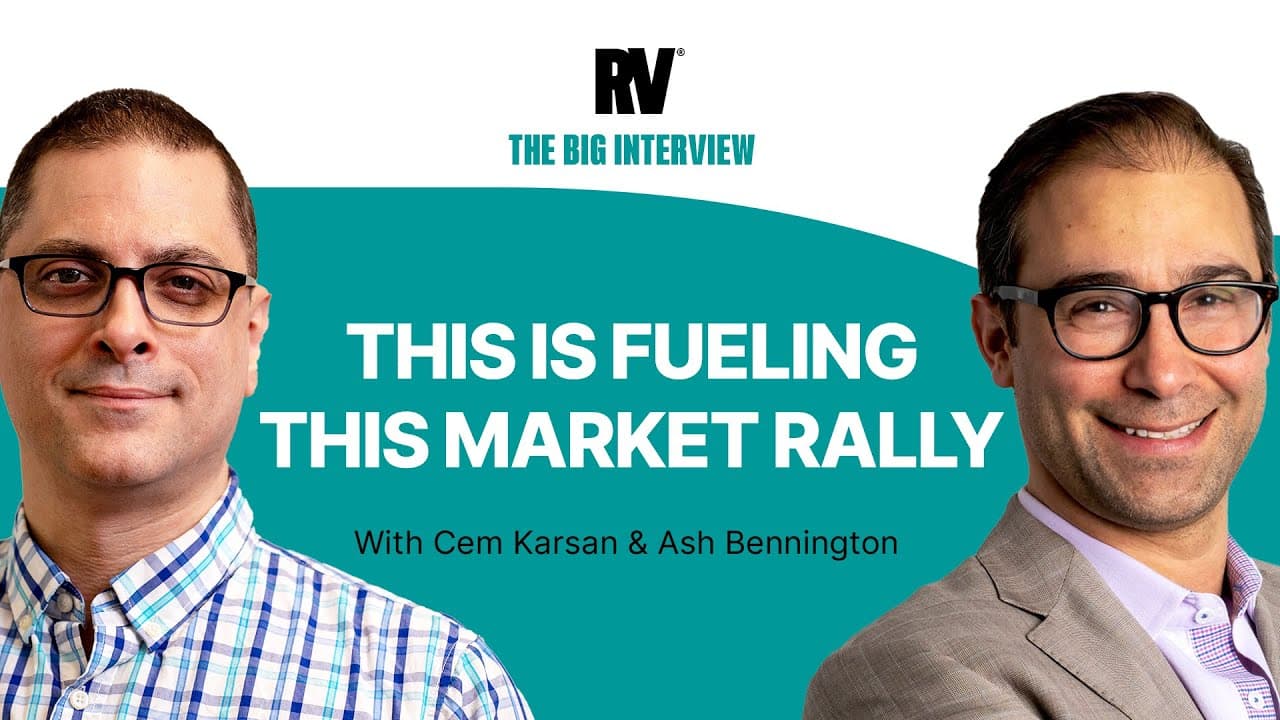
Post-election market dynamics are primarily driven by structural flows and institutional rebalancing. Concepts like Vanna, Charm, and Gamma are crucial, illustrating how time and volatility affect options trading, while the market functions as an insurance mechanism, impacting overall behavior. Historical trends indicate significant positive returns during election years, especially in populist contexts, due to increased fiscal spending.
Transcript
listen sorry to interrupt but it really is important for us if you can just hit the like And subscribe button that allows us to bring you the very best financial intelligence and the best guests on the planet anyway appreciate it like And subscribe welcome back to real Vision I'm Ash Bennington today I have the pleasure of speaking to a real Vision... Read More
Key Insights
- Cem Karsan emphasizes the importance of structural market flows and their impact on market dynamics, explaining how these flows are not driven by individual investors but by institutional rebalancing and hedging.
- The concepts of Vanna, Charm, and Gamma are crucial for understanding market movements, as they relate to the effects of time and volatility on options and derivatives.
- The market operates as an insurance company for the world, with structural short positions on downside protection and long positions on upside potential, affecting overall market behavior.
- Market seasonality and structural flows play a significant role in market behavior, with certain periods showing predictable patterns due to these underlying forces.
- The world's largest carry trade involves shorting downside exposure and longing upside exposure, significantly influencing market trends and volatility.
- Historical trends show that election years, particularly in populist periods, tend to have positive market returns due to increased fiscal spending and monetary stimulus.
- The impact of 40 years of monetary policy has led to significant inequality, affecting market structure and leading to periods of populism and protectionism.
- Dispersion trades and the potential for a blowoff top in 2024 are discussed, highlighting the importance of understanding internal market dynamics and structural shifts.
Install to Summarize YouTube Videos and Get Transcripts
Explore YouTube Video Summarizer or Get YouTube Transcript Extractor
Questions & Answers
Q: What are the key factors driving the post-election market rally?
The post-election market rally is driven by structural market flows, which are not influenced by individual investors but by institutional rebalancing and hedging. These flows, combined with the effects of time and volatility on options, create predictable patterns in market behavior, leading to positive outcomes after elections.
Q: How do Vanna, Charm, and Gamma affect market movements?
Vanna, Charm, and Gamma are crucial for understanding market movements as they relate to the effects of time and volatility on options and derivatives. Vanna measures the change in Delta with respect to changes in implied volatility, Charm measures the change in Delta with respect to time, and Gamma measures the rate of change of Delta itself. These factors influence how options are priced and how market makers hedge their positions.
Q: What is the world's largest carry trade and how does it impact markets?
The world's largest carry trade involves shorting downside exposure and longing upside exposure. This trade is highly profitable due to the skew in volatility pricing, where downside puts are priced higher than upside calls. This structural positioning affects market trends and volatility, leading to predictable patterns in market behavior over time.
Q: Why are election years particularly positive for markets?
Election years, especially during populist periods, tend to have positive market returns due to increased fiscal spending and monetary stimulus. Governments often implement policies to boost the economy and market sentiment to secure electoral success, resulting in higher market returns during these years.
Q: How has 40 years of monetary policy affected market structure?
Forty years of monetary policy have led to significant inequality, with policies favoring capital over labor. This has resulted in increased wealth concentration at the top, leading to populism and protectionism. The Federal Reserve's efforts to smooth the business cycle have also removed volatility, delaying necessary economic adjustments and contributing to structural market imbalances.
Q: What role does dispersion play in market dynamics?
Dispersion refers to the variation in performance among different stocks within an index. High dispersion can indicate a rotation in market leadership or a shift in investor sentiment. Understanding dispersion is crucial for identifying potential market tops or bottoms, as it reflects internal market dynamics and structural shifts.
Q: What are the potential risks and opportunities in the current market environment?
The current market environment presents risks related to structural imbalances and potential blowoff tops, particularly in sectors like technology. However, it also offers opportunities for investors who understand the underlying flows and can position themselves accordingly. Monitoring Vanna, Charm, and Gamma effects, as well as dispersion trends, can help identify these opportunities.
Q: How can investors navigate the challenges posed by populism and protectionism?
Investors can navigate challenges posed by populism and protectionism by understanding the structural shifts in market dynamics and positioning themselves accordingly. This involves diversifying investments, focusing on non-correlated assets, and staying informed about political and economic developments. Recognizing the impact of fiscal and monetary policies on market trends is also crucial for making informed investment decisions.
Summary & Key Takeaways
-
Cem Karsan discusses the influence of structural market flows on post-election market dynamics, emphasizing the role of institutional rebalancing and hedging in driving market movements.
-
Key concepts such as Vanna, Charm, and Gamma are explored, highlighting their significance in understanding the effects of time and volatility on options and derivatives.
-
The discussion touches on the impact of 40 years of monetary policy, resulting in significant inequality and leading to periods of populism and protectionism in global markets.
Read in Other Languages (beta)
Share This Summary 📚
Summarize YouTube Videos and Get Video Transcripts with 1-Click
Try YouTube Summary with ChatGPT & Claude or YouTube Transcript Generator
Explore More Summaries from Real Vision 📚


Summarize YouTube Videos and Get Video Transcripts with 1-Click
Try YouTube Summary with ChatGPT & Claude or YouTube Transcript Generator