How to Calculate Dasha Balance in Astrology
TL;DR
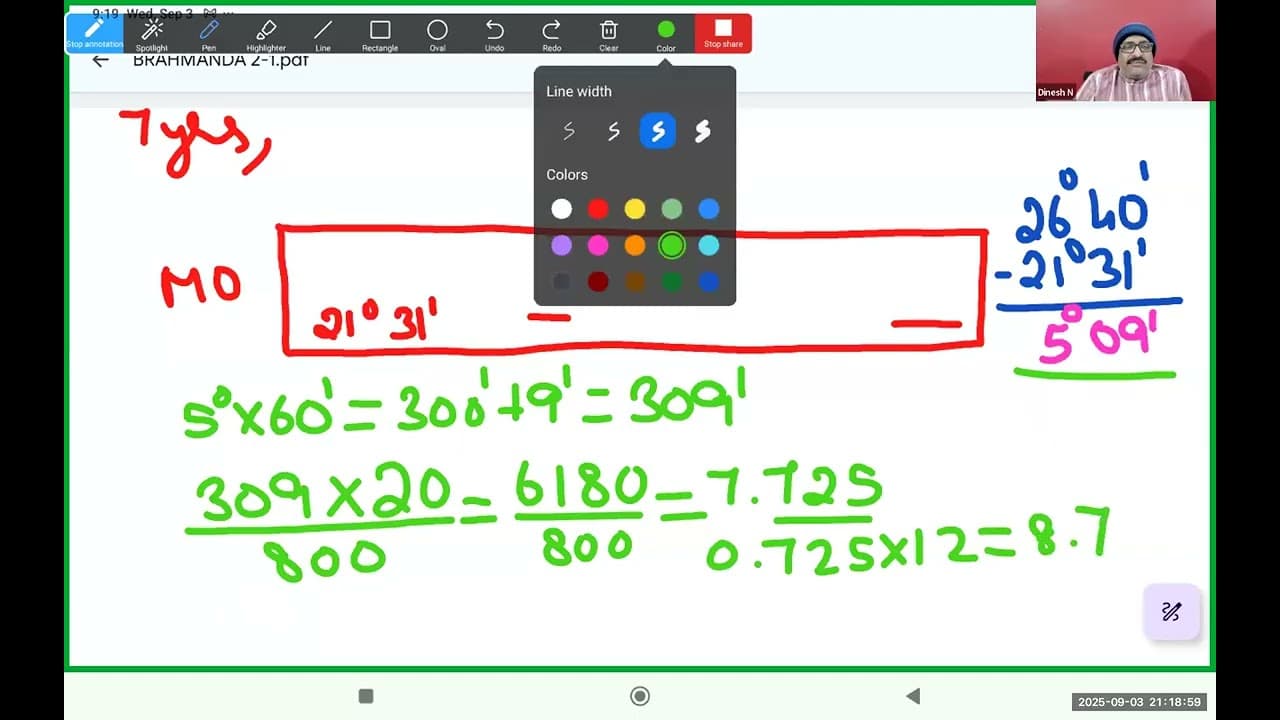
To calculate dasha balance, start by identifying the nakshatra position of the moon at birth, then calculate the remaining degrees to complete the nakshatra. Convert these degrees into years, months, and days using the dasha system, which assigns specific time periods to each planet. This method helps predict future events based on planetary periods.
Transcript
Sir, can I request the new recording be started because it's nearly half an hour of just chithat. Three pages discrimin asked one question balance degree for dasha calculation. Okay. The first question was Berni Nakshhatra 21° 31 minutes please take a calculator pen and paper everything. Okay. Okay sir. Let us take Bernie completely that box entire... Read More
Key Insights
- Dasha calculation is based on the moon's position in a specific nakshatra at the time of birth.
- Each nakshatra spans 13°20' in the zodiac, divided into four padas.
- The balance of dasha is calculated by determining how much of the nakshatra has been traversed.
- The remaining degrees are converted into time using the dasha system, assigning years, months, and days.
- Each planet governs a specific period in the dasha system, influencing life events.
- The calculation involves converting degrees into minutes, then into time periods using a specific formula.
- Understanding dasha balance helps predict future events and personal growth periods.
- Astrology combines mathematical calculations with interpretative skills to provide insights.
Install to Summarize YouTube Videos and Get Transcripts
Explore YouTube Video Summarizer or Get YouTube Transcript Extractor
Questions & Answers
Q: How to calculate dasha balance in astrology?
To calculate dasha balance, identify the moon's position in its nakshatra at birth. Determine the remaining degrees to complete the nakshatra, then convert these degrees into years, months, and days using the dasha system. This involves converting degrees into minutes and applying a specific formula to assign time periods to planets, predicting future events.
Q: What is a nakshatra in astrology?
A nakshatra is a segment of the zodiac in Vedic astrology, spanning 13°20'. It is divided into four padas or quarters, each influencing different aspects of life. There are 27 nakshatras, each associated with specific characteristics and planetary rulers, playing a crucial role in astrological calculations and predictions.
Q: How does the dasha system work in astrology?
The dasha system in astrology assigns specific time periods to each planet, influencing life events based on their position at birth. Each planet governs a certain number of years, and the dasha balance is calculated by determining the remaining time in a planet's period. This system helps predict future events and personal growth periods.
Q: Why is the moon's position important in dasha calculation?
The moon's position is crucial in dasha calculation because it determines the starting point of the dasha system. The moon's nakshatra at birth sets the sequence of planetary periods, influencing the timing of events in a person's life. Calculating the remaining degrees in the nakshatra helps determine the dasha balance.
Q: What is the significance of planetary periods in astrology?
Planetary periods, or dashas, are significant in astrology as they dictate the timing of events and personal growth phases. Each planet governs a specific period, influencing life experiences based on its characteristics and position in the birth chart. Understanding these periods helps astrologers predict future events and provide guidance.
Q: How are degrees converted into time in dasha calculation?
In dasha calculation, the degrees of a nakshatra traversed by the moon are converted into time using a specific formula. This involves converting degrees into minutes, then into years, months, and days. The dasha system assigns specific time periods to planets, allowing for predictions based on remaining planetary periods.
Q: What role do padas play in nakshatra calculation?
Padas are quarters of a nakshatra, each influencing different aspects of life. In nakshatra calculation, padas help determine the specific area of influence within a nakshatra. The moon's position in a pada at birth affects the dasha balance, as the remaining degrees to complete the nakshatra are calculated for time conversion.
Q: How does astrology combine calculations with interpretation?
Astrology combines mathematical calculations with interpretative skills to provide insights into life events. Calculations determine planetary positions, dasha balances, and time periods, while interpretation involves understanding the symbolic meanings and influences of planets and nakshatras. This combination helps astrologers offer guidance and predictions based on cosmic patterns.
Summary & Key Takeaways
-
Dasha balance calculation starts with identifying the moon's position in a nakshatra and determining the remaining degrees to complete it. This is converted into years, months, and days using the dasha system, which assigns specific time periods to planets.
-
Each nakshatra is divided into four padas, and the balance is calculated by determining how much of the nakshatra has been traversed. This balance is then converted into time using a formula, helping predict future events.
-
Understanding the dasha system involves mathematical calculations and interpretative skills, providing insights into life events and personal growth periods based on planetary influences.
Read in Other Languages (beta)
Share This Summary 📚
Summarize YouTube Videos and Get Video Transcripts with 1-Click
Try YouTube Summary with ChatGPT & Claude or YouTube Transcript Generator