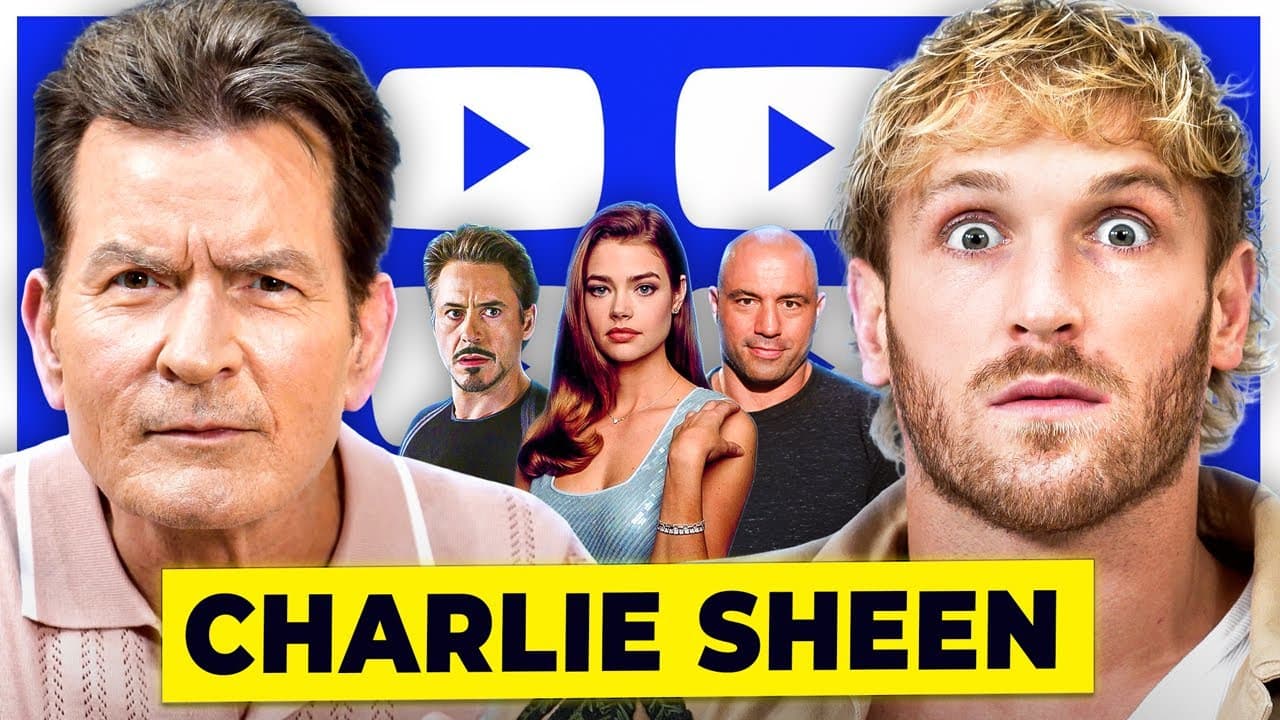
Charlie Sheen on Fentanyl, Sobriety and Two and a Half Men
TL;DR
Charlie Sheen says the drug lifestyle he lived in the '80s and '90s would kill him today because of fentanyl, calling casual use 'Russian roulette.' He turned down $2 million per episode pressure on Two and a Half Men, never tried heroin by deliberate choice, and is now 8 years sober after a career built around constant access to every 'cookie jar.'
Transcript
Dude, I can't believe it. Charlie, if what you had been doing in the '9s was today, you would be dead easily. Who has a crazier story than you? If they do, I don't think they're still with us. We don't have like any kind of a drug past or anything. You're not yet. No. But what's that like? Like never. You lost your virginity to a woman named Candy.... Read More
Key Insights
- Fentanyl has made recreational drug use far deadlier than in past decades, with Sheen stating that the same drugs he took in the '80s and '90s would kill him 'easily' today because of how potent street supply has become.
- Heroin was the one drug Sheen deliberately never tried, reasoning he would either 'do it once and die' or need it every day for life, a decision he made without research but still stands by.
- A near-miss in Hamburg around 1993 nearly changed everything: a driver handed Sheen brown 'schnee' (German for snow) when he expected cocaine, and a dim pub light revealed it was heroin before he used it.
- Fentanyl overdoses happen even inside rehab, illustrated by the death of his ex-wife Brooke's fiance, a fit 33-year-old who scored a bag from another client and died from nearly pure fentanyl.
- Sheen urges users who won't quit to buy Amazon test kits to check their supply, framing harm reduction as a practical step while the hosts add the simpler message to not do drugs at all.
- Addiction escalated through access and momentum, as booking one job led to the next, more money, and 'deeper into every cookie jar,' turning a six-week prep window into three days of readiness.
- The simplicity of 'don't do drugs' fails many people because, in Sheen's Hollywood scene, drugs were 'always on the menu' and felt like a normal path everyone followed.
- Sheen has phantom equity in Lunchly, a 'better for you' lunch kit created to compete with Lunchables, described on the show as a small ownership stake.
Install to Summarize YouTube Videos and Get Transcripts
Explore YouTube Video Summarizer or Get YouTube Transcript Extractor
Questions & Answers
Q: Why does Charlie Sheen say his old drug habits would kill him today?
Sheen says that if the drugs he took in the '80s and '90s were consumed today, he would be dead 'easily' because of the fentanyl crisis. He describes a real epidemic where street drugs are laced with fentanyl, making them vastly more lethal than the substances available during his heaviest partying years. He frames modern casual use as gambling with your life.
Q: What is the one drug Charlie Sheen says he never tried?
Heroin was the only drug Sheen never did. He explains he made the decision without research or much data, reasoning that he would either do it once and die, or do it once and then need it every day for a long time until it killed him. He calls that reasoning 'objective truth' and says he simply knew to avoid it.
Q: What happened during Charlie Sheen's heroin near-miss in Hamburg?
Around 1993, coming back through Germany, Sheen asked a limo driver to get him drugs, expecting cocaine. The driver returned with a brown bindle. As they drove a dark street at about 2 a.m., a thin light from a pub caught the bindle for a fraction of a second, revealing it was brown, meaning heroin. He stopped before using it. The driver used 'schnee,' which turns out to be German for snow.
Q: How dangerous is fentanyl according to the discussion?
The guests describe fentanyl as extremely dangerous and a real epidemic. Sheen shares that his ex-wife Brooke's fiance, a successful 33-year-old businessman and athlete, was in and out of rehab, scored a bag from another client, took a giant dose in the bathroom, and was dead before he hit the floor. It was nearly pure fentanyl, illustrating how quickly it can kill even fit young people.
Q: What harm-reduction advice is given for people who use drugs?
Sheen suggests that anyone partaking in drug use should get test kits, available on Amazon, to test their substances for contamination. He frames this as a practical safety measure given the fentanyl risk. The hosts take it a step further, adding the simpler message to not do drugs at all, while acknowledging the niche audience that will use regardless.
Q: Why does 'just don't do drugs' fail so many people, per Sheen?
Sheen says that despite the simplicity of programs like DARE and the message 'don't do drugs,' many people still do because in his world drugs were ingrained in the whole scene and process. They were 'always on the menu' and just what everybody did. He describes it as a path you followed as you struggled for work, hit big, gained more money, and got deeper access.
Q: How did career success fuel Charlie Sheen's addiction?
Sheen explains that as he got work, each job led to the next, he stopped auditioning, started making more money, and gained more access, going 'deeper into every cookie jar.' He describes a stop-start cycle where he could deliver on jobs then pull back, but prep windows shrank from six weeks to three days as he negotiated later start dates.
Q: What is Lunchly and what is Charlie Sheen's connection to it?
Lunchly is described as a 'better for you' lunch kit created to compete with Lunchables, a snack meal kit. On the show, it's noted that Sheen holds phantom equity in Lunchly, meaning a very small ownership stake, small enough that it's almost an amount you wouldn't notice. The product is positioned as a healthier alternative in the same snack-meal category.
Summary & Key Takeaways
-
Charlie Sheen joins Impaulsive and opens with reflections on drug culture, saying his '80s and '90s lifestyle would be fatal today because of fentanyl. He compares casual use to Russian roulette and stresses that the danger is objectively worse now than during his heaviest years of partying.
-
He recounts nearly using heroin in Hamburg around 1993, when a driver gave him a brown substance he mistook for cocaine; a fleeting pub light exposed it as 'schnee.' He explains heroin was the single drug he refused, believing it meant certain death or lifelong dependence.
-
Sheen describes fentanyl's lethality through the death of his ex-wife Brooke's 33-year-old fiance inside rehab, promotes drug test kits for those who won't stop, and discusses how Hollywood access fueled his addiction. He also mentions phantom equity in the Lunchables competitor Lunchly.
Read in Other Languages (beta)
Share This Summary 📚
Summarize YouTube Videos and Get Video Transcripts with 1-Click
Try YouTube Summary with ChatGPT & Claude or YouTube Transcript Generator
Explore More Summaries from IMPAULSIVE 📚






Summarize YouTube Videos and Get Video Transcripts with 1-Click
Try YouTube Summary with ChatGPT & Claude or YouTube Transcript Generator