How Does the Universe Think Through Consciousness?

TL;DR
The universe “thinks” through patterns reflected in human consciousness, according to the speaker’s interpretation of the Hermetic law of correspondence. Because each person is a microcosm of the universe, studying personal psychology can reveal how the larger system operates. The speaker also describes natural forces such as gravity and electricity as impersonal, making alignment, not moral worth, central to reaching a desired reality; read on to understand the framework and its practical implications.
Transcript
the psychology of the universe. Until you understand how the universe fundamentally works, every step towards your desired reality will almost feel like you've got this resistance that is pulling you back. And unfortunately, most people don't understand how the universe thinks. The universe has a psychology in of itself because it is an intelligenc... Read More
Key Insights
- The video's central claim is that the universe is an intelligent but indirectly impersonal system. Its principles operate consistently without checking whether a person is morally good, which the speaker illustrates through the equal effects of gravity, electricity, and rain.
- The law of correspondence is the video's prerequisite for understanding universal psychology. Expressed as "as above, so below," it proposes that patterns found within an individual correspond to patterns operating throughout nature and the larger universe.
- A person is presented as a microcosm of the universe, meaning a miniature reflection of the greater system. The speaker applies this idea metaphysically, not merely to the claim that human bodies are made from the same material found among the stars.
- Personal consciousness is described as the place where the universe's psychological structure can be discovered. Because individuals supposedly reflect the larger system, examining human psychological wiring becomes the speaker's method for inferring how the universe itself works.
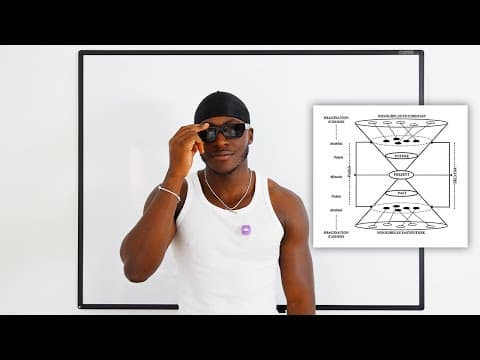
- Different personal realities are attributed to differences in frequency and vibration. Although humanity occupies one planet and one universe, the speaker argues that individual frequencies create billions of distinct experiential worlds and separate points of reality.
- Alignment is presented as necessary for entering a desired reality. The speaker maintains that resistance persists when people pursue desired outcomes without understanding the principles that govern the universe or the corresponding patterns within their own consciousness.
- Spiritual identity can become a performed archetype rather than an authentic practice. The speaker criticizes treating specific speech, diets, clothing, consumption choices, or moral restrictions as universal proof that someone is spiritual.
- Practical influence over personal reality is presented as more meaningful than displaying spiritual righteousness. The speaker argues that adopting a spiritual persona has limited value when a person remains trapped in circumstances they dislike and cannot direct effectively.
Install to Summarize YouTube Videos and Get Transcripts
Explore YouTube Video Summarizer or Get YouTube Transcript Extractor
Questions & Answers
Q: How does the universe think through consciousness?
The speaker argues that the universe’s way of thinking is hidden within each person’s consciousness. Through the law of correspondence, he treats people as miniature reflections of the universe, so examining personal psychological patterns becomes a way to understand the larger system.
Q: What does “as above, so below” mean?
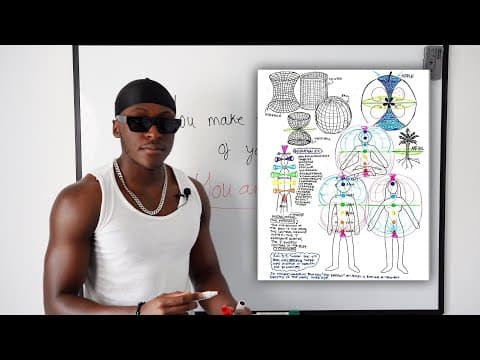
“As above, so below” refers to the Hermetic law of correspondence, in which patterns at one level of existence reflect patterns at another. The speaker illustrates this with tree branches and roots, galaxies and the iris, and patterns in lungs and nature.
Q: Why does the speaker describe the universe as impersonal?
The speaker says universal principles operate without judging a person’s morality. Gravity affects good and bad people alike, electricity can zap anybody, and rain falls on both the just and the unjust.
Q: What does it mean to be a microcosm of the universe?
A microcosm is a miniature reflection of the larger universe. The speaker means this metaphysically rather than only biologically: patterns within human consciousness supposedly correspond to patterns in the greater system.
Q: Why do bad things happen to good people in this framework?
The speaker argues that natural forces do not adjust their operation according to moral worth. Bad outcomes can therefore affect good people because gravity, electricity, rain, and other universal principles act impersonally.
Q: How can someone align with a desired reality?
According to the speaker, alignment begins with understanding how the universe fundamentally works and how its patterns appear within personal consciousness. Without that understanding, steps toward a desired reality can feel as though resistance is pulling the person back.
Q: What role do frequency and vibration play in personal reality?
The speaker claims that frequency and vibration separate people into different experiential realities even though everyone occupies one planet and one universe. He describes this as 8 billion different worlds created by 8 billion frequencies and distinct points of reality.
Q: Why does the speaker criticize performed spiritual identities?
The speaker argues that spirituality can become a personality defined by particular speech, food, clothing, consumption choices, or moral restrictions. In his view, displaying that archetype matters less than understanding universal principles and being able to direct a personal reality.
Summary & Key Takeaways
-
The speaker describes the universe as an intelligent yet indirectly impersonal system. Natural forces do not distinguish between good and bad people, so morality does not determine every outcome. He argues that reaching a desired reality requires understanding these underlying principles and bringing personal consciousness into alignment with how the universe operates.
-
The law of correspondence, summarized as "as above, so below," provides the video's main framework. The speaker presents every person as a microcosm, or miniature reflection, of the universe. Recurring patterns in trees, roots, galaxies, eyes, and lungs are offered as illustrations of corresponding structures across different scales of existence.
-
The speaker argues that studying personal consciousness can reveal how the larger universe is psychologically structured. He also rejects spirituality based mainly on appearances, restrictive lifestyle rules, or moral superiority. In his view, authentic spirituality should help people direct their reality instead of merely encouraging them to perform a recognizable spiritual personality.
Read in Other Languages (beta)
Share This Summary 📚
Summarize YouTube Videos and Get Video Transcripts with 1-Click
Try YouTube Summary with ChatGPT & Claude or YouTube Transcript Generator
Explore More Summaries from Nero Knowledge 📚



Summarize YouTube Videos and Get Video Transcripts with 1-Click
Try YouTube Summary with ChatGPT & Claude or YouTube Transcript Generator