Why Are Asian Stocks Rallying on Trade Hopes?
TL;DR
Asian risk assets were positioned for gains because U.S. and Chinese negotiators reported progress toward a broad trade agreement, while a threatened 100% U.S. tariff was described as off the table. Major unresolved issues included rare earths, existing tariffs, Russian oil purchases, and South Korea's proposed $350 billion U.S. investment plan.
Transcript
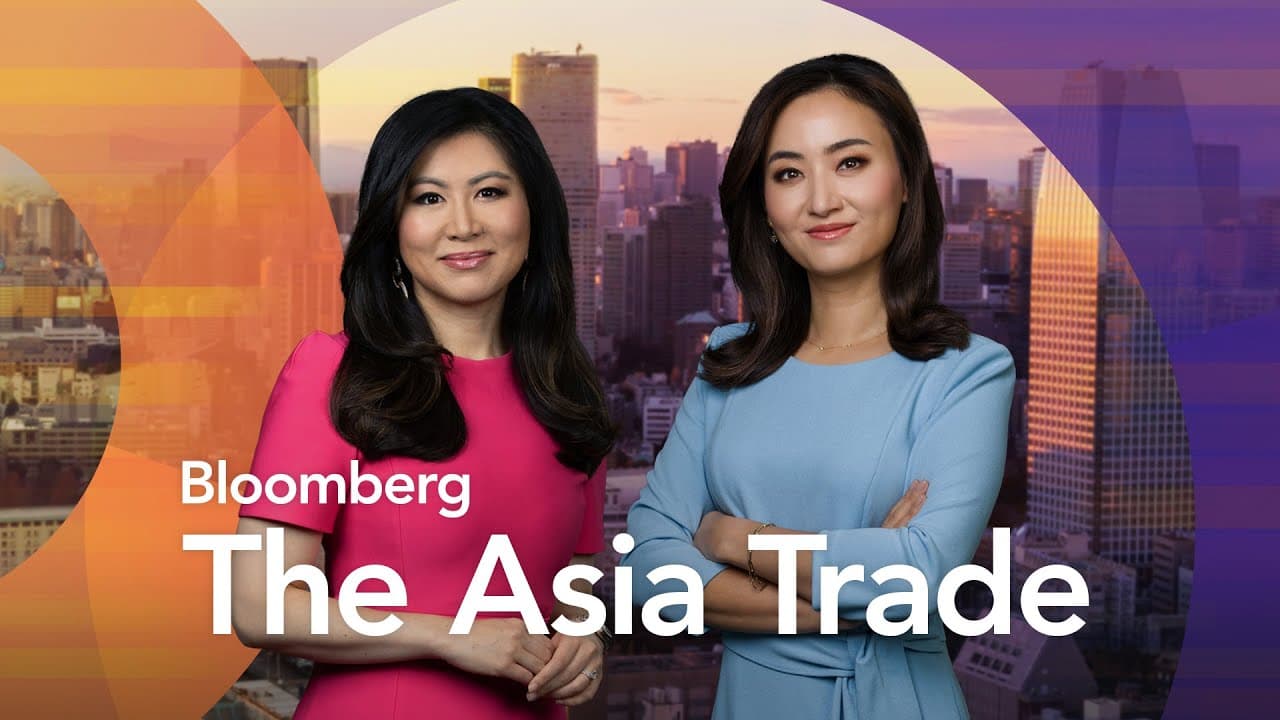
THIS IS THE ASIA TRADE. >> I AM IN THE -- I AM IN KUALA LUMPUR FOR THE ASEAN SUMMIT. A SWEEPING TRADE DEAL FOR PRESIDENT TRUMP AND XI TO SIGN OFF ON WHEN THEY MEET IN KOREA. THE TREASURY SECRETARY SAID DONALD TRUMP'S TARIFF THREAT IS OFF THE TABLE WITH CONSENSUS ON TOPICS INCLUDING EXPORT CONTROLS AND SHIPPING LEVIES. RISK ASSETS SET FOR GAINS I... Read More
Key Insights
- U.S.-China trade tensions appeared to ease after two days of negotiations in Malaysia produced agreement across broad themes, including fentanyl, export controls, shipping levies, and agricultural imports, ahead of an expected meeting between Presidents Trump and Xi in Korea.
- The threatened 100% U.S. tariff on Chinese goods was described by Treasury Secretary Scott Bessent as off the table, reducing a major source of market uncertainty and helping position Asian risk assets for gains as investors anticipated a possible trade agreement.
- Chinese soybean purchases were expected to resume substantially, according to Bessent, who argued that the global market involving Brazil, Argentina, and the United States had returned to equilibrium. Agricultural imports were politically important because they affected President Trump's domestic base.
- Rare earths remained a central issue because the United States was pursuing greater supply-chain security through negotiations with China and Southeast Asian countries. Regional trade pacts also sought expanded markets for U.S. agricultural products and tariff exemptions for participating Asian exporters.
- China still faced an effective tariff level of 40% if existing duties remained unchanged, about 25 percentage points above other countries. The correspondent said this would continue to place Chinese exports at a disadvantage despite the broader thaw in bilateral relations.
- China's purchases of Russian oil entered the negotiations after Chinese state-owned companies canceled some shipments from sanctioned Russian companies. Analysts expected further cancellations were possible, but considered broader action unlikely without a significant U.S. concession, given China and Russia's strategic partnership.
- South Korea's proposed $350 billion U.S. investment plan remained unsettled because the investment method, total amount, schedule, allocation of losses, and distribution of dividends were still sticking points. President Lee argued that any agreement must avoid catastrophic consequences for South Korea.
- South Korea's economic strategy prioritized stable economic and fiscal policy over lower interest rates because rate cuts could further stimulate already elevated real estate prices. President Lee supported moving capital from property into financial markets and other productive sectors of the economy.
Install to Summarize YouTube Videos and Get Transcripts
Explore YouTube Video Summarizer or Get YouTube Transcript Extractor
Questions & Answers
Q: Why were Asian stocks and risk assets expected to gain?
Asian risk assets were expected to benefit from signs that trade tensions between the United States and China were easing. After two days of negotiations in Malaysia, officials indicated progress on export controls, shipping levies, fentanyl, agricultural imports, and soybean purchases. Bessent also said the threatened 100% tariff on Chinese goods was off the table, reducing a major source of uncertainty.
Q: What did the U.S. and China discuss in Malaysia?
The two sides discussed a broad range of disputed economic issues during two days of talks in Malaysia. The Chinese statement identified fentanyl, export controls, shipping levies, and agricultural imports as key themes. The negotiations were intended to prepare a potential agreement for Presidents Trump and Xi to consider when they met in Korea later that week.
Q: What tariff issues remained unresolved between the U.S. and China?
Although the threatened 100% tariff was described as off the table, the future of existing tariffs remained uncertain. The correspondent said China still faced an effective tariff level of 40%, approximately 25 percentage points higher than other countries. If that level remained in place, Chinese exports would continue to operate from a significantly disadvantaged position despite improved diplomatic relations.
Q: Why were soybean purchases important to the trade negotiations?
Bessent expected China to make substantial purchases of U.S. soybeans again, saying the global market involving Brazil, Argentina, and the United States had returned to equilibrium. Agricultural imports represented an important negotiating outcome for President Trump because they affected his political base. Renewed purchases also served as a visible sign that commercial relations between the two countries were thawing.
Q: How did rare earths shape U.S. trade talks in Asia?
Rare earth supply was a central concern in both the prospective U.S.-China agreement and U.S. negotiations with Southeast Asian countries. The United States sought to secure rare earth supply chains while expanding foreign markets for its agricultural products. Vietnam, Malaysia, Thailand, and Cambodia sought tariff exemptions for their exports in exchange for agreements addressing U.S. commercial and supply-chain priorities.
Q: Why was South Korea's U.S. investment agreement still delayed?
South Korean President Lee Jae Myung said the countries had reached a preliminary comprehensive understanding but still disagreed on major implementation details. The unresolved matters included the investment method, the amount of investment, the timeline, the sharing of losses, and the division of dividends. He argued that U.S. interests could not be maximized to the point of causing catastrophic consequences for South Korea.
Q: How does South Korea plan to balance relations with the U.S. and China?
President Lee said South Korea would maintain its alliance with the United States and trilateral cooperation while also managing its relationship with China. He described Korea as geographically and economically positioned between two supply-chain blocs. Although Chinese pressure could continue against Korean companies cooperating with Washington, he said South Korea would emphasize the U.S. relationship without directly confronting China.
Q: Why did South Korea keep interest rates unchanged?
President Lee said stable economic policy and supportive fiscal policy were more important than an interest-rate reduction. Lower rates could stimulate real estate prices, which he already regarded as a serious problem. He therefore supported the Bank of Korea's decision to keep rates unchanged and argued that additional fiscal measures could help establish a foundation for economic revival and sustainable growth.
Summary & Key Takeaways
-
U.S. and Chinese negotiators completed two days of talks in Malaysia before an expected Trump-Xi meeting in Korea. Officials cited progress on export controls, shipping levies, fentanyl, agricultural imports, and soybean purchases. The prospect of reduced trade friction supported optimism toward Asian risk assets, although important tariff questions remained unresolved.
-
Trump's Southeast Asian agreements sought wider markets for U.S. agricultural goods and stronger access to rare earth supply chains. Vietnam, Malaysia, Thailand, and Cambodia pursued tariff exemptions for their exports. The discussions showed that regional trade diplomacy involved both commercial access and the strategic security of critical material supplies.
-
South Korean President Lee Jae Myung said economic negotiations with Washington remained caught on investment methods, amounts, timing, losses, and dividends. He also defended unchanged interest rates, warned that elevated property prices could produce a severe crisis, and supported directing capital toward financial markets and other productive economic sectors.
Read in Other Languages (beta)
Share This Summary 📚
Summarize YouTube Videos and Get Video Transcripts with 1-Click
Try YouTube Summary with ChatGPT & Claude or YouTube Transcript Generator
Explore More Summaries from Bloomberg Television 📚


Summarize YouTube Videos and Get Video Transcripts with 1-Click
Try YouTube Summary with ChatGPT & Claude or YouTube Transcript Generator