What Are Ethical Concerns in Data Collection?
TL;DR
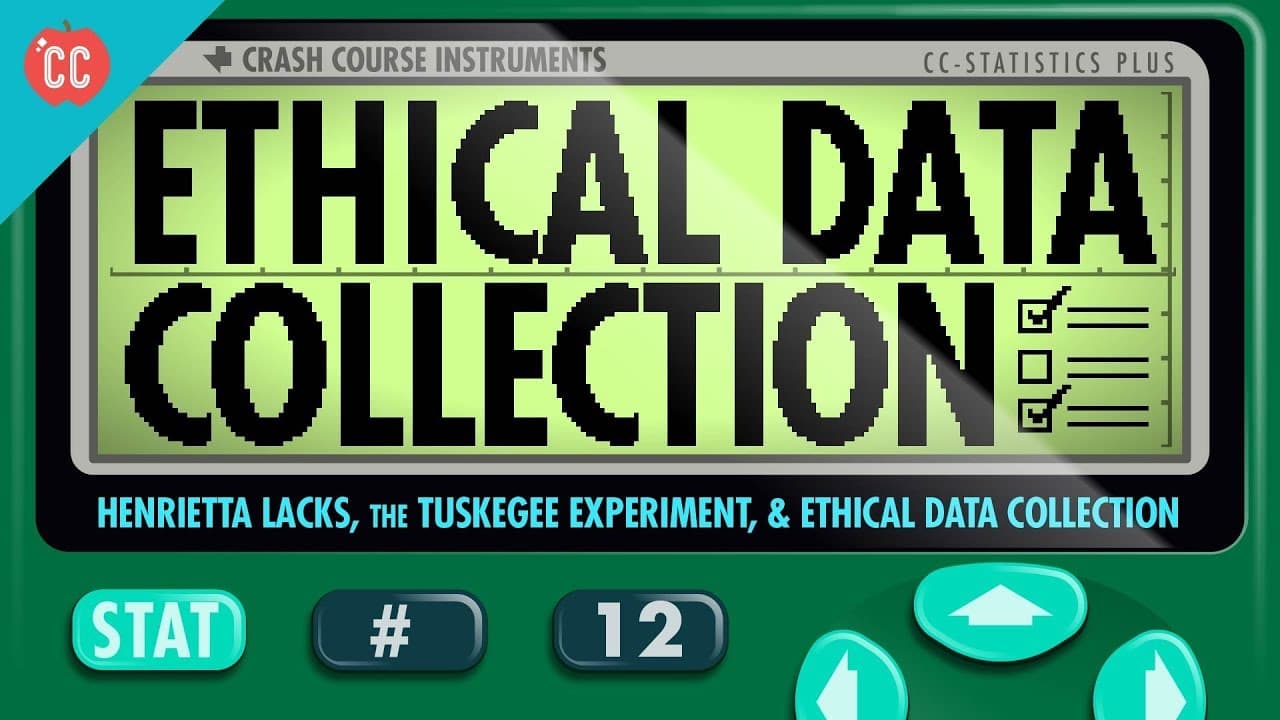
Ethical data collection is crucial to ensure that research does not harm participants. Historical cases like the Tuskegee Syphilis Study and Henrietta Lacks highlight the importance of informed consent and voluntariness. In the digital age, data mining raises new ethical questions about privacy and consent, paralleling past issues of coercion and lack of transparency.
Transcript
Hi, I’m Adriene Hill, and Welcome back to Crash Course, Statistics. Today we’re going to step back from sampling and regressions to talk about the impact of all that statistical gathering. We’ve seen that the interpretation of this information can have real lasting effects on our society, but its collection can also have lasting effects on the subj... Read More
Key Insights
- Ethical data collection requires informed consent and voluntariness from participants.
- The Tuskegee Syphilis Study showed the dangers of deception in research, as participants were not treated properly.
- Henrietta Lacks' cells were taken without consent, raising issues of autonomy and compensation.
- The Nuremberg Code established guidelines for ethical treatment of human subjects post-World War II.
- Institutional Review Boards (IRBs) ensure research is conducted ethically by overseeing study protocols.
- Digital data mining raises privacy concerns, as users often unknowingly consent to data collection.
- Informed consent in the digital age should be clear and understandable to all users, not just legal experts.
- Advances in technology necessitate ongoing discussions about ethical standards in data usage and privacy protection.
Install to Summarize YouTube Videos and Get Transcripts
Explore YouTube Video Summarizer or Get YouTube Transcript Extractor
Questions & Answers
Q: What are the ethical concerns in data collection?
Ethical concerns in data collection include ensuring informed consent, voluntariness, and minimizing harm to participants. Historical cases like the Tuskegee Syphilis Study and Henrietta Lacks highlight the importance of these principles. In the digital age, issues of privacy and data mining require updated ethical guidelines to protect individuals' rights.
Q: How did the Tuskegee Syphilis Study violate ethical standards?
The Tuskegee Syphilis Study violated ethical standards by misleading participants about their treatment and withholding effective treatment for syphilis. Participants were not informed of the study's true nature, nor were they given the option to withdraw, violating principles of informed consent and voluntariness.
Q: Why is informed consent important in research?
Informed consent is crucial because it respects participants' autonomy and ensures they understand the study's purpose, risks, and benefits. It allows individuals to make an educated decision about their involvement, safeguarding their rights and well-being, and is a fundamental ethical requirement in research.
Q: What role do Institutional Review Boards play in research?
Institutional Review Boards (IRBs) oversee research studies to ensure they meet ethical standards. They review study protocols to confirm that participants' rights and welfare are protected, focusing on informed consent, risk minimization, and voluntariness, thus safeguarding ethical integrity in research.
Q: How does data mining raise ethical issues?
Data mining raises ethical issues related to privacy and consent, as users often unknowingly agree to data collection through terms of service. This lack of transparency can lead to unauthorized use of personal information, necessitating clearer guidelines to ensure informed consent in digital contexts.
Q: What is the significance of the Nuremberg Code?
The Nuremberg Code, established post-World War II, provides ethical guidelines for human research. It emphasizes the necessity of voluntary participation, informed consent, and beneficence, setting foundational principles that continue to guide ethical research practices and protect participants' rights.
Q: How do historical cases like Henrietta Lacks impact modern research ethics?
Historical cases like Henrietta Lacks highlight the importance of informed consent and fair treatment in research. Her cells were used without consent, raising issues of autonomy and compensation. These cases drive the development of ethical standards to prevent exploitation and ensure respectful treatment of participants.
Q: What challenges do technological advances pose to research ethics?
Technological advances pose challenges to research ethics by introducing new privacy concerns and complexities in obtaining informed consent. The widespread use of digital platforms for data collection requires updated ethical guidelines to protect individuals' rights while balancing innovation and ethical responsibility.
Summary & Key Takeaways
-
Ethical data collection involves ensuring that research participants provide informed consent and that their participation is voluntary. Historical cases like the Tuskegee Syphilis Study and Henrietta Lacks' HeLa cells underscore the importance of these principles. The Nuremberg Code and Institutional Review Boards help uphold ethical standards in research.
-
In the digital age, data mining presents new ethical challenges related to privacy and consent. Users often unknowingly agree to data collection through terms of service agreements. Ethical considerations must evolve to address these issues, ensuring that consent is informed and voluntary even in digital contexts.
-
The parallels between historical unethical research practices and modern data mining highlight the need for clear ethical guidelines. As technology advances, society must decide how to apply research ethics to protect individuals' privacy and autonomy, balancing innovation with ethical responsibility.
Read in Other Languages (beta)
Share This Summary 📚
Summarize YouTube Videos and Get Video Transcripts with 1-Click
Try YouTube Summary with ChatGPT & Claude or YouTube Transcript Generator
Explore More Summaries from CrashCourse 📚





Summarize YouTube Videos and Get Video Transcripts with 1-Click
Try YouTube Summary with ChatGPT & Claude or YouTube Transcript Generator