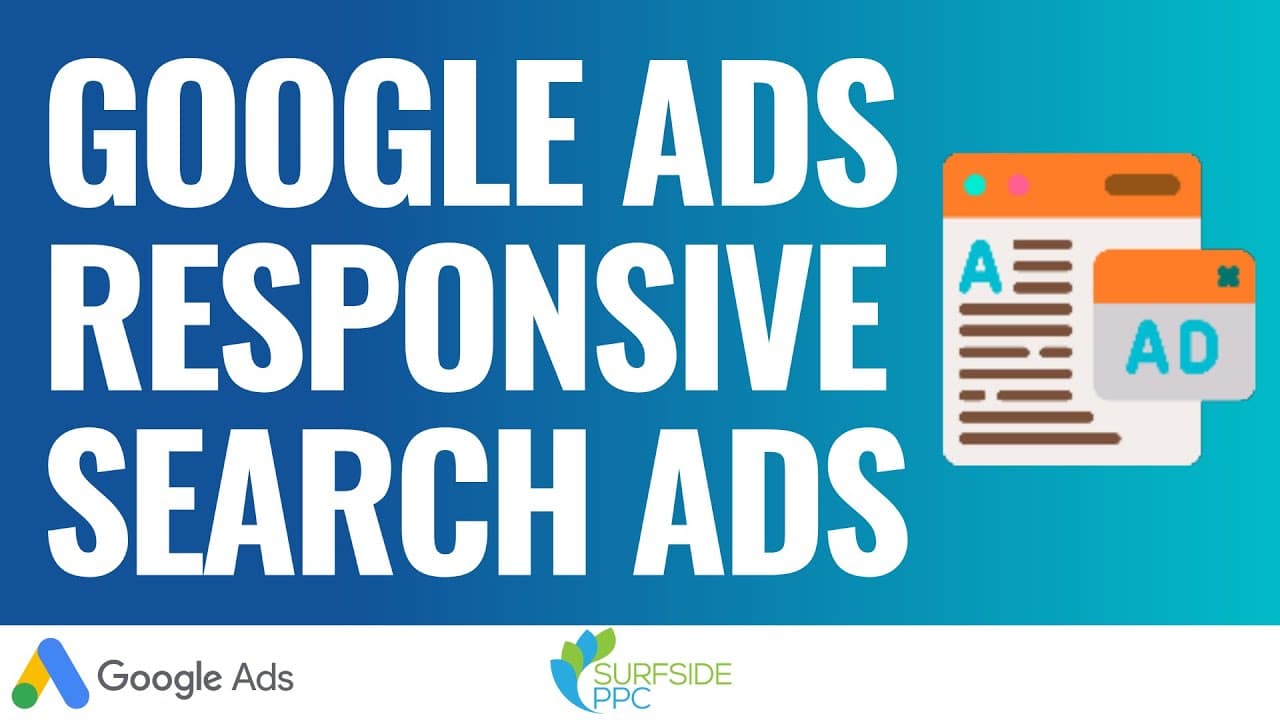
Google Ads Responsive Search Ads: Best Practices to Drive More Conversions
TL;DR
The best way to improve Google Ads responsive search ads is to make each ad highly relevant to its ad group, achieve good or excellent ad strength, and give Google multiple assets to test. Fill every headline slot, write unique headlines and descriptions, test two to three ads per ad group, and use conversion tracking with smart bidding. Read on for specific guidance on pinning, assets, broad match keywords, and negative keywords.
Transcript
today I'll be going through responsive search ads in Google ads so some best practices for creating your responsive search ads how to create good or excellent ad strength responsive search ads and basically everything you need to know about writing effective advertisements now to get started I'm going to go over some best practices here and some di... Read More
Key Insights
- 🫠 Ad strength in responsive search ads is an indicator, not used in the auction, but provides feedback on areas for improvement.
- 🫠 Testing multiple ads per ad group allows for meaningful comparisons and optimization.
- 🫠 Incorporating relevant assets, such as promotions and callouts, enhances ad effectiveness.
- 🫠 Pinning headlines can improve ad strength and aid in targeted messaging.
- ✋ Asset performance ratings help identify high-performing elements for optimization.
- 🍉 Smart bidding strategies, like maximize conversions or target CPA, contribute to long-term campaign success.
- 🫠 Broad match keywords and responsive search ads together maximize keyword reach and adaptability.
Install to Summarize YouTube Videos and Get Transcripts
Explore YouTube Video Summarizer or Get YouTube Transcript Extractor
Questions & Answers
Q: What are the best practices for Google Ads responsive search ads?
Create ads that closely match the keywords and subject of each ad group rather than reusing one advertisement across every group. Aim for good or excellent ad strength, test two to three responsive search ads per ad group, add relevant assets, and use conversion tracking with smart bidding.
Q: How can I achieve good or excellent responsive search ad strength?
Get checkmarks for all four recommendations: include popular keywords, add more headlines, make the headlines unique, and make the descriptions unique. Fill all available headline slots and review Google's suggestions for areas that can be improved.
Q: Does responsive search ad strength affect the Google Ads auction?
No. The transcript says Google does not use ad strength within the auction; it is feedback that identifies possible improvements, such as making headlines more unique.
Q: How many responsive search ads should I test per ad group?
Test two to three responsive search ads per ad group. This creates multiple options for comparing elements such as headlines, descriptions, and landing pages while optimizing the campaign over time.
Q: Which assets should I add to responsive search ads?
Add all assets relevant to the ad group, including site links, callouts, structured snippets, phone numbers, prices, promotions, lead forms, and app downloads. Ad-group-level assets can be matched to the specific keywords and offer being advertised.
Q: How should I pin headlines in responsive search ads?
Pin multiple relevant headlines to the same position instead of allowing only one headline to appear there. For example, the transcript pins four keyword-related headlines to position one so Google Ads can test those alternatives while keeping the targeted message in that position.
Q: Why should each ad match its ad group's keywords?
A responsive search ad should focus only on what its ad group targets, such as busy board toys or bath toys. This keeps the advertisement relevant to the search terms and directs traffic to a corresponding landing page with the goal of driving a conversion.
Q: How do broad match keywords, smart bidding, and responsive search ads work together?
Broad match keywords can match hundreds or thousands of related search terms, while responsive search ads select a suitable ad combination for each term. With conversion tracking enabled, smart bidding can optimize the campaign for conversions, and negative search keywords can exclude irrelevant searches as data accumulates.
Summary & Key Takeaways
-
Creating good or excellent ad strength is crucial for responsive search ads, with focus on unique headlines and descriptions.
-
Testing two to three responsive search ads per ad group allows for optimization and improved campaign results.
-
Incorporating all relevant assets, such as callouts, promotions, lead forms, and apps, enhances the effectiveness of responsive search ads.
Read in Other Languages (beta)
Share This Summary 📚
Summarize YouTube Videos and Get Video Transcripts with 1-Click
Try YouTube Summary with ChatGPT & Claude or YouTube Transcript Generator
Explore More Summaries from Surfside PPC 📚




Summarize YouTube Videos and Get Video Transcripts with 1-Click
Try YouTube Summary with ChatGPT & Claude or YouTube Transcript Generator