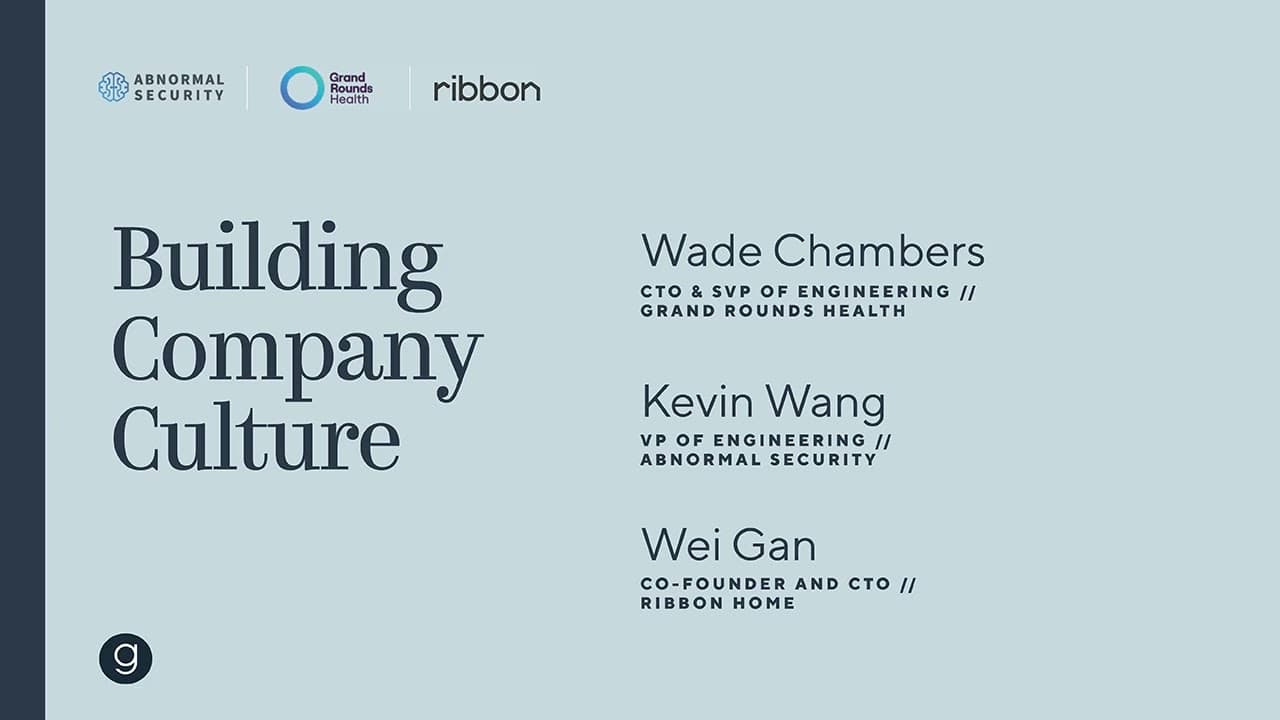
Wade Chambers, Kevin Wang and Wei Gan | Building Company Culture
TL;DR
Industry leaders discuss the importance of culture in organizations and share strategies for building and maintaining a strong company culture.
Transcript
hi everyone and welcome to today's episode of gray matter i'm pleased to be joined today by wade chambers kevin wang and way gone we're going to have a fascinating conversation covering company and engineering culture and leadership guys welcome to gray matter i want to start by having the three of you introduce yourselves and while you work at dif... Read More
Key Insights
- 💦 Culture is an essential aspect of organizational success, impacting how people work together and drive the company's mission.
- 💪 Cultural values should be codified and reinforced through rituals, artifacts, and leadership behavior to create a strong and aligned culture.
- 😤 Building diverse and inclusive teams requires conscious efforts, including sourcing talent from diverse backgrounds, promoting diverse leaders, and creating an inclusive and equitable environment.
- 😤 Different teams may have unique cultural norms and practices, but they should still align with and reinforce the company's overall culture.
Install to Summarize YouTube Videos and Get Transcripts
Explore YouTube Video Summarizer or Get YouTube Transcript Extractor
Questions & Answers
Q: How do you define culture?
Culture is the shared way of life for a group of people within an organization, shaped by their beliefs, behaviors, and shared experiences. It includes how they do things and the observable norms and values that attract the right people to the company.
Q: How can companies ensure their culture reflects their mission and values?
Companies can define and codify their core beliefs and values, making them explicit and consistently reinforcing them through rituals, artifacts, and leadership behavior. It is also crucial to regularly evaluate and adapt cultural norms to ensure alignment with the changing needs of the business and market.
Q: How do you assess culture fit in the hiring process?
Assessing culture fit involves evaluating a candidate's alignment with the company's mission and values. This can be done by asking open-ended questions about their beliefs, past experiences, and approach to work. Reviewing their language and the way they talk about past experiences can provide insights into their cultural alignment.
Q: How can companies foster diversity and inclusion within their culture?
Companies can prioritize diversity and inclusion as a business imperative, not just a moral obligation. They can invest in sourcing talent from diverse backgrounds and make sure diverse leaders are represented in positions of power. Transparency, equity, and inclusion in decision-making and rituals can help create an environment where everyone feels valued and included.
Summary
In this video, Wade Chambers, Kevin Wang, and Way Gong discuss company and engineering culture and leadership. They delve into topics such as defining culture, the different levels of culture, designing foundational beliefs and values, determining cultural fit in the hiring process, and fostering diversity and inclusion in teams.
Questions & Answers
Q: How do you define culture?
Culture can be loosely defined as the way of life for a group of people and how they interact. It encompasses shared experiences, beliefs, and behaviors. A strong culture can be a powerful force that attracts the right people to a company and helps it move forward. On the other hand, a poor culture can be toxic and hinder the company's progress. It is important to consciously and purposefully shape the culture based on the company's foundational beliefs and business goals.
Q: Can you explain the different levels of culture?
There are three levels of culture: observable, transactional, and foundational. The observable level includes the visible aspects of culture, such as dress code, office environment, and company perks. The transactional level involves the unspoken rules and ways of getting things done within the organization. It encompasses decision-making processes, team structures, and norms. The foundational level represents the core beliefs and differentiation of the company. It defines the competitive advantage and drives the transactional and observable levels of culture. It is important to ensure all three levels align and reinforce each other.
Q: How do you design foundational beliefs and values for a company?
Designing foundational beliefs and values involves making them conscious and explicit. This can be done through new employee orientations, where key beliefs and values are explained and emphasized. It is important to walk the talk and lead by example to reinforce the desired culture. Object lessons, such as reinforcing the importance of frugality by not flying business class, can also help. Foundational beliefs should be periodically evaluated and adapted as the company grows and faces new challenges. It is crucial to understand the business and identify the beliefs and values that will provide a competitive advantage.
Q: How do you determine cultural fit in the hiring process?
Cultural fit can be assessed by understanding a candidate's alignment with the company's foundational beliefs and values. This can be done through open-ended questions that reveal their thought process, including their previous experiences and mindset. For example, asking about a time they didn't meet a customer's expectations can provide insights into their customer orientation and empathy. Additionally, paying attention to their language choices, such as using "I" versus "we," can signal their alignment with the company culture. It is important to train interviewers on what to look for and avoid making subjective judgments based on personal preferences.
Q: How do you make culture a positive, energy-creating discipline in the company?
To make culture a positive force, it needs to be seen as a carrot rather than a stick. One approach is to highlight and celebrate examples of cultural bar-raising behaviors. This can be done through regular stand-down calls or all-hands meetings where individuals and teams are commended for embodying the desired culture. Sharing customer success stories and emphasizing the impact the company has on people's lives can also help reinforce the positive aspects of culture. Involving the entire company in the process and providing clear guidelines and examples of cultural norms can make it more tangible and achievable for everyone.
Q: How do you foster diversity and inclusion in teams as the organization scales?
Fostering diversity and inclusion requires making it a business imperative, not just a moral imperative. It is important to recognize that diversity enhances talent and brings different perspectives and approaches to problem-solving. To attract diverse talent, companies should consider expanding their hiring pool to different geographies and actively seek out individuals from underrepresented backgrounds. Having leaders who reflect the desired diversity can also help create a more inclusive environment. Pay equity and inclusion efforts are also necessary to support diversity in the long term. Regular communication and celebration of diversity achievements can further reinforce the importance of inclusion in the culture.
Summary & Key Takeaways
-
Culture is the way of life for a group of people within an organization, shaped by shared experiences, beliefs, and behaviors.
-
Culture can be a powerful force when it aligns with the company's mission and values, but it can also become toxic if not intentionally managed.
-
Building a strong culture requires conscious effort, understanding the business's needs, and continuously evaluating and adapting cultural norms.
Read in Other Languages (beta)
Share This Summary 📚
Summarize YouTube Videos and Get Video Transcripts with 1-Click
Try YouTube Summary with ChatGPT & Claude or YouTube Transcript Generator
Explore More Summaries from Greymatter Podcast (Audio) 📚


Summarize YouTube Videos and Get Video Transcripts with 1-Click
Try YouTube Summary with ChatGPT & Claude or YouTube Transcript Generator