Why Cramer Says Own Nvidia, Don't Trade It
TL;DR
Own Nvidia, don't trade it. Cramer argues selling any Magnificent 7 stock out of fear is historically a mistake, citing his own loss on Google, which he sold over antitrust worries only to leave a double on the table. Despite Alphabet's Broadcom-made chips and Meta reportedly buying them, Nvidia's problems look surmountable.
Transcript
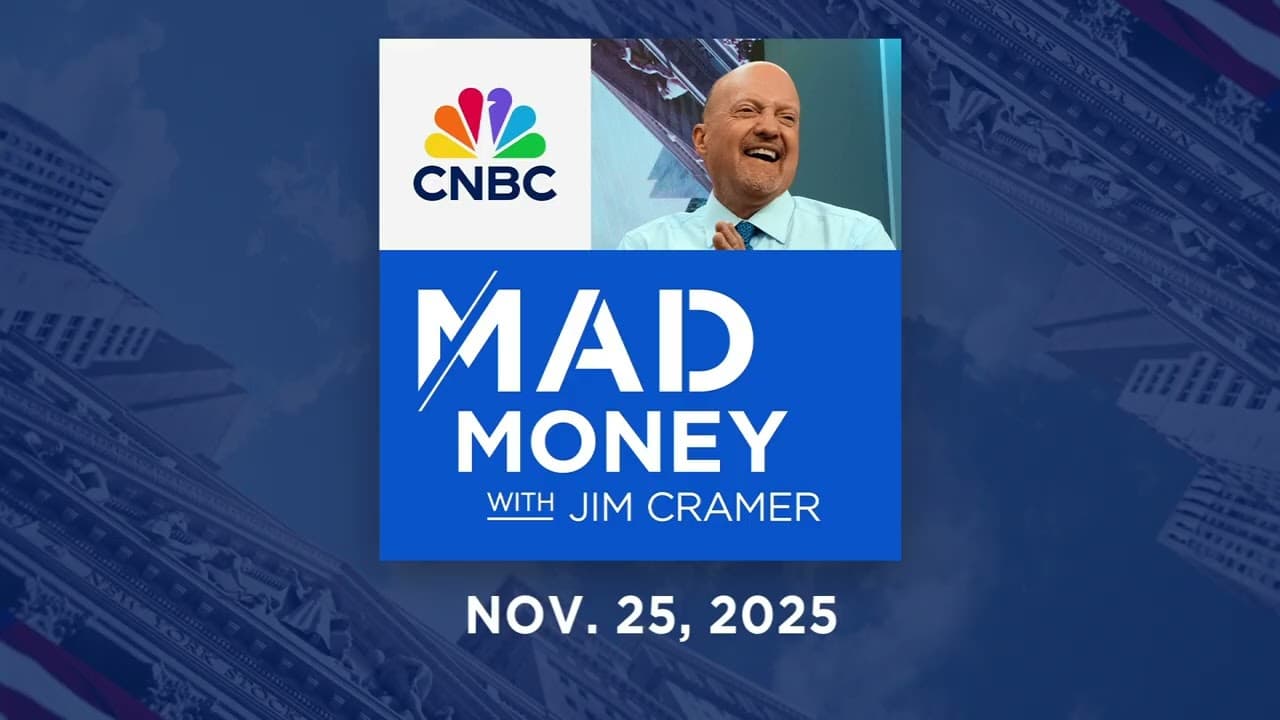
Hey, I'm Kramer. Welcome to Mad Money. Welcome to Craig Friends. I'm just trying to make a little money here. My job is not just entertain, but I'm teaching tonight. So, call me 1800 743 CBC. Tweet me Jim Kmer. You either believe in artificial intelligence or you should just stay away. Don't buy. Don't buy. You trust Nvidia and Jensen Wong or you c... Read More
Key Insights
- Trust is the core of Cramer's investing logic: you should never buy a stock you don't trust enough to buy more of on weakness, and fear-driven selling on the way down and buying on the way up is a terrible strategy.
- The Magnificent 7 (Alphabet, Amazon, Apple, Meta, Microsoft, Nvidia, Tesla) reached trillion-dollar status through bountiful profits and by not missing quarters, which is why Cramer refuses to kick them out when they are down.
- Nvidia's stock fell from 212 at the end of October to 186 before its quarter, then dropped to 180 after reporting, and further to 177 today (down $4.73), trading as low as 169 on the Meta news.
- Alphabet is deemphasizing Nvidia's chips by relying on its own chips made by Broadcom, and Meta, a competitor, is reportedly contracting with Alphabet to buy those same chips at a considerable savings.
- Broadcom CEO Hock Tan sits on Meta's board, which Cramer notes could enable a license agreement including Broadcom, the general contractor for Google's chips, in any Meta-Google chip deal.
- Tesla demonstrates how a stock can morph while the company stays the same: after falling from the 400s to the 200s as a hammered EV maker, it became a self-driving and robot play once Elon Musk changed the narrative and regained nearly all lost points.
- Cramer's Google sale is his cautionary tale: he sold over antitrust fears and Gemini cannibalization worries, but the judge blessed the company (including a $20 billion payment to Apple to be sole built-in search provider) and Gemini enhanced search margins instead.
- Cramer categorically rejects short-seller claims that Nvidia is the next Enron or linked to fraudulent accounting, calling them absurd and dubious, and says Nvidia's near-term concerns are real but not insurmountable.
Install to Summarize YouTube Videos and Get Transcripts
Explore YouTube Video Summarizer or Get YouTube Transcript Extractor
Questions & Answers
Q: Why does Cramer say to own Nvidia rather than trade it?
Cramer says historically it has been a bad idea to dump any of the Magnificent 7 out of fear. He points to his own mistake selling Google over antitrust worries and Gemini cannibalization fears, only to see the judge bless the company and leave a double on the table. He believes Nvidia's near-term concerns, while valid, are not insurmountable and remind him of the same doubts he heard all the way up from when Nvidia was a several-hundred-billion-dollar company to its $4 trillion size today.
Q: How far has Nvidia's stock price fallen recently?
Nvidia traded at 212 at the end of October. It was at 186 before its quarter, then fell to 180 after its report despite what seemed like a bang-up quarter. Today it dropped further to 177 on Meta news, down $4.73, and fell as low as 169 during the session. Cramer describes it as 'injured reserve style banged up' and calls the decline the house of pain, noting that from 212 down to 169 is quite an amount of loss.
Q: Why is Alphabet stock hot while Nvidia stock is ice cold?
Alphabet is deemphasizing Nvidia's chips by relying on its own chips made by Broadcom, which are reportedly so good that competitor Meta is said to be contracting with Alphabet to get them, perhaps to replace Nvidia's high-price semiconductors. Alphabet had been a huge client of Nvidia, and press reports say it will adopt its own chips far more. This news, plus a report that Meta will buy the same chips from Google at a considerable savings, drove Alphabet up while Nvidia sold off hard.
Q: What role does Broadcom play in the Meta and Google chip story?
Broadcom is the general contractor for Google's chips. Cramer notes there could be a license agreement that includes Broadcom in any Meta-Google chip deal, especially because Broadcom CEO Hock Tan sits on Meta's board. Cramer previously took profits from selling Google and invested them in Broadcom, which he says has been a really outstanding performer, making it the one reason he is not kicking himself for having exited Google too early.
Q: What is Cramer's view on Disney as a buy, sell, or hold?
Cramer rates Disney a hold. He says it is too cheap to give away, but he felt higher prices where he wanted to sell it. He suggests the stock could go to 95, and maybe he would take a look there. He warns that Disney does not have the earnings: it had a quarter everyone thought was good yet the stock was hated, so if it reports a not-great quarter, he says look out.
Q: What does Cramer think about Sirius XM as an investment?
Cramer is cautious on Sirius XM. Responding to a caller who noted its decent cash flow, good dividend, and a big investor gobbling up a third of its shares, Cramer said you need more car sales and more growth in used cars before you can load the boat up. That dependence on the car market is the problem holding the stock back, so he is not ready to recommend buying it aggressively.
Q: How did Tesla's stock change even though the company stayed the same?
Tesla was a car company whose stock rallied as a car company, then got hammered repeatedly as electric vehicle competition intensified, falling from the 400s to the 200s early this year. Then the same stock morphed into a chit in the great game of self-driving and robots when CEO Elon Musk changed the narrative and the street bought it. That perception shift let the stock regain almost all its lost points even though it is pretty much the same company with the same declined EV profits.
Q: How does Cramer respond to claims that Nvidia is the next Enron?
Cramer calls the claim categorically absurd. He says short sellers are circulating what he regards as dubious condemnations, including linking Nvidia to companies with fraudulent accounting that amounted to a criminal enterprise. He refuses to even dignify the bogus accounting charges with a response, though he wishes Nvidia had alluded to them. He separates these baseless accusations from Nvidia's legitimate near-term concerns, which he acknowledges have some validity but believes are not insurmountable.
Summary & Key Takeaways
-
Cramer opens by arguing that AI investing comes down to trust: either you believe in artificial intelligence, Nvidia, and Jensen Huang, or you should stay away and own drug, food, or rail stocks. He stresses you should never buy a stock unless you trust it enough to buy more on weakness.
-
The Magnificent 7 (Alphabet, Amazon, Apple, Meta, Microsoft, Nvidia, Tesla) earned their lofty trillion-dollar status through bountiful profits and by not missing quarters. Cramer, a growth-stock believer, keeps returning to these hyperscalers because they are turbocharged with resources that his other holdings lack.
-
Nvidia stock got hammered as Alphabet leaned on its own Broadcom-made chips and Meta reportedly moved to buy them cheaply, falling from 212 to as low as 169. Cramer says own it, don't trade it, comparing the fear to his mistaken Google sale.
Read in Other Languages (beta)
Share This Summary 📚
Summarize YouTube Videos and Get Video Transcripts with 1-Click
Try YouTube Summary with ChatGPT & Claude or YouTube Transcript Generator
Explore More Summaries from CNBC Television 📚

Summarize YouTube Videos and Get Video Transcripts with 1-Click
Try YouTube Summary with ChatGPT & Claude or YouTube Transcript Generator