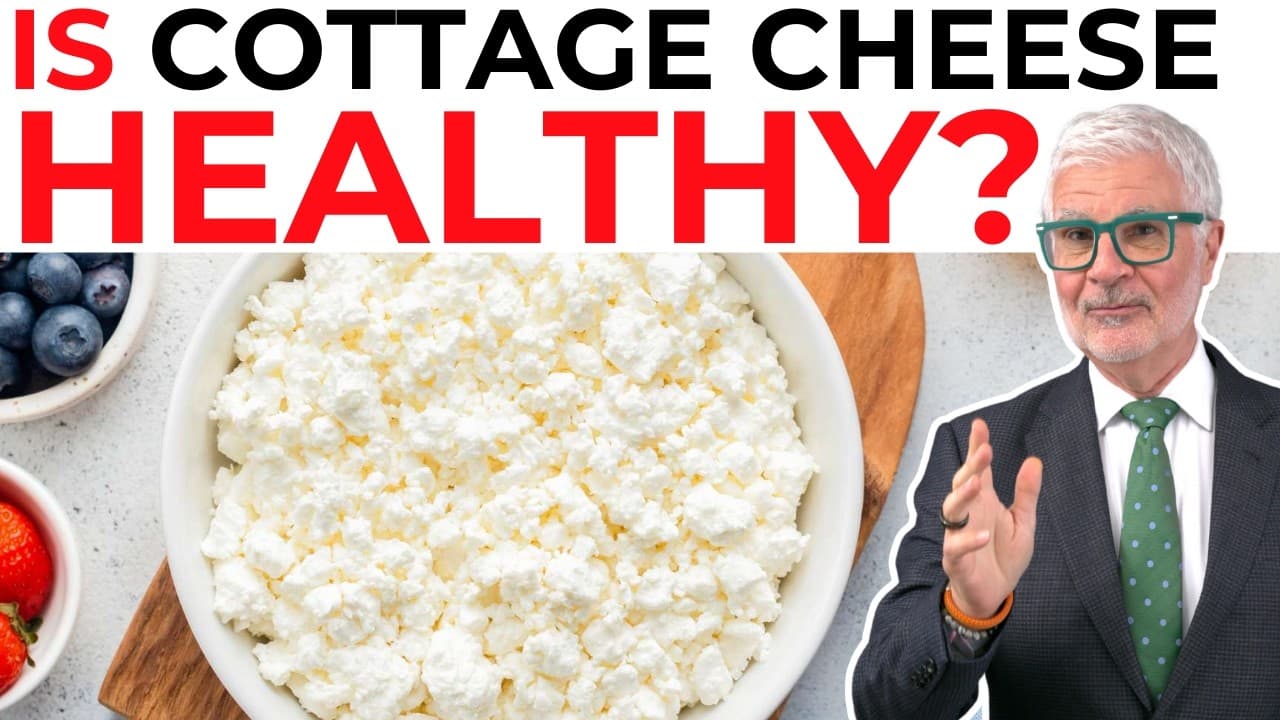
How Healthy Is Cottage Cheese for Protein?
TL;DR
Cottage cheese offers protein but may carry inflammation risks for some people due to A1 casein and Neu5Gc. Fermented or cultured cottage cheese reduces Neu5Gc, making it a safer option, while added sugars and high saturated fats in some brands can negate benefits. For protein needs, prefer whole foods and consider alternatives like eggs, wild salmon, or fermented cheeses for gut health.
Transcript
- Let's talk about cottage cheese. Wow, cottage cheese is everywhere right now. People are blending it into wraps, turning it into bagels, even making ice cream out of it. And why? Because it's being hailed as a low-calorie protein powerhouse. But is it really the health food everyone claims it to be? Let's get into it. All right , what is cottage ... Read More
Key Insights
- Cottage cheese is produced by curdling milk and separating curds from whey, which gives its chunky texture.
- A1 casein can act as an inflammatory trigger and may cause gut issues in some people, making A2 or fermented options preferable for sensitive individuals.
- Neu5Gc is a sugar molecule in dairy that can provoke inflammation and long-term immune responses in some people.
- Fermentation eats Neu5Gc and produces dairy products with reduced Neu5Gc content, offering a potentially safer option.
- Protein from dairy is not necessarily wasted if consumed in Whole, slowly digested forms rather than pre-digested powders.
- Many Americans consume more protein than USDA recommendations, and excess protein can be converted to sugar via gluconeogenesis.
- Brain health relies on specific fats, including DHA and arachidonic acid, which can be found in eggs and certain fish.
- Best practice is to choose cultured cottage cheese or alternatives like fermented cheeses to minimize health risks while maintaining protein intake.
Install to Summarize YouTube Videos and Get Transcripts
Explore YouTube Video Summarizer or Get YouTube Transcript Extractor
Questions & Answers
Q: What is cottage cheese and how is it made?
Cottage cheese starts with milk from cows, goats, or sheep. The milk is lightly heated and mixed with an acid or rennet which causes curdling. The curds are separated from the liquid whey, then cut, heated, and stirred to expel whey. The curds are rinsed and salted to create the characteristic texture. This basic process explains why cottage cheese has its lumpy appearance and variable texture depending on processing.
Q: Why might cottage cheese cause inflammation for some people?
Some people react to A1 casein found in many cow milk products, which can trigger inflammation and possibly gut issues like leaky gut or autoimmune responses. The transcript notes A1 casein as an inflammatory trigger and contrasts it with goat or sheep dairy options, suggesting individual tolerance varies and that A1 can be a problem for some individuals.
Q: What is Neu5Gc and why is it mentioned in relation to cottage cheese?
Neu5Gc is a sugar molecule present in cow, goat, and sheep milk that can cause inflammation and has been linked to chronic diseases. When consumed, it can lead to antibody formation against Neu5Gc and promote long-term inflammatory responses. Fermentation is described as a method that eats Neu5Gc, reducing its presence in dairy products.
Q: How can you reduce Neu5Gc in cottage cheese?
Fermented cheeses and cultured cottage cheeses are described as safer options because fermentation eats Neu5Gc. Choosing fermented or cultured forms of cottage cheese minimizes the Neu5Gc content, potentially reducing inflammatory risk while still providing dairy protein and texture people enjoy.
Q: Are there recommended protein sources besides cottage cheese?
Yes, the transcript suggests pasture-raised eggs as a good protein source, offering complete protein plus choline and arachidonic acid for brain health. Wild-caught salmon and shellfish are also recommended for protein and healthy fats, while plant-based options like hemp seeds and sardines can be included for variety.
Q: What is the issue with high protein intake according to the transcript?
The transcript argues that many Americans eat more protein than USDA recommendations, with 82 percent of consumed protein potentially converted to sugar via gluconeogenesis if not used for tissue repair or muscle building. It emphasizes that excess protein does not equate to extra usable protein and can impact metabolism.
Q: What should someone avoid in cottage cheese recipes?
Avoid using cottage cheese made with casein A-1 dairy, high sodium, or added sugars in recipes like wraps or bagels. The transcript recommends alternatives such as lettuce wraps or cassava and almond flour wraps, and suggests considering cultured options to minimize health risks while preserving taste and texture.
Q: What are better alternatives if you love the texture of cottage cheese?
If cottage cheese flavor and texture are appealing but you want to avoid health risks, the transcript suggests fermented cottage cheese as a safer option, using Parmesan for crackers and wraps, and exploring recipes from the creator’s books. It also recommends checking product labels for additives and choosing cultured or lower-sugar options.
Summary & Key Takeaways
-
Cottage cheese is made from milk and curds, with the curds forming the chunky texture while whey is mostly drained away, and texture varies by processing.
-
The health debate centers on A1 casein inflammation and Neu5Gc, which may contribute to gut and inflammatory issues in some individuals.
-
Fermentation can negate Neu5Gc, making fermented cottage cheese a safer option, while added sugars and high saturated fat can reduce health benefits.
-
Protein is not stored efficiently from excess intake, and gluconeogenesis can convert extra protein to sugar, impacting how much protein is actually utilized.
-
Pasture-raised eggs and wild-caught fish are recommended as strong protein sources with brain-supporting fats.
-
Skinny or flavored cottage cheese may contain added sugars and higher sodium, which can undermine benefits.
-
Alternative wraps and recipes can replace high-sodium cottage cheese dishes with healthier options.
-
Overall, balance dairy intake with individual tolerance and prefer cultured options when possible.
Read in Other Languages (beta)
Share This Summary 📚
Summarize YouTube Videos and Get Video Transcripts with 1-Click
Try YouTube Summary with ChatGPT & Claude or YouTube Transcript Generator
Explore More Summaries from The Dr. Gundry Podcast 📚





Summarize YouTube Videos and Get Video Transcripts with 1-Click
Try YouTube Summary with ChatGPT & Claude or YouTube Transcript Generator