How Do Antidepressants Work to Treat Depression?
TL;DR
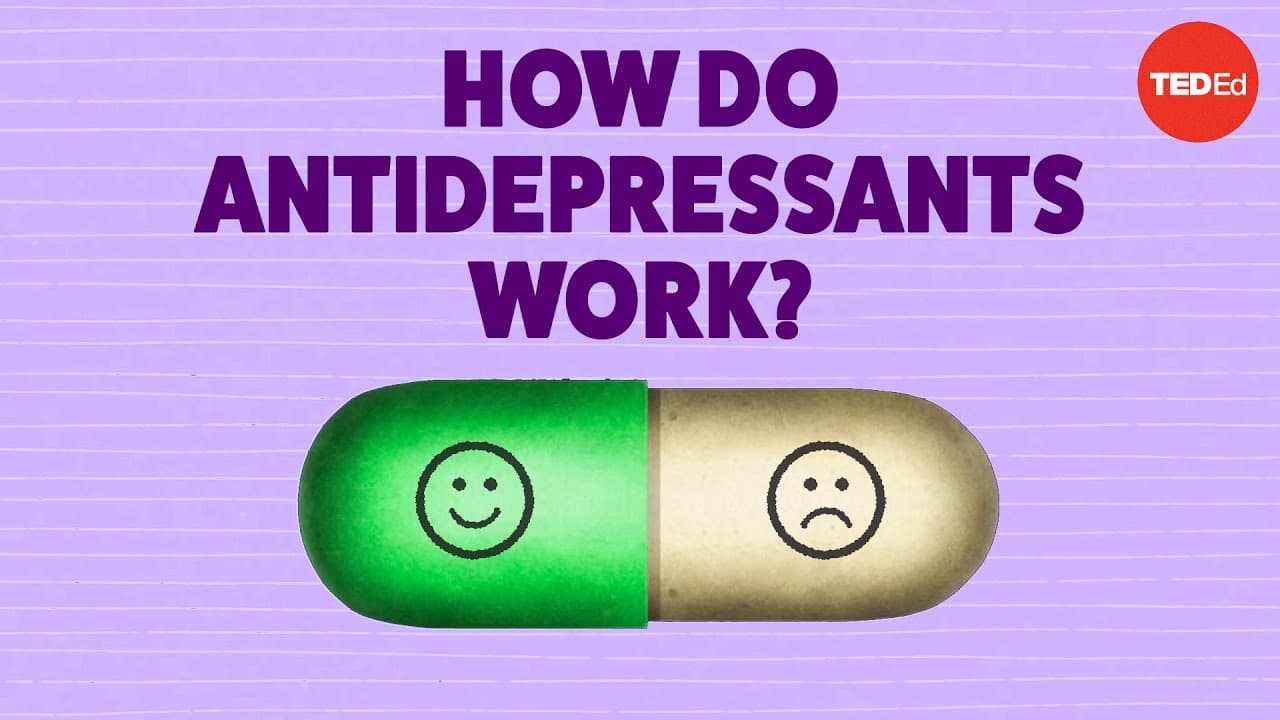
Antidepressants work primarily by altering neurotransmitter levels in the brain, specifically targeting monoamines like serotonin. While older drugs affected multiple neurotransmitters often causing side effects, SSRIs like Prozac focus on serotonin and offer fewer side effects. Despite their effectiveness, the exact mechanisms of how antidepressants alleviate depression symptoms remain unclear.
Transcript
In the 1950s, the discovery of two new drugs sparked what would become a multibillion dollar market for antidepressants. Neither drug was intended to treat depression at all— in fact, at the time, many doctors and scientists believed psychotherapy was the only approach to treating depression. The decades-long journey of discovery that followed... Read More
Key Insights
- 💱 The discovery of antidepressants by chance in the 1950s revolutionized our understanding of depression and changed the treatment landscape.
- 🥶 Older antidepressants targeted various monoamines, leading to side effects. SSRIs, which specifically act on serotonin, are more targeted and have fewer side effects.
- 🧑🏭 The chemical imbalance theory is an incomplete explanation for depression, as not all drugs that treat depression act on serotonin alone.
- ❓ The exact causes of depression and the mechanisms of antidepressants are still not fully understood.
- 👋 Combining psychotherapy with medication often yields the best results for treating depression.
- 🆘 The marketing efforts surrounding Prozac helped reduce the stigma and culture of blame associated with depression.
- 🥺 SSRIs became the go-to treatment for depression in the 1990s, leading to a decline in other treatments like psychotherapy.
Install to Summarize YouTube Videos and Get Transcripts
Explore YouTube Video Summarizer or Get YouTube Transcript Extractor
Questions & Answers
Q: How were the first antidepressant drugs discovered?
Ipronaizid and imipramine, initially intended for tuberculosis and allergic reactions respectively, were found to improve the moods of patients diagnosed with depression during clinical trials in the 1950s.
Q: What is the chemical imbalance theory of depression?
The theory suggests that depression is caused by having insufficient monoamines, such as serotonin, in the brain's synapses. Antidepressants were developed to restore the balance by increasing the availability of monoamines.
Q: How have newer antidepressants, like SSRIs, improved the treatment of depression?
SSRIs, such as Prozac, specifically target serotonin reuptake, increasing its availability in the brain. They are more effective and have fewer side effects compared to older antidepressants, leading to an increase in their usage.
Q: Do antidepressants work for everyone?
While many people respond well to antidepressants, not everyone does. Some individuals may respond better to drugs that act on other neurotransmitters, and others may not respond to medication at all. A combination of psychotherapy and medication is often more effective than either alone.
Summary & Key Takeaways
-
In the 1950s, two drugs intended for tuberculosis and allergic reactions were found to improve the moods of patients diagnosed with depression.
-
These discoveries led to the chemical imbalance theory, suggesting that depression is caused by insufficient monoamines in the brain.
-
Selective Serotonin Reuptake Inhibitors (SSRIs), like Prozac, became popular in the 1980s due to their effectiveness and fewer side effects compared to older antidepressants.
Read in Other Languages (beta)
Share This Summary 📚
Summarize YouTube Videos and Get Video Transcripts with 1-Click
Try YouTube Summary with ChatGPT & Claude or YouTube Transcript Generator
Explore More Summaries from TED-Ed 📚

Summarize YouTube Videos and Get Video Transcripts with 1-Click
Try YouTube Summary with ChatGPT & Claude or YouTube Transcript Generator