Why Bitcoin Miners Are Pivoting to AI Compute
TL;DR
Bitcoin mining companies are adding AI compute to their business models because they can build and energize data centers rapidly and already hold access to land and power. CleanSpark's CEO says blending interruptible mining loads with always-on AI data centers gives utilities the flexibility they need while diversifying miner revenue as mining rewards shrink.
Transcript
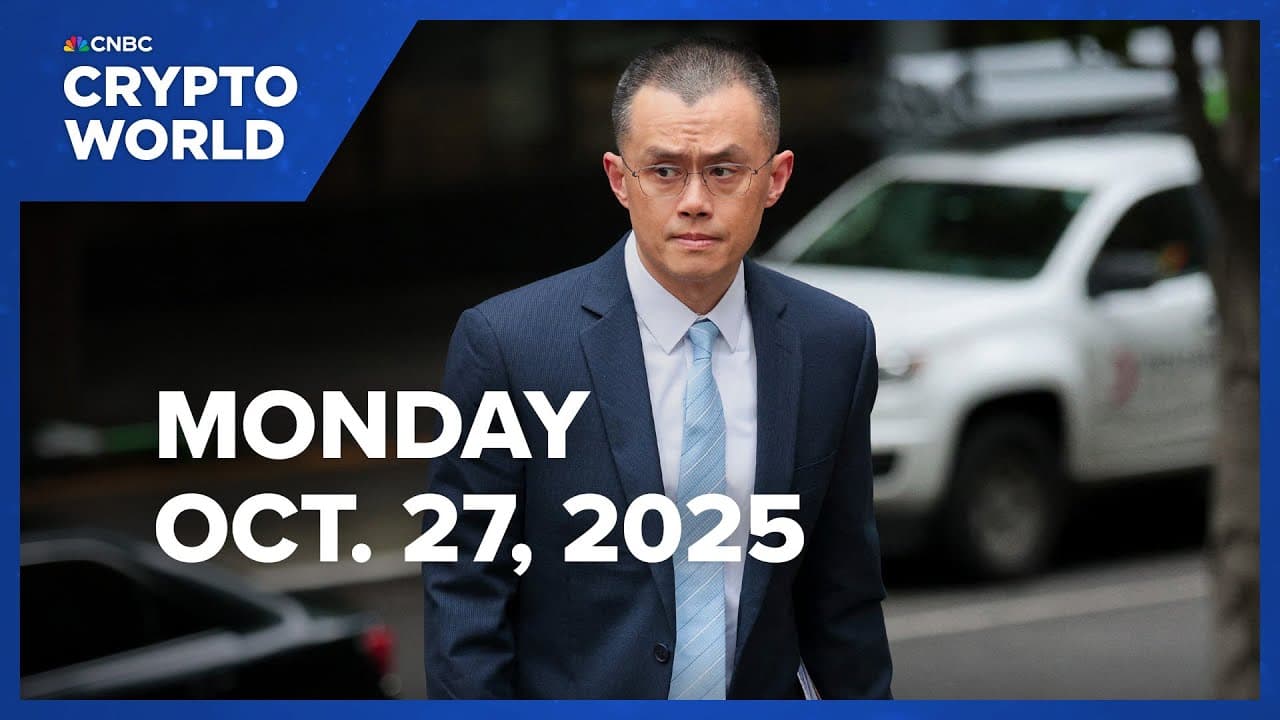
Today, cryptocurrencies rise as we kick off a key week of earnings and trade talks. Democratic senators court their colleagues to pass a resolution condemning the pardon of Shangpang Xiao. And CleanSpark CEO Matt Schultz breaks down the Bitcoin mining company's pivot to AI. Welcome to CNBC's Crypto World. I'm Jordan Smith. Digital currencies are ge... Read More
Key Insights
- Bitcoin miners are uniquely positioned to pivot into AI because they can build out and energize data centers very rapidly, and the main constraint on AI capacity right now is access to power, not demand.
- CleanSpark is moving away from being a pure-play Bitcoin miner and introducing AI compute, running a dual-track strategy that maximizes mining value while using its land and power access to provide AI data center services.
- Bitcoin mining is an interruptible load: miners receive a signal from the utility when grid demand rises and can curtail their load and push power back rapidly, helping utilities manage rolling brownouts and blackouts.
- AI data centers are the opposite of mining loads because their service agreements require near-continuous uptime, so blending mining with AI gives utilities both stability of demand and the flexibility to curtail power when needed.
- CleanSpark used its mined Bitcoin treasury as collateral for a Bitcoin-backed revolving line of credit, avoiding continual dilution and convertible debt while funding infrastructure and retiring the obligation with cash flows.
- The pivot to AI is becoming an industry-wide trend, driven by falling mining rewards and rising power costs, pushing miners to add AI compute rather than remain pure-play operations.
- Companies that pivoted to AI earliest generally had less efficient mining fleets, making it logical to repurpose their land and power assets toward higher-value AI compute.
- Democratic senators are circulating a resolution condemning President Trump's pardon of Binance founder Changpeng Zhao, aiming to pass it by unanimous consent as a largely symbolic statement of disapproval.
Install to Summarize YouTube Videos and Get Transcripts
Explore YouTube Video Summarizer or Get YouTube Transcript Extractor
Questions & Answers
Q: Why are Bitcoin miners pivoting to AI compute?
Bitcoin miners are pivoting to AI compute because they are uniquely positioned to build out and energize data centers very rapidly, and the primary constraint on AI capacity is access to power rather than demand. CleanSpark's CEO notes hyperscalers are spending a large share of their free cash flow to keep up with AI, while miners already hold the land and power access needed. Falling mining rewards and rising power costs add further pressure to diversify beyond pure-play mining.
Q: What is CleanSpark's dual-track strategy?
CleanSpark's dual-track strategy means maximizing the value of its Bitcoin mining operations while simultaneously using its access to land and power to provide AI data center services. The company started as an energy company, shifted to become a pure-play Bitcoin miner, and is now reintroducing AI compute. The CEO says this dual approach offers the most appealing cash flows and profitability for shareholders, rather than abandoning mining entirely, which remains a major part of the business.
Q: How does interruptible Bitcoin mining help utilities?
Bitcoin mining is an interruptible load, meaning miners receive a signal from the utility when grid demand increases and can curtail their operations and push power back very rapidly. A utility principal in Georgia told CleanSpark that adding flexibility to the grid could solve the vast majority of rolling brownouts and blackouts that challenge many utilities. During Hurricane Helen, a CleanSpark facility curtailed its load and sent power back, restoring the hospital's electricity while community infrastructure was repaired.
Q: Why blend Bitcoin mining with AI data centers?
Blending Bitcoin mining with AI data centers combines two opposite load types into an ideal utility partner. Mining is interruptible and flexible, letting operators curtail power when the grid needs it, while AI data centers require near-continuous uptime under their service agreements. Combining them gives utilities both the stable, predictable demand of AI and the flexibility of mining that utilities desperately need, making the paired facility what CleanSpark's CEO calls the perfect customer for power providers.
Q: How does CleanSpark manage rising power costs?
CleanSpark manages rising power costs by treating Bitcoin mining as a uniquely flexible, interruptible load that can curtail consumption when grid demand and prices spike. The company also emphasizes fleet efficiency, saying its mining machines now consume roughly half the power per unit of work compared to a cycle or so ago, letting it mine substantially more Bitcoin for the same energy. This efficiency and flexibility help sustain strong gross margins despite increasing power expenses.
Q: How did CleanSpark finance its infrastructure buildout?
CleanSpark financed its infrastructure by using its self-mined Bitcoin treasury as collateral for a Bitcoin-backed revolving line of credit. Rather than relying on continual share dilution or repeated convertible debentures, the company taps this secured credit line to fund operating and capital expenditures, then uses its cash flows to retire the obligation. The CEO says this approach created a phenomenally strong balance sheet and demonstrates that Bitcoin mining can operate at industrial scale with a focus on capital stewardship.
Q: What are the senators' objections to the Binance founder's pardon?
Democratic Senators Adam Schiff and Elizabeth Warren object to President Trump's pardon of Binance founder Changpeng Zhao, calling on Congress to stop what they describe as blatant corruption. Their letter states that while Zhao was CEO, Binance facilitated one of the most prolific money-laundering operations in history, allowing funds to flow to child abusers, narcotics dealers, and terrorist organizations without filing suspicious activity reports. They also allege the pardon followed Zhao's reported work brokering deals with Trump family crypto companies.
Q: Who is Trump's new pick for CFTC chair?
President Trump's new nominee for CFTC chair is Michael Selig, who announced the nomination on X and pledged to help make the United States the crypto capital of the world. Selig had worked under SEC Chair Paul Atkins as chief counsel of the agency's crypto task force. The nomination came after Trump pulled the earlier nomination of former CFTC Commissioner Brian Quintenz. White House AI and Crypto Czar David Sacks welcomed Selig, praising his passion for modernizing US crypto regulation.
Summary & Key Takeaways
-
Cryptocurrencies rose as markets opened a week of key earnings and a Fed rate decision, with positive signs that the US and China could reach a trade truce. Bitcoin, Ether, and XRP all gained. President Trump also announced a new nominee for CFTC chair, Michael Selig, who pledged to make the US the crypto capital of the world.
-
Democratic Senators Adam Schiff and Elizabeth Warren invited colleagues to join a resolution condemning Trump's pardon of Binance founder Changpeng Zhao. The letter said Binance facilitated a prolific money-laundering operation and alleges the pardon followed Zhao's reported work brokering business deals with Trump family crypto companies, which World Liberty Financial denied.
-
CleanSpark CEO Matt Schultz explained the company's pivot to add AI compute alongside Bitcoin mining. He said miners can rapidly build and energize data centers, and blending interruptible mining with always-on AI loads makes miners an ideal utility partner, citing a Georgia facility that restored hospital power after a hurricane by curtailing its load.
Read in Other Languages (beta)
Share This Summary 📚
Summarize YouTube Videos and Get Video Transcripts with 1-Click
Try YouTube Summary with ChatGPT & Claude or YouTube Transcript Generator
Explore More Summaries from CNBC Television 📚





Summarize YouTube Videos and Get Video Transcripts with 1-Click
Try YouTube Summary with ChatGPT & Claude or YouTube Transcript Generator