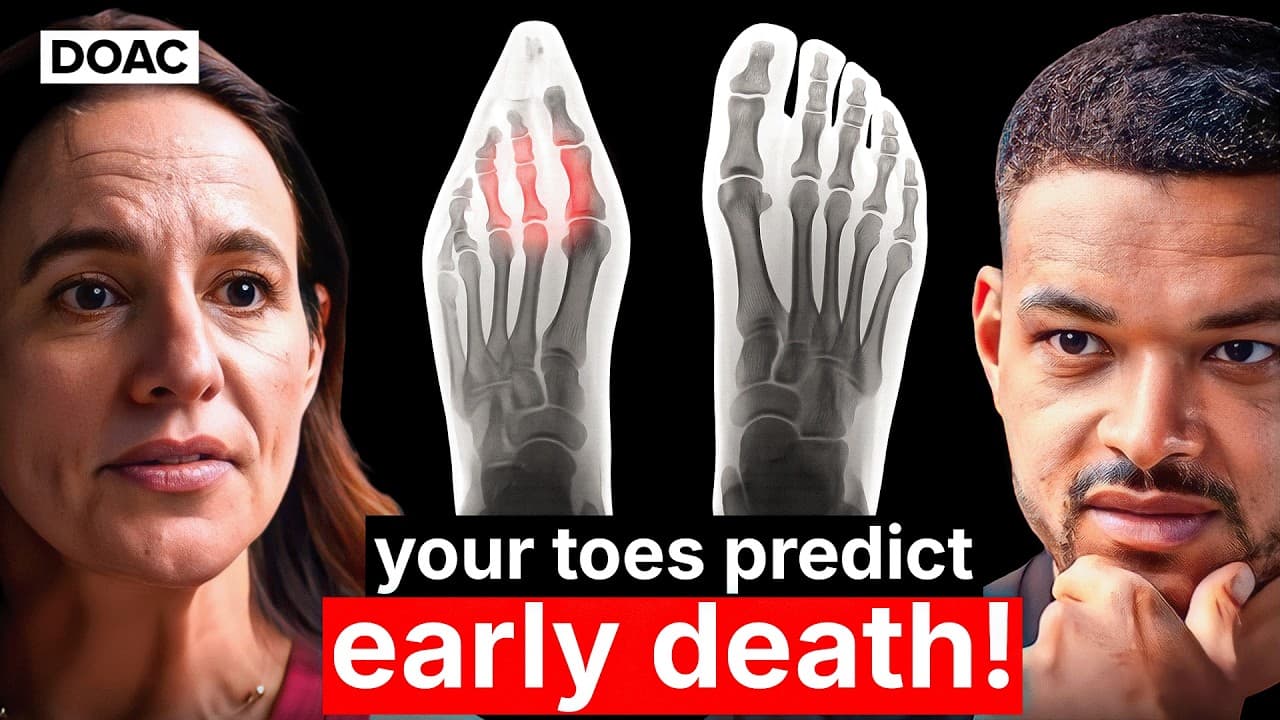
The Foot Expert: What Your Toes Reveal About Longevity and How to Fix Plantar Fasciitis
TL;DR
Stronger feet, functional footwear, and regular walking can reduce foot pain and support mobility and longevity. Dr. Courtney Conley says one in three people experience foot pain, while 5,000 daily steps can reduce depression symptoms and all-cause mortality risk by 15%. Read on for specific guidance on shoe design, plantar fasciitis, foot exercises, and transitioning safely to minimalist footwear.
Transcript
i want people to start thinking about their feet because the implications it will have for longevity is massive but there is plenty of things we can do for foot strength and performance and you can actually do this at home and I'm going to educate you here there's a lot we could talk about here that didn't sound like a compliment dr courtney Connle... Read More
Key Insights
- Foot strength and appropriate footwear are crucial for overall health and longevity.
- Walking 5,000 steps daily reduces depression symptoms and mortality risk by 15%.
- Children's narrow shoes can impair foot development and future health.
- Foot pain affects one in three people, impacting physical, mental, and emotional health.
- Insoles can help initially with plantar fasciitis but should not be a long-term solution.
- Super-cushioned running shoes may weaken foot muscles over time.
- Strong feet can prevent falls and improve mobility as we age.
- Improving foot health involves a gradual transition to functional footwear and strengthening exercises.
Install to Summarize YouTube Videos and Get Transcripts
Explore YouTube Video Summarizer or Get YouTube Transcript Extractor
Questions & Answers
Q: How can you prevent foot pain and improve longevity?
Build foot strength, wear functional shoes, and walk regularly. Dr. Courtney Conley says foot pain can restrict movement and harm physical, emotional, and mental health, while 5,000 daily steps can reduce depression symptoms and all-cause mortality risk by 15%.
Q: What features should a functional shoe have?
Look for a wide toe box that permits natural toe splay, zero drop so the heel and toes remain level, and minimal cushioning that preserves feedback from the ground. These features allow the foot to move more naturally and support its muscles.
Q: Why is foot strength important as you age?
Strong feet support balance, mobility, and the ability to keep walking. Weakness and severe foot pain can limit basic activities, while stronger feet can help reduce falls and maintain movement with age.
Q: How does walking support physical and mental health?
Walking 5,000 steps per day can reduce depression symptoms and all-cause mortality risk by 15%. Reaching 9,800 steps can reduce dementia risk, making walking an accessible activity for physical and mental health.
Q: How can plantar fasciitis be managed?
Insoles can initially offload the foot and help with plantar fasciitis, but they should not be the long-term solution. Longer-term management should emphasize strengthening the foot and gradually transitioning to functional footwear.
Q: How do narrow shoes affect children’s feet?
Around 70% of children wear shoes that are too narrow. Because childhood is when foot structure and strength develop, restrictive footwear can interfere with natural movement and development.
Q: What exercises can strengthen the feet at home?
Toe yoga, toe curls using resistance bands, and balance exercises can strengthen the foot muscles. These exercises develop stability and support the foot’s natural movement.
Q: Why should you transition gradually to barefoot or minimalist shoes?
A gradual transition gives foot muscles time to adapt and strengthen. Begin with short periods in minimalist footwear, then progressively increase the duration as the feet become stronger.
Summary & Key Takeaways
-
Strong, healthy feet are essential for overall well-being and longevity. Regular walking can significantly reduce risks of depression, heart attack, and dementia. Choosing appropriate footwear and strengthening foot muscles are essential steps to prevent and alleviate foot pain, which affects one in three people and can lead to severe health issues.
-
Dr. Courtney Conley emphasizes the importance of foot health as it impacts physical, mental, and emotional well-being. Proper footwear, walking, and foot exercises can reduce the risk of foot pain and related health issues. Transitioning to functional shoes and strengthening foot muscles are key strategies.
-
Footwear choices have a significant impact on foot health and overall function. Wearing shoes with a wide toe box and minimal cushioning can improve foot strength. Regular walking and foot exercises can enhance longevity and reduce the risk of chronic diseases like dementia and heart disease.
Read in Other Languages (beta)
Share This Summary 📚
Summarize YouTube Videos and Get Video Transcripts with 1-Click
Try YouTube Summary with ChatGPT & Claude or YouTube Transcript Generator
Explore More Summaries from The Diary Of A CEO 📚






Summarize YouTube Videos and Get Video Transcripts with 1-Click
Try YouTube Summary with ChatGPT & Claude or YouTube Transcript Generator