What Are the Geopolitical Dynamics Between US, India, and China?
TL;DR
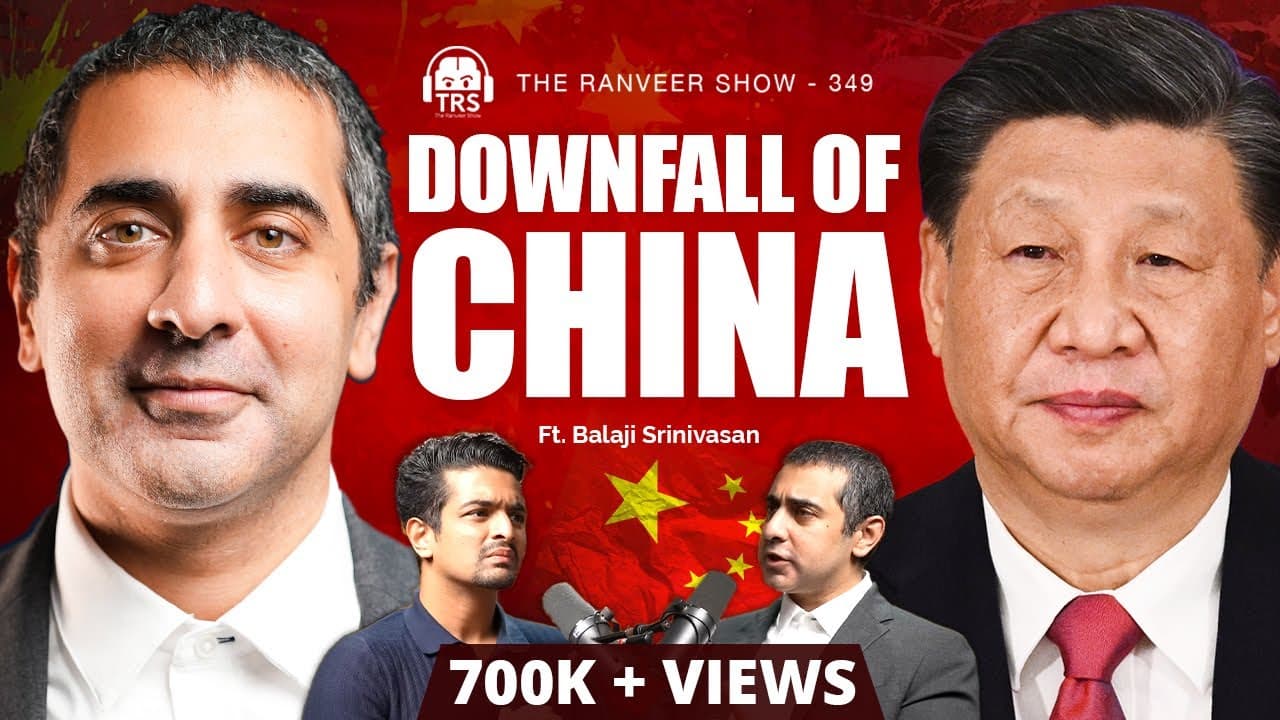
India is emerging as a key strategic ally for the US against China, driven by its growing technological advancements and favorable demographics. Influential figures like Balaji Srinivasan emphasize that the narrative around India's potential hinges on showcasing its achievements while leveraging the diaspora's contributions. As robotics and AI evolve, traditional population metrics may yield to innovation as the cornerstone of economic progress.
Transcript
this whole son Chia narrative does the world know this about India or is it just Indians just Indians nuclear weapons were not in the mahab what do you saying about I'm kid to simplify it the American mindset right now is China bad India good why is India good India good because India is not China and India is like maybe America's friend against Ch... Read More
Key Insights
- 🙈 India's geopolitical position is enhancing as it becomes increasingly seen as a strategic ally for Western countries against China.
- 🖐️ The diaspora plays a crucial role in India's growth narrative, contributing to international business and technological advancements.
- ❓ Technological advancements, especially in robotics and AI, may redefine economic growth models, focusing on innovation rather than sheer population size.
- 🧠 The perception of brain drain evolves towards brain circulation, highlighting the cyclical benefits of skilled professionals moving between countries.
- 🌐 Balaji emphasizes the importance of India's narrative, presenting its historical achievements in a contemporary context to gain global recognition.
- 💱 Acknowledging demographic changes in both China and India is essential for understanding their future economic trajectories.
- 🇨🇷 The conversation critiques the inefficient spending of the US and highlights how India's cost-effective advancements are challenging traditional Western notions of superiority.
Install to Summarize YouTube Videos and Get Transcripts
Explore YouTube Video Summarizer or Get YouTube Transcript Extractor
Questions & Answers
Q: How has India's global perception changed recently?
India's global perception has shifted positively as the country has increasingly been viewed as an ally against China. The narrative surrounding Indians, particularly in technology and geopolitics, has transformed from perceived liabilities to assets, making India's contributions more recognized globally, thus enhancing its geopolitical standing.
Q: What does Balaji mean by "robotics over demographics"?
Balaji explains that advancements in robotics and AI could reduce the dependency on population growth for economic productivity. As technology continues to evolve, it enables nations to achieve greater output with fewer people, shifting the focus away from merely having a large, working-age population to effectively utilizing advanced technology.
Q: How does the concept of brain drain differ from brain circulation?
Brain drain traditionally refers to the emigration of skilled individuals in search of better opportunities, often seen negatively. However, Balaji suggests the term "brain circulation," which emphasizes that these talents can contribute to their homeland's growth through connections and investments, thus benefiting both their country of residence and their origin.
Q: In what ways can India leverage its diaspora for economic growth?
India can leverage its diaspora by promoting investment opportunities and facilitating easier travel arrangements, allowing Indian professionals abroad to participate in the local economy. As the diaspora grows, these individuals can serve as influential bridges to propel India's interests on the global stage.
Q: How does Balaji view the relationship between the US and India amidst rising tensions with China?
Balaji notes that the US sees India as a favorable ally against China, primarily due to the deterioration of relations with China. He suggests that as India's global influence rises, it is crucial for India to navigate this relationship carefully to maximize its position without being overly reliant on one geopolitical power.
Q: What role does technology play in India's geopolitical strategy?
Technology is pivotal for India's geopolitical strategy, as it can enhance operational efficiency and global competitiveness. By prioritizing sectors like robotics and AI, India can reduce traditional dependency on human labor and position itself as a leader in innovative solutions on the international stage.
Q: What are the implications of demographic shifts in both China and India?
India's relatively youthful population is seen as an asset for future economic growth, while China faces demographic challenges due to an aging population. However, Balaji emphasizes that technology and innovation can mitigate these demographic factors, suggesting that both countries need to adapt to changing global dynamics.
Q: How does Balaji assess the US financial system in relation to its global status?
Balaji argues that while the US is rich, its spending inefficiencies diminish this wealth's effectiveness. He points to the contrast between American financial practices and the achievements of countries like India, which can deliver significant advancements at lower costs, fundamentally questioning the sustainability of America's current model.
Summary & Key Takeaways
-
The conversation highlights India's shifting global standing, with increasing acceptance and value for Indians abroad, especially as allies against China's growing influence.
-
Balaji Srinivasan discusses the interrelationship of demographics, technology, and geopolitics, asserting that robotics and AI could supersede traditional population growth as key economic drivers.
-
The dialogue reveals the complexities of global perceptions regarding India, emphasizing the need for improved international relations and the potential of India's diaspora.
Read in Other Languages (beta)
Share This Summary 📚
Summarize YouTube Videos and Get Video Transcripts with 1-Click
Try YouTube Summary with ChatGPT & Claude or YouTube Transcript Generator