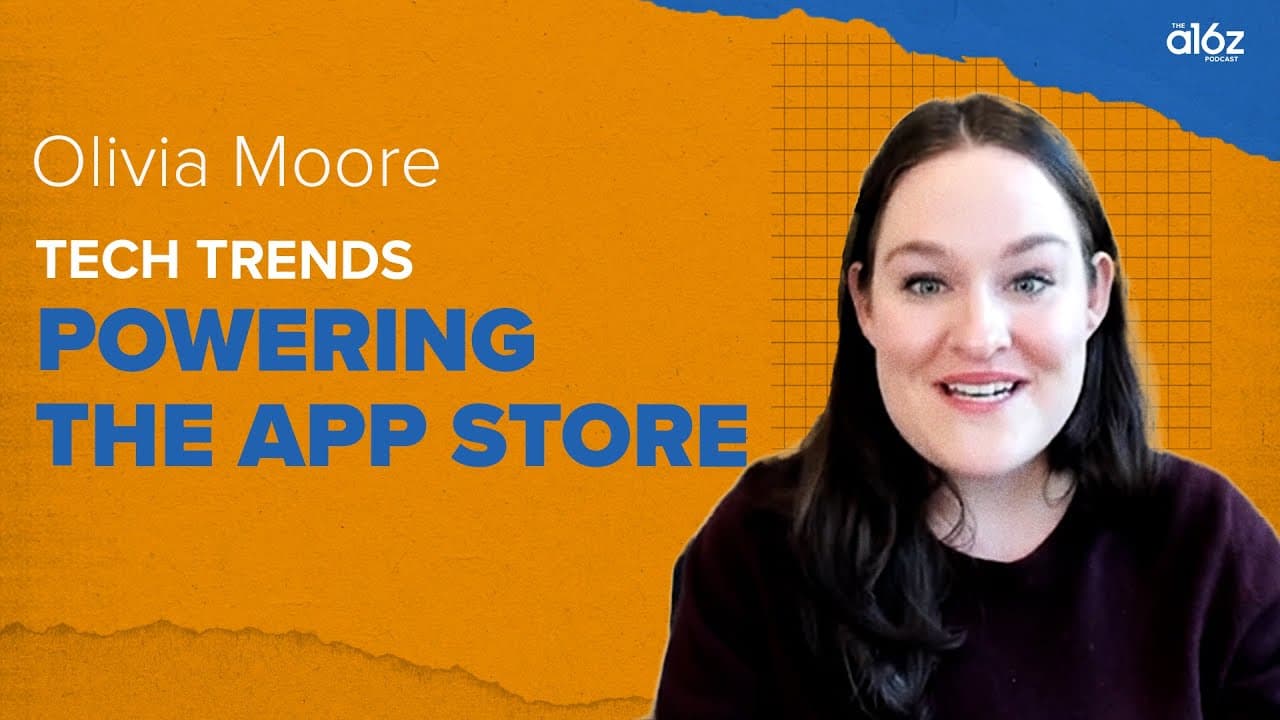
Olivia Moore on Key Trends Powering App Stores
TL;DR
App Store breakout success is powered by user-led virality, platform shifts, accessible AI models, and enduring social motivations. Talking Ben the Dog returned to number one after a YouTuber with 15 million subscribers turned it into a meme, while iOS 16 widgets and Stable Diffusion enabled new app experiences. Read on to see how developers can turn these patterns into growth and revenue.
Transcript
foreign interesting and always fun to see is sometimes there's these big acquisition moments that aren't at all orchestrated by the company but orchestrated by the user base and they're almost their own kind of special form of Word of Mouth but at like massive scale one of the top apps this year was called Talking Ben the Dog which is a kids educat... Read More
Key Insights
- User-led virality can transform an app's intended purpose and acquisition path. Talking Ben the Dog was designed as a children's educational science game, but humorous creator videos about debating serious subjects with the character turned it into a meme and revived its App Store position.
- Massive social reach does not guarantee the highest App Store ranking. A brief TikTok request supporting a father's boating app attracted extensive attention and drove the app high in the charts, yet the example also demonstrated how difficult reaching the top position remains.
- Operating-system changes can unlock new categories of consumer behavior. Apple's expanded support for home-screen and lock-screen widgets created opportunities for apps centered on lightweight communication, including notes and drawings that people could exchange with significant others without opening a conventional messaging experience.
- Accessible AI models lower the technical barrier to creating consumer applications. Developers could integrate models such as Stable Diffusion into mobile products and offer generated artwork or avatars without developing their own underlying model, helping AI apps rise prominently in the charts.
- Anonymous social apps repeatedly attract teenagers because curiosity and social validation are durable motivations. Products that promise insight into what friends think can spread quickly, and founders can revisit previously successful formats when the underlying emotional appeal remains relevant across generations.
- Anonymous networks often struggle with lasting retention because users may not store relationships or communicate deeply within them. If the initial concept lacks a second act, the dense early community can unravel and move to another product as quickly as it originally assembled.
- Short-lived popularity can still produce a successful business when monetization begins early. The discussion argues that a founder may reasonably prioritize rapid adoption and immediate revenue instead of pursuing a permanent, advertising-supported network with an enormous mainstream audience.
- Recurring paid content can extend the value of a viral app after its first purchase cycle. Lensa followed its AI avatar surge by releasing additional styles, packs, and dog avatars, using its installed presence and notification access to invite customers back for new experiences.
Install to Summarize YouTube Videos and Get Transcripts
Explore YouTube Video Summarizer or Get YouTube Transcript Extractor
Questions & Answers
Q: What trends drive App Store breakout success?
Breakout apps often benefit from user-led virality, technology or operating-system shifts, accessible AI models, and recurring interest in anonymous social experiences. Talking Ben the Dog, widget apps, AI art products, and Gas illustrate how developers can capitalize on these different forces.
Q: How did Talking Ben the Dog return to number one?
Talking Ben the Dog was originally released as a children’s educational science game. An adult YouTuber with 15 million subscribers began posting videos about debating serious topics with Ben, inspiring a meme and many imitation videos that pushed the old app back to number one.
Q: Why did the viral boating app reach only number seven?
A short TikTok appeal asking viewers to support the creator’s father’s boating app received more than 20 million views, followed by other widely viewed clips. The app reached about number seven, showing that enormous social reach does not convert perfectly into downloads or guarantee the top App Store position.
Q: How difficult is it for an app to reach number one?
The discussion says mass-market social apps at number one require a hundred thousand downloads in a day. Even the boating app’s TikTok exposure did not produce the top ranking, illustrating the intense download volume needed to lead the charts.
Q: How did iOS 16 create opportunities for widget apps?
Apple changed iOS 16 to let users place widgets on both home screens and lock screens. Apps such as NoteIt, Locket Widget, LiveIn, and Widgetable used that shift to offer notes, drawings, and lightweight communication that users could see without opening a conventional messaging experience.
Q: How did Stable Diffusion help mobile AI apps break out?
Stable Diffusion became available for developers to build into mobile apps. This allowed them to offer generated art and avatars without developing their own AI models, helping AI products dominate the top charts during late Q3 and early Q4.
Q: Why do anonymous social apps repeatedly become popular?
Anonymous social apps tap into durable motivations such as curiosity, social validation, and the desire to know what friends are saying. Gas followed earlier products such as Honesty Box, Ask.fm, Formspring, and TBH by using an emotional format that remains compelling across generations.
Q: Can a short-lived viral app still become a successful business?
Yes, an app can create a meaningful business by monetizing during its early viral growth instead of depending entirely on a permanent advertising-supported network. Recurring styles, packs, and related products can extend revenue, but lasting engagement still requires a credible experience beyond the original hook.
Summary
This video discusses the power of user-generated content in driving app acquisition and the success of certain app categories in 2022. It also explores the concept of anonymous social apps and the challenges and opportunities they present for founders.
Questions & Answers
Q: How did the app "Talking Ben the Dog" go viral and achieve top status?
Talking Ben the Dog, a kids' educational science game, gained popularity after a YouTuber with a massive following started making videos of himself debating serious topics with Ben. This content went viral and sparked a meme, prompting other users to create their own videos about it. Despite being released many years prior, the app shot up to number one in the app store.
Q: Can user-generated content be a powerful form of word-of-mouth marketing?
Absolutely. User-generated content has the potential to create massive acquisition moments for apps, especially when shared by influential users. In the case of "Talking Ben the Dog," the content created by the YouTuber and the subsequent videos made by others propelled the app to the top of the charts.
Q: What is an example of an app outside of the social category that saw traction in 2022?
Widgets, enabled by a change in iOS 16 that allowed users to place widgets on their home and lock screens, became a trend in 2022. Apps like Noteed, Locket Widget, and Live-in Widgetable capitalized on this feature and gained popularity. This represents a tech shift that enabled new consumer behavior.
Q: How did AI play a role in the success of certain apps in 2022?
The availability of AI models like Stable Diffusion for mobile apps led to the dominance of AI-related apps in Q3 and Q4 of 2022. These apps allowed users to create beautiful art or avatars without needing their own AI models. This tech shift contributed to their success.
Q: What are some evergreen app categories that consistently gain popularity?
Anonymous social apps have consistently gained popularity throughout the years. Examples include Honesty Box, Ask FM, and Form Spring. In 2022, Gas App, developed by Nikita and later sold to Discord, became a notable example of this category. The human emotions of wanting to be complemented or understood seem to drive the success of these apps.
Q: Is it worth emulating successful apps from the past to create new ones?
There is value in combing through previous successful apps and creating updated versions. Nikita, the founder of Gas App, copied what had worked before and created a similar app that produced similar success. Human emotions and fundamental needs remain consistent across generations, making these apps potentially effective and evergreen.
Q: Can anonymous social apps build lasting social networks?
The issue with anonymous social apps is that they can gain popularity quickly, but if there is no "Act 2" or further development beyond the initial concept, they can decline just as fast. These apps tend to lack the ability to store relationships or facilitate direct messaging. However, some anonymous social apps have managed to sustain their success.
Q: Are people cycling through apps more quickly these days?
There seems to be a trend of people cycling through apps more quickly. This raises questions about the longevity of apps and whether it is necessary to last long in the App Store ecosystem. However, with the right approach, it is still possible to create viral sensations and build significant monetization within a short period.
Q: Is it beneficial to focus on creating viral sensations and early monetization rather than aiming for long-term success?
The opportunity to build and monetize mobile apps quickly has never been greater. Nikita has publicly stated that Gas App made millions of dollars in the months before the acquisition, proving that short-term success can be profitable. While it may not reach the level of multi-billion dollar companies, achieving success within a few months can still be considered a win.
Q: What factors contribute to the ability of apps to make money early in their lifecycle?
The shift towards increased adoption of Apple Pay, Google Pay, and online purchasing has made it easier for apps to monetize early on. As users become more comfortable with making purchases on their phones, apps have a greater chance of making money while still in their early stages. This, coupled with effective marketing and product offerings, can lead to significant profits.
Takeaways
The power of user-generated content cannot be underestimated in driving app acquisition. Apps that capture the interest and excitement of influential users can quickly rise to the top. In 2022, tech shifts, such as the introduction of widgets on iOS 16 and the availability of AI models, played significant roles in the success of certain app categories. Additionally, anonymous social apps, fueled by human emotions and the desire for social validation, continue to garner attention. While it may not be necessary to achieve long-term success, there is a growing opportunity to create viral sensations and monetize apps quickly in the current app market.
Summary & Key Takeaways
-
Unexpected user behavior can revive an old app or propel an obscure product up the charts. Talking Ben the Dog returned to prominence after a popular creator used the character for humorous debates, while a short TikTok appeal generated substantial interest in a boating app built by the creator's father.
-
Platform and technology shifts created major opportunities for mobile developers. Expanded widget placement encouraged intimate note and drawing apps, while accessible AI models enabled developers to offer generated art and avatars without building proprietary models. Anonymous social apps also remained attractive because curiosity about friends' opinions produces strong participation.
-
Founders do not necessarily need to build permanent, advertising-supported social networks to achieve meaningful outcomes. Mobile payments let apps earn money during early viral growth, while recurring styles, packs, and related products can extend revenue after the initial surge. Lasting engagement still requires a credible experience beyond the original hook.
Read in Other Languages (beta)
Share This Summary 📚
Summarize YouTube Videos and Get Video Transcripts with 1-Click
Try YouTube Summary with ChatGPT & Claude or YouTube Transcript Generator
Explore More Summaries from The a16z Podcast 📚





Summarize YouTube Videos and Get Video Transcripts with 1-Click
Try YouTube Summary with ChatGPT & Claude or YouTube Transcript Generator