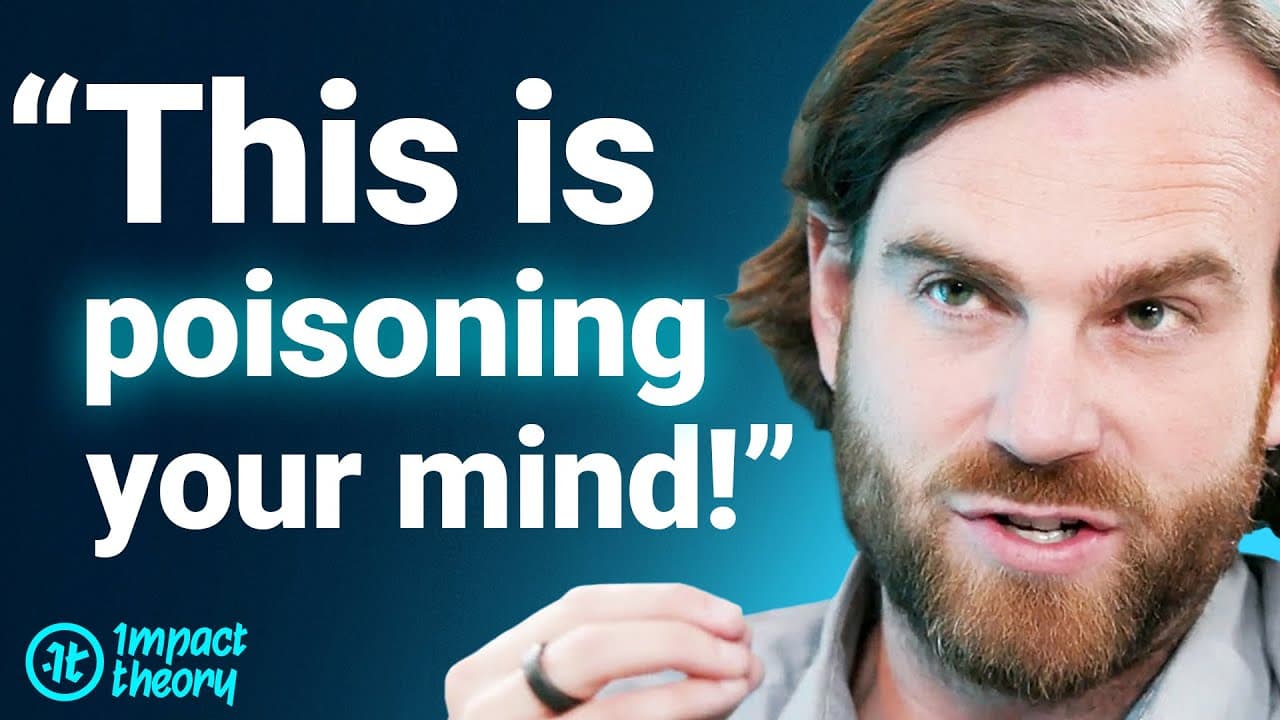
Neuroscientist On How To Achieve A Calm State & Rewire An Anxious Brain | Nolan Williams
TL;DR
Depression is a complex disorder influenced by brain circuitry. Understanding and modulating brain circuits through techniques like transcranial magnetic stimulation and psychedelic therapy can provide treatment options and improve outcomes.
Transcript
we basically live in a simulation that's created by our Biology one of the most troubling glitches in that Matrix is depression you're an intersection of something that I think is really important with transcranial magnetic stimulation and psychedelics what's happening what causes depression if you take somebody and you stress them in the scanner a... Read More
Key Insights
- 🧠 Depression involves disruptions in brain circuitry, particularly the prefrontal cortex and anterior cingulate regions.
- 🥺 External factors like stress and loss of control can lead to dysfunctions in specific brain circuits, contributing to depressive symptoms.
- 🧠 Transcranial magnetic stimulation and psychedelics offer novel treatment options by modulating brain circuits and restoring control.
- 🎯 Early interventions and targeted therapies may provide preventative measures and improve outcomes for individuals at risk of depression.
- 🧠 AI and neurofeedback hold potential for personalized and optimized treatments by mapping and manipulating brain circuits.
Install to Summarize YouTube Videos and Get Transcripts
Explore YouTube Video Summarizer or Get YouTube Transcript Extractor
Questions & Answers
Q: What brain region is associated with control and perceptions of control in individuals with depression?
The left or cilateral prefrontal cortex is the specific brain region involved in control and perceptions of control. In individuals with depression, this brain region often goes offline, leading to a loss of control.
Q: How does transcranial magnetic stimulation (TMS) work in treating depression?
TMS involves using a device to deliver magnetic pulses to stimulate specific brain regions. By targeting and modulating the affected brain circuits, TMS can restore control and alleviate depressive symptoms.
Q: Can external stimuli induce sadness or depressive symptoms in individuals without depression?
Yes, through experimental methods like watching sad movies, researchers can induce sadness even in individuals without depression. These manipulations help to understand brain circuitry and the mechanisms behind depressive symptoms.
Q: How does the concept of brain plasticity tie into the treatment of depression?
The concept of brain plasticity suggests that the brain can change and rewire itself. By harnessing brain plasticity, individuals can improve their depressive symptoms and regain control. Techniques like TMS aim to facilitate brain plasticity and promote positive changes.
Q: Can AI and neurofeedback be used to modulate brain circuits and improve mental health outcomes?
AI and neurofeedback hold promise in mapping and manipulating brain circuits. With advanced data collection and analysis, it may be possible to personalize treatments and optimize brain circuit functioning to improve mental health outcomes.
Q: Is depression solely a result of brain circuitry, or are there other factors involved?
While brain circuitry plays a significant role in depression, there are likely other contributing factors such as genetics, early life trauma, and environmental influences. The complexity of depression necessitates a comprehensive understanding of various factors and their interactions.
Q: What is Psychiatry 3.0, and how does it differ from previous approaches?
Psychiatry 3.0 refers to a circuit-based understanding of mental illness and treatment approaches. It builds upon the concepts of psychotherapy (Psychiatry 1.0) and psychopharmacology (Psychiatry 2.0) by focusing on circuit-level interventions and modulations for improved outcomes.
Summary & Key Takeaways
-
Depression is characterized by disruptions in brain circuitry, particularly in the prefrontal cortex and anterior cingulate regions.
-
External factors like stress and loss of control can lead to offline functioning of certain brain regions, perpetuating depressive symptoms.
-
Treatment options like transcranial magnetic stimulation and psychedelics aim to modulate brain circuitry, restore control, and alleviate depressive symptoms.
-
Early interventions and targeted therapies could prevent the development or progression of depression.
Read in Other Languages (beta)
Share This Summary 📚
Summarize YouTube Videos and Get Video Transcripts with 1-Click
Try YouTube Summary with ChatGPT & Claude or YouTube Transcript Generator
Explore More Summaries from Tom Bilyeu 📚




Summarize YouTube Videos and Get Video Transcripts with 1-Click
Try YouTube Summary with ChatGPT & Claude or YouTube Transcript Generator