How Do Wealthy Investors Grow and Protect Money?
TL;DR
Build wealth by combining informed action with diversification, sensible asset protection, tax awareness, and debt that is serviced by income-producing assets or businesses. Juan Haro argues that investors should develop expertise in one field, spread accumulated wealth across multiple asset types, learn from experienced people, and prepare to pursue opportunities during both rising and falling economic cycles.
Transcript
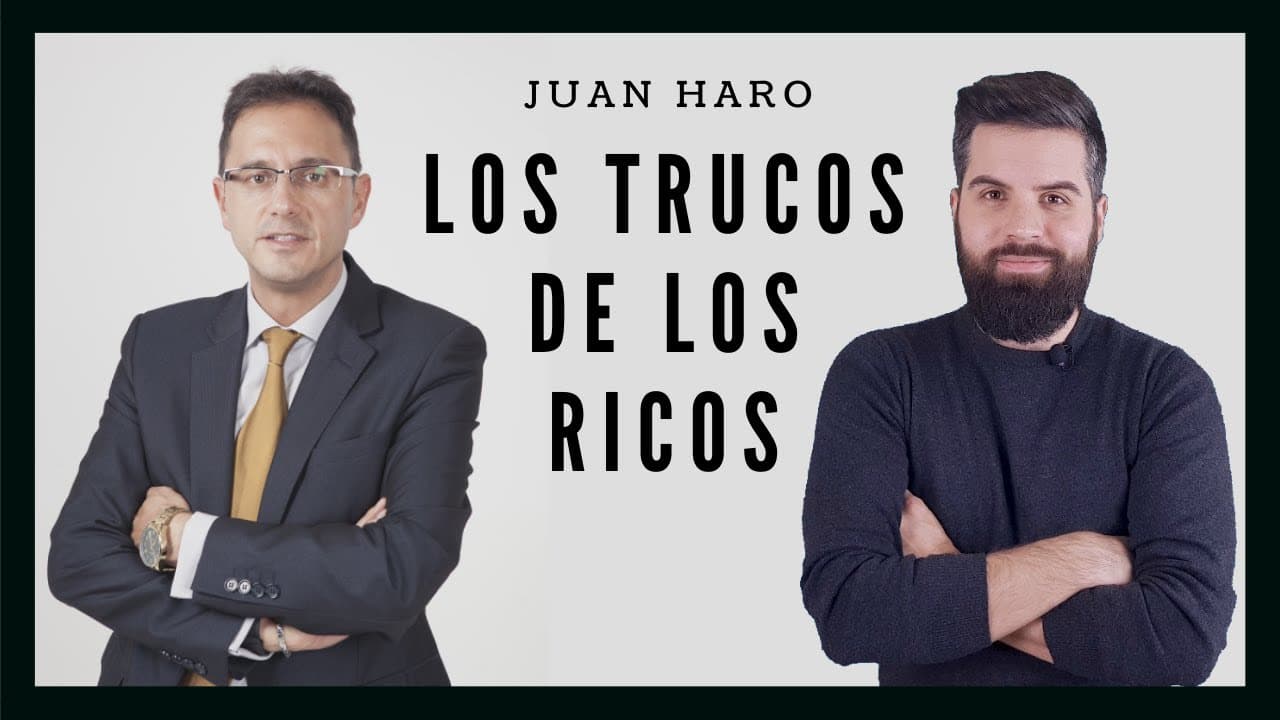
Greetings to all! Welcome to a new live of Código Trading. As you can see today we are very well accompanied because Juan Haro accompanies us. It is very likely that some of you already know him, but for those who do not, Juana is the founder of the investment school and is a trainer and an expert in the areas of real estate money. e inversiones ha... Read More
Key Insights
- Real estate is presented as a durable investment field because people need homes to occupy or rent, while property operations can potentially produce shorter-term returns and recurring rental income can support longer-term cash flow.
- The wealth triangle is a framework built around three goals: increasing money, reducing the tax burden, and protecting existing assets from seizure or other difficult circumstances. Haro treats all three as necessary parts of greater financial freedom.
- Asset separation is described as placing different properties or other holdings in separate companies instead of concentrating everything in one entity. Haro presents this structure as one of the asset-protection techniques used by wealthy investors.
- Diversification is presented as a step that follows earning money in a field the investor understands. Haro lists real estate, companies, startups, cash, gold, cryptocurrencies, shares, trading, investment clubs, jewelry, art, and antiques as possible areas.
- Good debt is defined in the interview as borrowing that is ultimately paid by customers, income-producing assets, or businesses already working for the investor. Haro contrasts this arrangement with debt that the investor must service without supporting income.
- Economic-cycle awareness is described as the ability to seek profits in both rising and falling conditions. Haro argues that someone who understands both environments should be less concerned about whether markets and the broader economy are moving upward or downward.
- Investment education can follow an active or passive path. The active route requires learning the field extensively, while the passive route involves relying on experienced people and carefully selecting the people who accompany the investor toward a financial goal.
- An effective investment mindset combines vision with concrete action. Haro warns that fear, low confidence, and remaining at the level of ideas prevent progress, while a defined road map and emotional control help turn financial intentions into practical decisions.
- Libro relacionado: Los trucos de los ricos
- Export your Kindle highlights to Glasp: How to Download Highlights and Notes from Kindle
- More videos about this book:
- More from this channel: Código Trading
Install to Summarize YouTube Videos and Get Transcripts
Explore YouTube Video Summarizer or Get YouTube Transcript Extractor
Questions & Answers
Q: Why does Juan Haro invest in real estate?
Juan Haro gives four main reasons for focusing on real estate. He has invested in the field for 22 years, people continually need homes to live in or rent, property can offer shorter-term returns through operations and longer-term recurring income, and successful real estate activity can accelerate personal goals. He says it helped him pursue basketball coaching and trading.
Q: What is the wealth triangle for investors?
The wealth triangle consists of growing whatever money a person has, reducing the associated tax burden, and protecting accumulated assets. Juan Haro argues that financial freedom depends on addressing all three objectives together. His book presents 92 techniques related to this framework, using stories and anecdotes to make the investment and asset-protection concepts accessible to ordinary citizens.
Q: Can ordinary people participate in real estate investing?
Juan Haro argues that real estate investing is not limited to people with very large amounts of capital. He says he teaches people how to buy property, conduct real estate operations, and create assets without using their own money. He also describes active learning and passive participation with experienced investors as two possible routes into the field.
Q: How does asset separation protect an investor's property?
Haro recommends avoiding the concentration of multiple properties in a single company. His example is that an owner with three properties could place each property in a different company. He presents this separation as a technique used by wealthy people for properties, businesses, companies, and other assets, within the broader objective of protecting accumulated wealth from difficult circumstances.
Q: How should an investor diversify accumulated wealth?
Haro suggests first making money in a field the investor understands, then diversifying the assets intended for multiplication. He names real estate, companies, startups, cash, gold, Bitcoin and other cryptocurrencies, shares, trading, investment clubs, business ideas, jewelry, art, and antiques. The interview does not prescribe specific allocations, but emphasizes avoiding excessive concentration in one area.
Q: What does Juan Haro mean by good debt?
Good debt is borrowing that other people or productive activities ultimately pay. Haro says wealthy investors may hold substantial debt, but customers, assets, or businesses already working for them provide the money needed to service it. His distinction focuses on who generates the repayment cash flow, rather than treating every form of borrowing as automatically beneficial or harmful.
Q: How can investors prepare for rising and falling cycles?
Haro recommends understanding business and economic cycles so an investor can seek ways to make money when conditions rise and when they fall. He connects this principle to technique 26 in his book and mentions stock-market expert André Kostolany. The objective is to reduce fear of a possible crisis by developing approaches suited to different market directions.
Q: What habits support a stronger investment mindset?
Haro recommends combining vision with action instead of leaving goals on a purely mental level. He also advises adopting the profession of a journalist: set aside assumptions about trading, real estate, risk, or required capital, and ask questions of people who already have the desired results. A road map, emotional control, curiosity, and practical execution support progress.
Summary & Key Takeaways
-
Juan Haro favors real estate because people continually need places to live or rent, and because property can generate both shorter-term operational returns and longer-term recurring income. He says real estate enabled him to pursue other interests, while his investment school teaches both property investing and other investment families.
-
Haro presents a wealth triangle with three objectives: growing available money, reducing the tax burden, and protecting accumulated assets from seizures or difficult circumstances. His book organizes these themes into 92 techniques intended for ordinary employees, entrepreneurs, self-employed people, and public servants who want to improve their financial position.
-
Four highlighted techniques involve separating properties among different companies, diversifying beyond a specialized income-producing field, using debt that customers or functioning businesses ultimately service, and understanding economic cycles. Haro also recommends combining vision with action and adopting a journalist's habit of questioning successful people instead of relying on fear or prejudice.
Read in Other Languages (beta)
Share This Summary 📚
Summarize YouTube Videos and Get Video Transcripts with 1-Click
Try YouTube Summary with ChatGPT & Claude or YouTube Transcript Generator
Explore More Summaries from Código Trading 📚
Summarize YouTube Videos and Get Video Transcripts with 1-Click
Try YouTube Summary with ChatGPT & Claude or YouTube Transcript Generator