Dr. Benjamin Bickman: How Can a Ketogenic Diet Help Reduce Liver Fat?
TL;DR
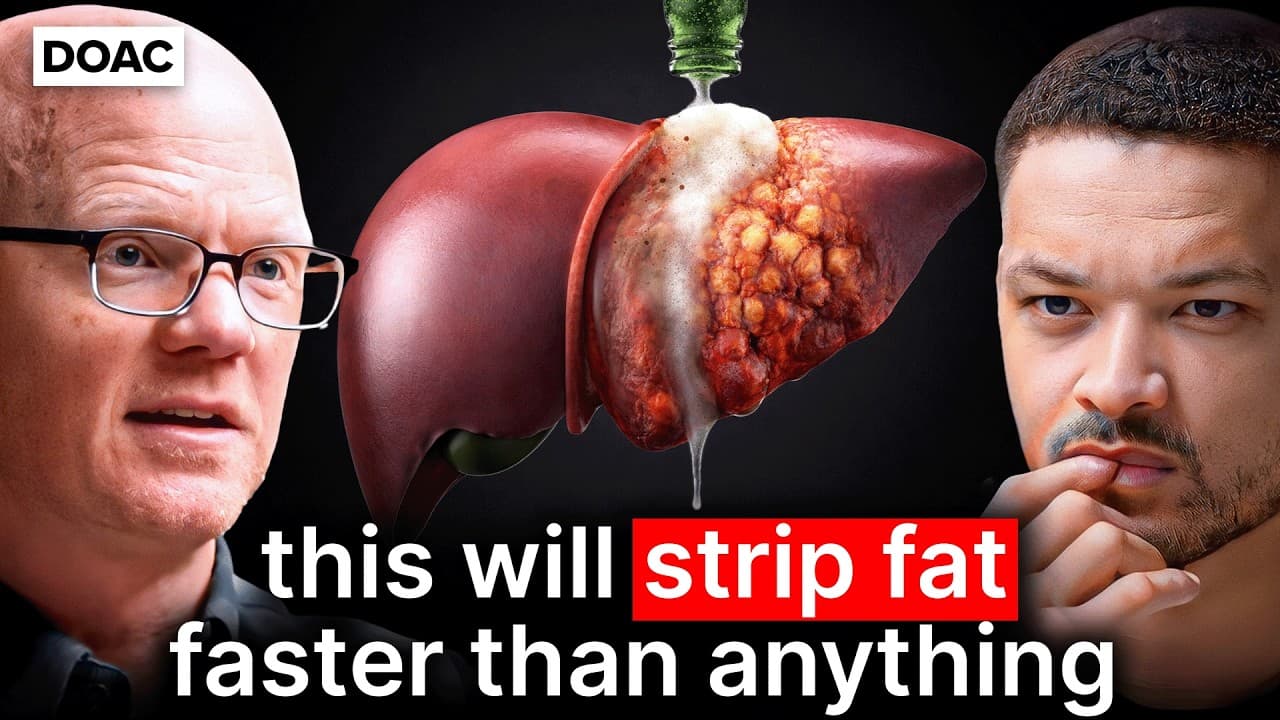
Reducing carbohydrate intake may help reduce liver fat by lowering insulin, the hormone Dr. Benjamin Bickman says directs energy into storage in fat tissue and the liver. He presents a ketogenic diet as a practical strategy while acknowledging that calories still matter and that there is more than one way to lose weight. Read on for his guidance on carbohydrates, ketones, fasting insulin, and structured indulgences.
Transcript
One of the problems with weight loss goals is saying you need to cut calories in order to get there. Now, I'm not saying calories don't matter. They are relevant, but not the most relevant. And I'm going to talk about evidence to support that. >> If someone is listening at home now and they have the goal of losing some weight, they want to be in a ... Read More
Key Insights
- Insulin is the primary hormone that regulates energy storage and fat accumulation in the body.
- A ketogenic diet lowers insulin levels, which can lead to reduced fat storage and improved metabolic health.
- Ketones, produced during a ketogenic diet, are the brain's preferred fuel and can enhance cognitive function.
- Constant carbohydrate consumption can lead to insulin resistance and increased fat storage.
- GLP-1 drugs may help reduce carbohydrate cravings but can also cause muscle loss over time.
- A fasting insulin test can reveal metabolic issues long before diabetes develops.
- Women may experience different metabolic effects on a ketogenic diet depending on their hormonal cycle.
- Exogenous ketones can assist in transitioning to a ketogenic diet and maintaining muscle mass during weight loss.
Install to Summarize YouTube Videos and Get Transcripts
Explore YouTube Video Summarizer or Get YouTube Transcript Extractor
Questions & Answers
Q: How does a ketogenic diet help reduce liver fat?
Dr. Benjamin Bickman says cutting carbohydrates lowers insulin. Because insulin directs calories toward storage in tissues such as fat and the liver, reducing it can promote fat burning and limit further fat storage.
Q: Why does Dr. Benjamin Bickman focus on insulin instead of calories alone?
He says calories are relevant to weight loss, but they are not the most relevant factor. His explanation centers on insulin because it tells cells what to do with energy and strongly directs that energy toward storage.
Q: What role does insulin play in weight gain?
Insulin regulates how cells handle energy and directs calories into storage. According to Bickman, high insulin can encourage energy to be stored in fat tissue or the liver.
Q: Why does Dr. Benjamin Bickman recommend a ketogenic diet for weight loss?
He calls a ketogenic diet the most practical and simplest strategy, while emphasizing that it is not the only way to lose weight. Its central advantage is that cutting carbohydrates brings insulin down.
Q: What is the problem with constant carbohydrate consumption?
Bickman describes constant carbohydrate consumption as a major problem with the modern diet. He says carbohydrates are especially difficult to control, although he distinguishes between carbohydrate foods that are acceptable and refined starches and sugars that are not.
Q: How should people manage holiday indulgences?
Bickman recommends assigning refined starches and sugars a distinct period rather than indulging continuously. He also suggests recruiting a family member or loved one to help track the plan and prompt a return to normal eating afterward.
Q: What benefits does the discussion attribute to ketones?
The discussion describes ketones as a preferred fuel for the brain. It says they can help with anxiety, depression, and attention, and notes that exogenous ketone products are available to drink.
Q: Why is a fasting insulin test important?
The existing discussion identifies fasting insulin testing as a way to reveal metabolic problems before diabetes develops. Elevated fasting insulin can indicate that the body is struggling to manage blood sugar and may be moving toward insulin resistance.
Summary & Key Takeaways
-
Lowering insulin levels is crucial for reducing liver fat and achieving weight loss. A ketogenic diet, which involves reducing carbohydrate intake, effectively lowers insulin and promotes fat burning. This approach not only aids in fat loss but also provides cognitive benefits through the production of ketones.
-
The body's metabolic rate increases when insulin levels are low, facilitating weight loss. Ketones, as an alternative fuel source, support brain health and can reduce anxiety and improve attention. Exogenous ketones may help individuals transition into ketosis and maintain muscle mass while losing weight.
-
GLP-1 drugs can suppress appetite and reduce carbohydrate cravings but may lead to muscle loss if used long-term. A fasting insulin test is a valuable tool for detecting early metabolic issues. Women might experience different effects on a ketogenic diet based on their hormonal cycle, particularly during the luteal phase.
Read in Other Languages (beta)
Share This Summary 📚
Summarize YouTube Videos and Get Video Transcripts with 1-Click
Try YouTube Summary with ChatGPT & Claude or YouTube Transcript Generator
Explore More Summaries from The Diary Of A CEO 📚






Summarize YouTube Videos and Get Video Transcripts with 1-Click
Try YouTube Summary with ChatGPT & Claude or YouTube Transcript Generator