How Will Global Conflicts Impact Financial Systems?
TL;DR
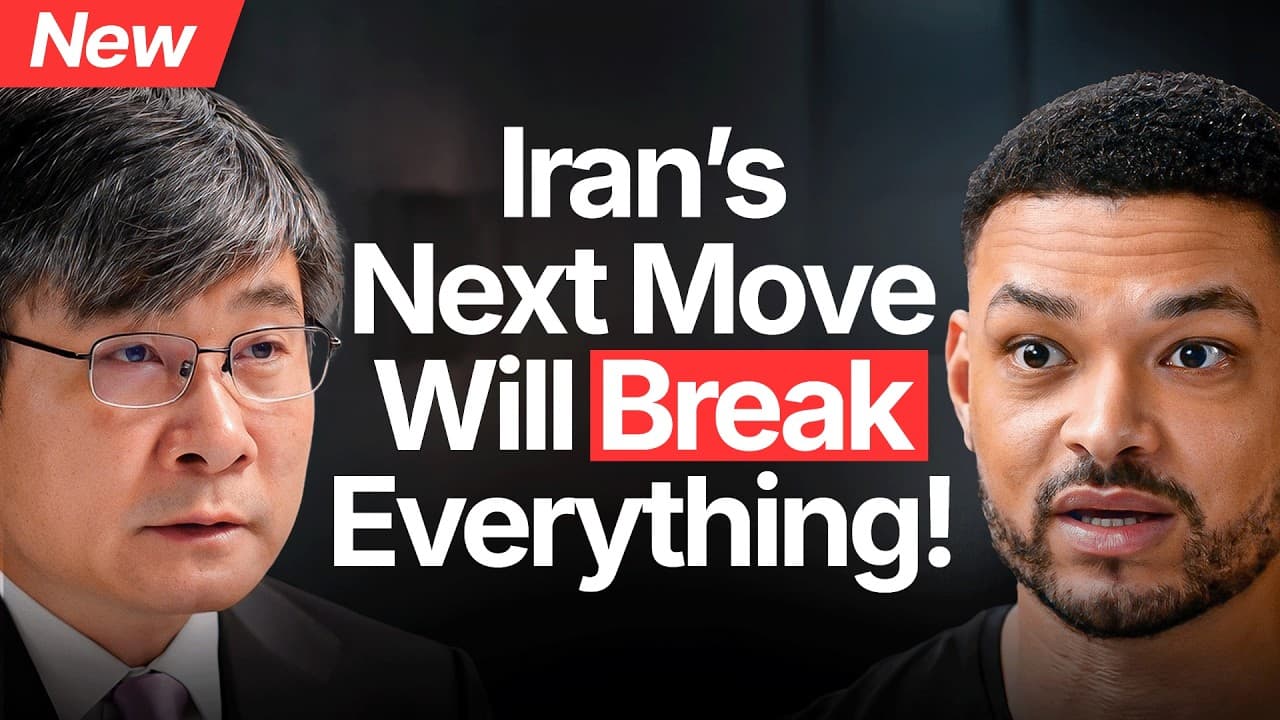
Professor Jiang predicts that future conflicts will target financial systems rather than physical infrastructure. He explains how global supply chains and geopolitical tensions could lead to a breakdown in civilization, similar to the Bronze Age collapse. The focus is on preparing for a world where technological progress is hindered by declining globalization and specialization.
Transcript
I think there are a lot of people who do not like what I'm saying. I am one of the most polarizing figures in the world right now. But I'm trying to prepare everyone. And what I want to explain [music] to you today, Stephen, is why the world is collapsing. Because having studied patterns of history and global supply chains, I now recognize and have... Read More
Key Insights
- Professor Jiang predicts that future attacks will target financial systems, causing widespread panic and disruption.
- The global economy relies heavily on the petrodollar system and US military dominance.
- Technological progress depends on globalization and specialization, both of which are threatened by current geopolitical tensions.
- Water scarcity and demographic shifts in the Global South could lead to mass migration and civil unrest in Western societies.
- The Middle East remains a critical flashpoint, with Iran's proxies expanding their influence in the region.
- The US empire is perceived as declining, with increased global instability as a consequence.
- AI will likely be used for surveillance and control rather than solving global problems due to disrupted supply chains.
- Belief in God and focusing on family are presented as ways to find meaning and resilience amidst global chaos.
Install to Summarize YouTube Videos and Get Transcripts
Explore YouTube Video Summarizer or Get YouTube Transcript Extractor
Questions & Answers
Q: How could future conflicts impact the financial system?
Future conflicts are expected to target financial systems, leading to widespread panic and disruption. Professor Jiang suggests that an attack on critical US financial data servers could wipe out bank accounts, causing mass anxiety and potentially self-destructive responses from the public.
Q: What is the role of the petrodollar in the global economy?
The petrodollar system underpins the global economy by ensuring that oil is traded in US dollars. This system is supported by US military dominance, particularly in the Middle East. Any disruption to this system could have cascading effects on global trade and economic stability.
Q: Why is technological progress threatened by current geopolitical tensions?
Technological progress depends on globalization and specialization. Current geopolitical tensions, such as the war in Iran and potential conflicts in East Asia, threaten these processes by forcing nations to become more self-sufficient and less reliant on global trade, hindering technological advancements.
Q: How might water scarcity and demographic shifts affect global stability?
Water scarcity and demographic shifts in the Global South could lead to mass migration and civil unrest in Western societies. As resources become scarce, conflicts over water and other essential commodities may intensify, leading to increased polarization and potential civil wars.
Q: What are the implications of Iran's expanding influence in the Middle East?
Iran's expanding influence, through proxies like the Houthis and Hezbollah, poses a significant threat to regional stability. This expansion could draw more countries into conflict, further destabilizing the Middle East and potentially disrupting global oil supplies.
Q: How is the US empire perceived in the context of global instability?
The US empire is perceived as declining, with increased global instability as a consequence. Professor Jiang argues that the US's inability to maintain control over global trade and geopolitical tensions could lead to a collapse similar to the Bronze Age.
Q: What role will AI play in the future according to Professor Jiang?
AI is likely to be repurposed for surveillance and control rather than solving global problems due to disrupted supply chains. In a world where technological progress is hindered, AI may be used to monitor and manage populations rather than advancing human welfare.
Q: How can individuals find resilience amidst global chaos?
Professor Jiang suggests that belief in God and focusing on family can provide meaning and resilience in uncertain times. By grounding oneself in spiritual and familial values, individuals can navigate the challenges posed by global instability and find a sense of purpose.
Summary & Key Takeaways
-
Professor Jiang warns that the next major attack will likely target the US financial infrastructure, leading to a potential collapse of civilization akin to the Bronze Age. He discusses how global supply chains and geopolitical tensions threaten technological progress and economic stability.
-
The global economy's reliance on the petrodollar and US military hegemony is highlighted, with water scarcity and demographic shifts posing additional challenges. Iran's expanding influence in the Middle East is a key concern.
-
AI's role in surveillance and control is emphasized, with a focus on the importance of belief in God and family as sources of meaning and resilience in uncertain times.
Read in Other Languages (beta)
Share This Summary 📚
Summarize YouTube Videos and Get Video Transcripts with 1-Click
Try YouTube Summary with ChatGPT & Claude or YouTube Transcript Generator
Explore More Summaries from The Diary Of A CEO 📚





Summarize YouTube Videos and Get Video Transcripts with 1-Click
Try YouTube Summary with ChatGPT & Claude or YouTube Transcript Generator