How to Start Learning Data Science Step by Step
TL;DR
Data science turns raw data into insights that support decisions, predictions, and pattern discovery. A practical learning path begins with probability, statistics, and Python, then advances through exploratory analysis, machine learning, deep learning, NLP, generative AI, and interview preparation, supported by hands-on projects and an understanding of the complete data science life cycle.
Transcript
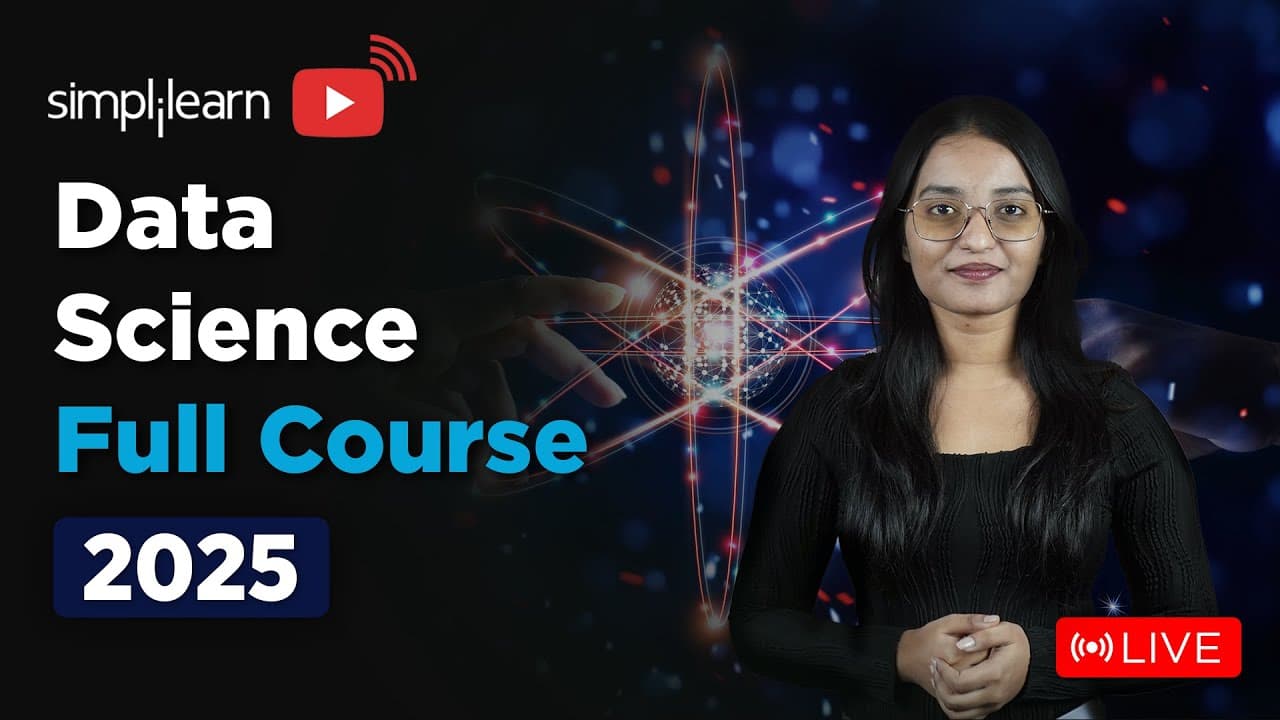
Welcome to the data science full course. Data science is one of the most in demand skills today. And in this course, we are going to help you unlock its full potential. Imagine turning raw data into powerful insights that help businesses make smarter decisions. That's exactly what data science is all about. We'll begin by unboxing the course and gi... Read More
Key Insights
- Data science is the practice of turning raw data into useful insights that help businesses and individuals make smarter decisions. Its main uses include decision support, predictive analysis, and pattern discovery across historical or real-time information.
- Asking the right question is the first step in the data science process. A practitioner must clearly identify the problem before exploring data, cleaning it, choosing an algorithm, training a model, or interpreting the resulting output.
- Python is presented as the most popular language for data science and a central part of the beginner learning path. The course introduces installation and key programming fundamentals before progressing toward machine learning and other advanced topics.
- Probability and statistics are foundational subjects for data science because they support analysis and concepts such as distributions and Bayes Theorem. The course places these foundations near the beginning of the roadmap before machine learning and deep learning.
- Predictive analytics is used to estimate outcomes such as airline delays, product demand, equipment failures, and maintenance needs. These predictions can help organizations reschedule services, prepare resources, reduce last-minute changes, and make more informed plans.
- Pattern discovery identifies recurring behavior in data, including seasonal increases or decreases in sales across particular months or quarters. Analyzing multiple years of sales information can reveal buying patterns that support planning and decision-making.
- Airline data science applications include route planning, delay prediction, promotional offers, passenger-demand analysis, and aircraft selection. Better analysis can reduce cancellations, improve scheduling, match planes to routes, and lessen problems experienced by airlines and passengers.
- A complete data science learning path extends beyond basic analysis to artificial intelligence, machine learning, deep learning, NLP, generative AI, and interview preparation. Covered algorithms include decision trees, random forests, K-means, and Naive Bayes.
Install to Summarize YouTube Videos and Get Transcripts
Explore YouTube Video Summarizer or Get YouTube Transcript Extractor
Questions & Answers
Q: What is data science used for?
Data science is used to convert raw information into insights that support better decisions, predictions, and pattern discovery. The course illustrates these purposes through autonomous vehicles, airline planning, logistics, online shopping, cab routing, television viewing analysis, predictive maintenance, and politics. In each case, relevant inputs are analyzed to select an action, estimate an outcome, or recognize recurring behavior.
Q: What are the main steps in the data science life cycle?
The data science life cycle begins with asking the right question and clearly defining the problem. The next stage is exploring the available data, which includes cleaning it and checking that it is suitable for analysis. Modeling follows, requiring the practitioner to choose an algorithm and model, train that model, and run it to address the original problem.
Q: What should beginners study to become data scientists?
Beginners should start with probability, statistics, Python fundamentals, and essential data science concepts. The roadmap then moves into artificial intelligence, machine learning, deep learning, NLP, and generative AI topics such as prompt engineering. It also includes distributions, Bayes Theorem, the data science life cycle, hands-on projects, and interview questions that prepare learners for practical opportunities.
Q: How does data science improve airline operations?
Data science can help airlines plan routes, predict delays, anticipate passenger demand, select appropriate aircraft, and create promotional offers. Weather, demand, route conditions, and equipment availability can all affect operations. Analyzing these inputs can support earlier rescheduling, reduce cancellations and last-minute changes, improve aircraft allocation, and lessen frustration for both passengers and airlines.
Q: How is data science used in logistics and delivery?
Logistics companies can use data science models to improve efficiency, optimize routes, and cut costs. Before a delivery truck begins its journey, analysis can identify the best available route for shipping items to customers. Various inputs can also help determine a suitable delivery time and the most appropriate mode of transport for completing a particular delivery.
Q: How does pattern discovery work in data science?
Pattern discovery examines data for recurring behavior that can inform future decisions. The course uses sales seasonality as an example: several years of sales records may show that purchases rise in certain months or quarters and fall in others. Recognizing these buying patterns helps an organization understand how customer behavior changes over time and plan accordingly.
Q: How can data science support everyday decisions?
Data science supports everyday decisions by comparing relevant criteria and filtering unsuitable choices. When purchasing office furniture online, for example, a buyer can identify websites that sell furniture, compare ratings, remove options below the preferred rating, check for discounts greater than 20%, and then select from the remaining websites before completing the purchase.
Q: Which machine learning topics are included in the course?
The course covers artificial intelligence, machine learning, deep learning, and several named algorithms. These include decision trees, random forests, K-means, and Naive Bayes. It also introduces distributions, Bayes Theorem, NLP, large language models, generative AI, and prompt engineering, connecting foundational statistics and Python skills with more advanced modeling concepts and interview preparation.
Summary & Key Takeaways
-
Data science helps organizations make better decisions, predict future outcomes, and discover patterns in historical information. Applications discussed include autonomous vehicles, airline planning, logistics, online shopping, route selection, entertainment preferences, predictive maintenance, and politics. Each application combines relevant inputs with analysis to answer a practical question or guide an action.
-
The data science process begins by defining the problem through the right questions. Practitioners then explore and clean the available data, select suitable algorithms and models, train those models, and use the results. This structured life cycle connects business problems and raw information to predictions, patterns, and decisions that can create practical value.
-
A beginner's roadmap starts with probability, statistics, Python fundamentals, and core data science concepts. It then covers artificial intelligence, machine learning, deep learning, NLP, generative AI, and algorithms such as decision trees, random forests, K-means, and Naive Bayes. Hands-on projects and interview questions help connect technical learning with career preparation.
Read in Other Languages (beta)
Share This Summary 📚
Summarize YouTube Videos and Get Video Transcripts with 1-Click
Try YouTube Summary with ChatGPT & Claude or YouTube Transcript Generator
Explore More Summaries from Simplilearn 📚


Summarize YouTube Videos and Get Video Transcripts with 1-Click
Try YouTube Summary with ChatGPT & Claude or YouTube Transcript Generator