How to Chemically Synthesize Cadaverine
TL;DR
To synthesize cadaverine, perform decarboxylation of the amino acid lysine using N-bromosuccinimide (NBS) in a controlled pH buffer solution. This method requires careful mixing and pH management to avoid undesired products, and despite challenges, it provides a unique insight into the synthesis of foul-smelling compounds.
Transcript
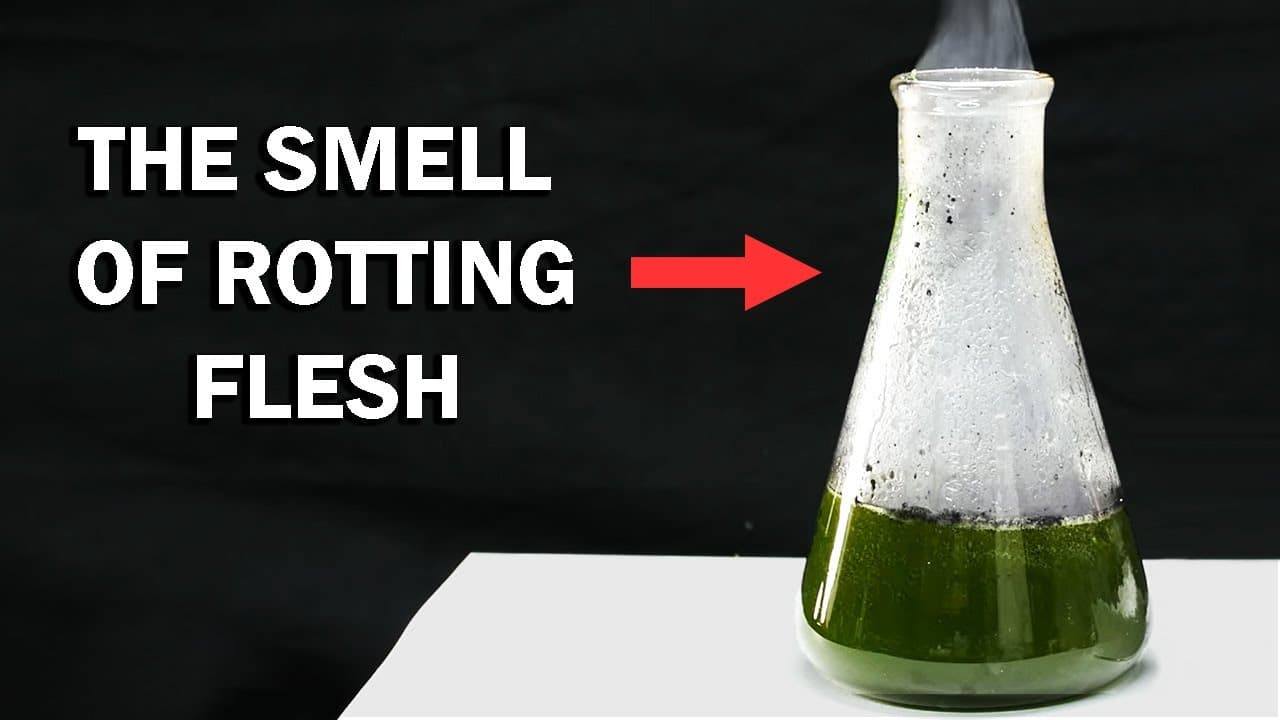
Peterson and cadaverine are nasty smelling organic compounds that contribute heavily to the smell of rotting flesh both are produced during the breakdown of amino acids which are the chemical building blocks of proteins future scene comes from the breakdown of the amino acid ornithine and cadaverine comes from lysine what might be interesting to kn... Read More
Key Insights
- 🤬 Peterson and cadaverine are responsible for foul odors in various contexts, such as rotting flesh, bad breath, bacterial vaginosis, and semen.
- 🎮 Decarboxylation is commonly used in the synthesis of cadaverine, involving the controlled breakdown of amino acids.
- 😘 The procedure described in the video, while resulting in a lower yield of cadaverine, provides insights into the importance of solubility and procedural adaptations.
Install to Summarize YouTube Videos and Get Transcripts
Explore YouTube Video Summarizer or Get YouTube Transcript Extractor
Questions & Answers
Q: What are peterson and cadaverine, and how do they contribute to smell?
Peterson and cadaverine are organic compounds formed during the breakdown of amino acids. Peterson contributes to the smell of rotting flesh, while cadaverine also contributes to bad breath, bacterial vaginosis, and the smell of semen.
Q: How is cadaverine synthesized through decarboxylation?
In the described experiment, a buffer solution with a pH of around 5 is prepared. Lysine is added to the solution, followed by the gradual addition of N-bromosuccinimide (NBS) to induce the decarboxylation reaction. Nickel chloride and sodium borohydride are then added to reduce the resulting nitrile to cadaverine.
Q: What was the main reason for the low yield of cadaverine in the experiment?
The low yield could be attributed to the poor adaptation of the procedure from the paper. The solubility of the amino acid used (lysine hydrochloride) in water influenced the effectiveness of extraction, leading to incomplete separation and potentially leaving behind a significant amount of cadaverine.
Q: What alternative methods could potentially improve the yield of cadaverine synthesis?
One suggestion is saturating the solution with sodium chloride to reduce the solubility of cadaverine in water, improving its extraction. Another idea is evaporating off the water to leave cadaverine hydrochloride and nickel salts, then basifying the residue with ethanol to freebase the cadaverine. Ethanol can be evaporated, leaving behind the cadaverine, and washing the residue with ether to separate it from the salts.
Summary & Key Takeaways
-
Cadaverine and Peterson are organic compounds that contribute to the smell of rotting flesh and other odors like bad breath and bacterial vaginosis.
-
The process of decarboxylation, using specific chemical reactions and a buffer solution, is used to create cadaverine.
-
The yield of cadaverine in the experiment described in the video was lower than the expected theoretical yield, possibly due to poorly adapting the procedure.
Read in Other Languages (beta)
Share This Summary 📚
Summarize YouTube Videos and Get Video Transcripts with 1-Click
Try YouTube Summary with ChatGPT & Claude or YouTube Transcript Generator
Explore More Summaries from NileRed 📚

Summarize YouTube Videos and Get Video Transcripts with 1-Click
Try YouTube Summary with ChatGPT & Claude or YouTube Transcript Generator