How to judge Persona 5 depth and meaning in gaming
TL;DR
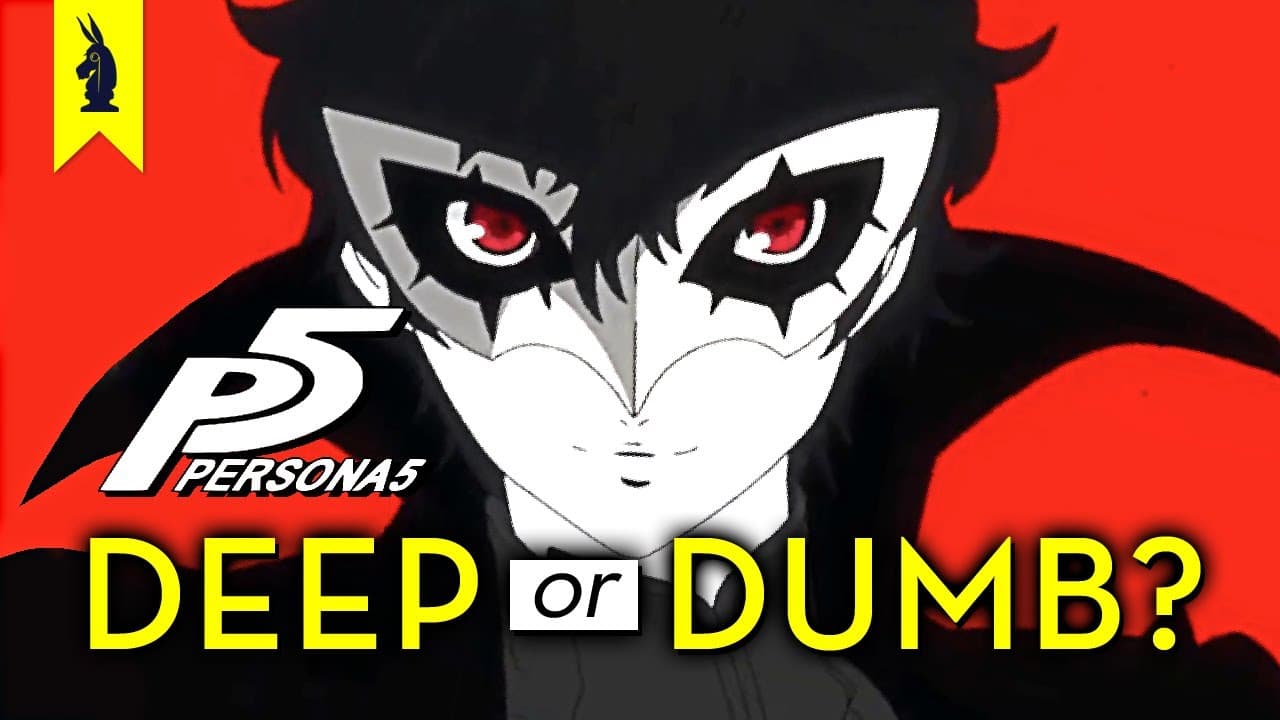
Persona 5 uses Jungian psychology and Esoteric Tarot to structure its world, combat, and character development. The video argues these elements are genuinely meaningful when viewed as archetypes, shadows, and the Fool’s Journey, though some connections can feel superficial. Overall, depth comes from thematic alignment rather than surface complexity, and the game rewards patient analysis.
Transcript
Hey Wisecrack, Jared here, and today we’re talking about the smart and stylish JRPG that lets you simultaneously date your high school teacher, your middle school-aged step-sister, and an alcoholic Lois Lane: Persona 5. For those of you who’ve never played Persona 5, we recommend pausing this video and playing through the 120 hour campaign. But if ... Read More
Key Insights
- Persona 5 is analyzed through Jungian psychology, with terms like archetype, shadow, and persona used to describe gameplay and story elements.
- The Metaverse is presented as a shared psychic space that embodies both individual distortions and societal cynicism, aligning with Jungian concepts of collective unconscious.
- Personas and Shadows are used to illustrate archetypes, with confronting and acknowledging shadows enabling growth and transformation in characters.
- Confidants are framed as archetypes that reinforce social bonds; equipping a Persona of the same archetype speeds up friendship building according to the analysis.
- The game uses the concept of archetypes to justify character development and the progression of relationships through confidants.
- Esoteric Tarot is employed to structure the Confidant system around the Fool’s Journey, tying Major Arcana to character arcs.
- Tarot symbolism is used to explain how different characters align with specific arcana like The Fool and The Lovers, reinforcing thematic coherence.
- The video notes some superficial connections in the Tarot mapping, suggesting depth can be uneven but coherent when aligned with core themes.
- More videos from this channel:
- More from this channel: Wisecrack
Install to Summarize YouTube Videos and Get Transcripts
Explore YouTube Video Summarizer or Get YouTube Transcript Extractor
Questions & Answers
Q: A real search query question about the video (e.g. 'How to...', 'What is...', 'Why does...', 'When should...'). Question 1
What makes Persona 5 feel deep according to the video is its integration of Jungian psychology and Tarot within the gameplay framework. The analysis points to how the Phantom Thieves wear Personas as masks, how shadows represent unconscious material, and how confronting and accepting parts of the self leads to growth. This alignment creates a cohesive narrative about self realization, not just a complex combat system.
Q: Question 2
How does the Metaverse reflect Jungian collective unconscious in the video’s argument? It is described as a shared psychic space formed by society and individual minds, containing Palaces that represent distorted places in real life. The game’s worldbuilding mirrors Jung’s ideas of collective cognition, while Mementos illustrates societal perception, reinforcing the depth of the in game world.
Q: Question 3
What role do archetypes play in Confidants and Personas, per the video? The analysis claims that Confidants embody archetypal roles and that equipping a Persona of the same archetype before interacting with them accelerates bonding, suggesting the game uses a Jungian mechanism to reward psychological alignments and self reflection.
Q: Question 4
How is the Fool’s Journey used to structure the game’s progression? The video explains that Arcana tied Confidants to Major Arcana guide Joker through stages of enlightenment, with True Ending requiring completion of a tarot based path. This framework positions narrative growth as a journey of self evolution mirroring esoteric tarot traditions.
Q: Question 5
What potential weaknesses does the video note in Persona 5’s esoteric Tarot usage? It mentions that some connections between characters and arcana can feel surface level and not deeply integrated, implying that while the system is coherent, some mappings could be less convincing or nuanced, reducing depth for certain players.
Q: Question 6
How does the video describe the game’s treatment of social themes? It argues that the Phantom Thieves target the desires of corrupt adults, using psychological and moral shifts through the theft of tempered desires, which functions as a form of psychotherapy within the subgenre of JRPGs, giving real thematic weight to the conflicts.
Q: Question 7
What is the overall verdict on Persona 5’s depth? The video asserts that the game is deeply crafted through consistent application of Jungian concepts and Tarot symbolism, with a structured narrative of growth and self transformation, while acknowledging occasional superficial mappings, making the overall depth contingent on how thoroughly a player engages with its symbolic framework.
Q: Question 8
How does the video suggest players should approach Persona 5 to appreciate its depth? It recommends recognizing how personas, shadows, and confidant arcs reflect internal psychology, and encouraging a patient exploration of how each mechanic ties to a larger archetypal story, rather than assuming complexity equals quality alone.
Summary & Key Takeaways
-
The video establishes that Persona 5 is dense and requires time to appreciate, framing its depth around Jungian psychology and Tarot symbolism rather than mere gameplay complexity.
-
It explains how the Metaverse and Palaces dramatize inner psychology, with Confidants linked to Major Arcana to guide the player through a path akin to self realisation.
-
The conclusion argues that Persona 5’s depth is earned by the coherence of its themes with its mechanics, making its complexity purposeful rather than arbitrary.
Read in Other Languages (beta)
Share This Summary 📚
Summarize YouTube Videos and Get Video Transcripts with 1-Click
Try YouTube Summary with ChatGPT & Claude or YouTube Transcript Generator