How to Shift from Network to Cloud Security

TL;DR
Moving from traditional security to cloud security starts with recognizing that cloud services are not disappearing and weighing their practical benefits against their risks. Familiar security habits, including controlling access and using two-factor authentication, still matter, while software-defined perimeters, provider complexity, billing, and responsibility for data protection require new understanding.
Transcript
All right. Thanks everybody for coming out. Um, I'm gonna jump right into this. Got a lot of stuff to cover, and I've timed it, and the best I've done is 45 minutes and 10 seconds, so maybe we'll have time for some Q&A. Uh, so yeah, Confessions of a Cloud Security Convert. So, um, talk about that title real quick. I've mostly, over my career, worke... Read More
Key Insights
- Cloud adoption requires a personal and professional reassessment of trust because users surrender some direct control over access to their information. Farnum’s initial resistance came from network security habits centered on controlling every entry point and keeping data within systems he directly managed.
- Cloud services are not disappearing, so treating them as a temporary trend does not provide a practical security strategy. Farnum compares resistance to cloud adoption with earlier skepticism about the internet, which organizations eventually had to address rather than dismiss.
- The decision to use cloud services is a risk-benefit judgment, not an assumption that cloud storage has no danger. Farnum accepted cloud use personally because convenience and automatic phone backups provided enough value to outweigh the risks he perceived.
- Two-factor authentication is one measure Farnum uses to reduce personal cloud risk. His conversion did not mean abandoning caution, but applying security practices while taking advantage of services such as iCloud and Dropbox for storage, synchronization, and automated backups.
- Traditional security experience remains useful in cloud environments because earlier technologies had already weakened the idea of a single fixed perimeter. Mobile phones and mobile endpoints prompted security professionals to question whether the perimeter was disappearing before widespread cloud adoption.
- Software-defined perimeters require a conceptual adjustment for practitioners accustomed to VPNs and on-premises data centers. Farnum identifies this shift as the most significant part of his perimeter challenge, even though prior discussions about mobile access had prepared him for broader perimeter changes.
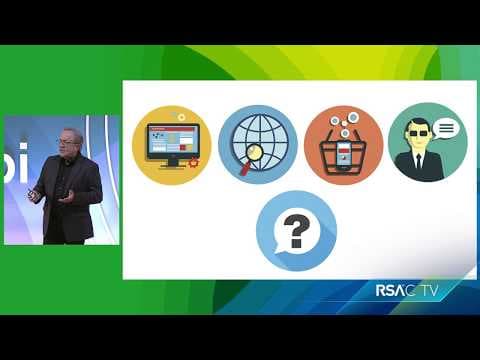
- Cloud complexity includes different provider types, provider services, and billing structures. Farnum represents these related sources of confusion as a hydra, emphasizing that becoming comfortable with cloud security requires understanding more than technical controls alone.
- Cloud data protection depends on understanding who secures the environment and who is responsible for particular protections. Farnum identifies responsibility for cloud security as a central challenge and presents his conversion as an unfinished journey with additional issues still to confront.
Install to Summarize YouTube Videos and Get Transcripts
Explore YouTube Video Summarizer or Get YouTube Transcript Extractor
Questions & Answers
Q: How can a traditional security professional transition to cloud security?
A traditional security professional can begin by identifying which established concepts still apply and which cloud concepts require adjustment. Farnum found that experience with mobile endpoints and perimeter debates prepared him for parts of cloud networking. He then focused on unfamiliar areas such as software-defined perimeters, provider types, services, billing, and responsibility for protecting data in the cloud.
Q: Why might network security professionals distrust cloud services?
Network security professionals may distrust cloud services because their experience emphasizes direct control over data, access points, and infrastructure. Farnum initially felt uncomfortable placing information in systems he did not control and worried about who could reach it. His resistance reflected security habits developed around protecting assets within an on-premises data center and tightly controlling every point of entry.
Q: How did Michael Farnum become more comfortable with personal cloud use?
Farnum became more comfortable after observing widespread use of iCloud without seeing the kind of breaches he expected, apart from compromised accounts. He also began using security measures such as two-factor authentication. Over time, conveniences including automatic phone backup and additional Dropbox storage persuaded him that the personal benefits of cloud services outweighed the risks for his own situation.
Q: What cloud security practices does Michael Farnum use personally?
Farnum says he tries to use two-factor authentication and the security measures appropriate for personal cloud use. He does not describe cloud adoption as risk-free. Instead, he combines precautions with a judgment that the practical gains are worthwhile, particularly because cloud backup removes the burden of manually backing up his phone through iTunes and operates automatically.
Q: Does cloud security eliminate the traditional network perimeter?
Farnum does not present the change as a simple disappearance of the perimeter. He says he had already considered perimeter questions because mobile phones and mobile endpoints existed before widespread cloud adoption. That background made the cloud perimeter challenge less difficult for him, although moving from familiar VPN access toward a software-defined perimeter still required a meaningful conceptual adjustment.
Q: What is difficult about moving from VPNs to software-defined perimeters?
The difficulty comes from changing a familiar model of secure access. Farnum was accustomed to using VPNs to reach assets protected inside his on-premises data center. A software-defined perimeter required him to reconsider how boundaries and access operate. This was the largest part of his perimeter challenge, even though previous mobile security discussions had prepared him for changing boundaries.
Q: What sources of confusion arise when learning cloud security?
Farnum identifies provider types, provider services, and billing as connected sources of confusion. He groups them under the Hydra of Confusion in his Dungeons & Dragons framing. His inclusion of billing shows that the learning process extends beyond security mechanisms, requiring practitioners to understand how cloud offerings are organized, delivered, and charged by their providers.
Q: Who is responsible for protecting data in the cloud?
Determining responsibility is itself one of the major challenges Farnum identifies. He frames data protection around two questions: who is securing the cloud, and who is responsible for it? The supplied transcript does not give a final allocation of duties, but it makes clear that cloud security professionals must explicitly investigate responsibility instead of assuming every protection belongs to one party.
Summary & Key Takeaways
-
Michael Farnum describes moving from network and application security into a role where cloud security became a primary concern. He frames the transition as a Dungeons & Dragons quest, with each unfamiliar challenge represented by a monster whose difficulty depends on his previous experience and understanding of related traditional security concepts.
-
His first major challenge was overcoming personal prejudice against storing information in cloud services. Convenience, automatic phone backups, widespread cloud adoption, and his observation of iCloud’s security record gradually changed his judgment. He concluded that the personal benefits outweighed the risks when paired with precautions such as two-factor authentication.
-
The transition did not make every traditional security idea obsolete. Earlier debates about mobile endpoints and the disappearing perimeter had already prepared him for cloud networking. His more significant adjustment involved understanding software-defined perimeters after years of relying on VPN access to protect assets located within an on-premises data center environment.
Read in Other Languages (beta)
Share This Summary 📚
Summarize YouTube Videos and Get Video Transcripts with 1-Click
Try YouTube Summary with ChatGPT & Claude or YouTube Transcript Generator
Explore More Summaries from RSAC Cybersecurity 📚

Summarize YouTube Videos and Get Video Transcripts with 1-Click
Try YouTube Summary with ChatGPT & Claude or YouTube Transcript Generator