How Does Sleep Clear Brain Toxins and Help Prevent Alzheimer's and Dementia? | Louisa Nicola
TL;DR
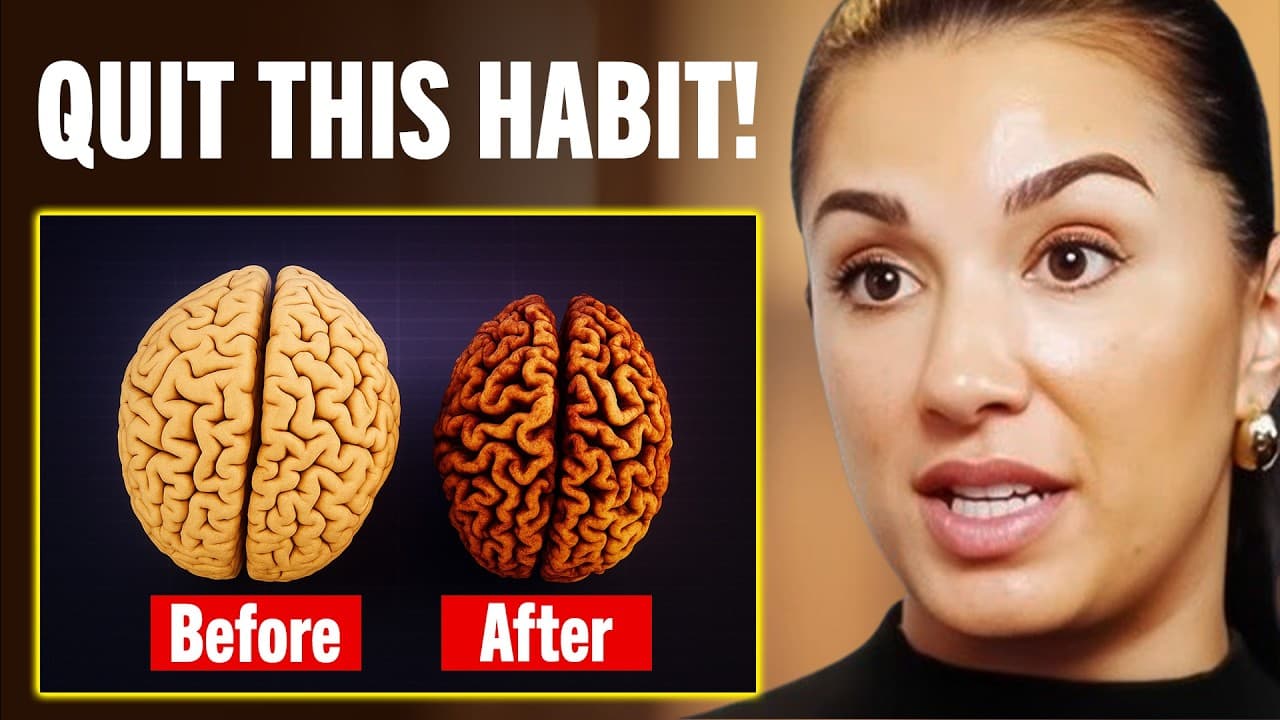
Deep stage-three sleep helps clear brain toxins by activating the lymphatic system, allowing cerebral spinal fluid to wash away debris such as amyloid beta. This deepest phase of non-REM sleep generally begins around 90 minutes after falling asleep. Louisa Nicola recommends at least 7.5 hours nightly and a regular sleep schedule, so read on to understand the mechanisms and habits that may protect long-term brain health.
Transcript
What would you like everyone to know about the relationship between sleep and brain function? First of all, sleep is the the best way for you to clear out these amaloid proteins that build up during the day. Wow. When we sleep, we dip into our our deep sleep zone, which is stage three sleep. We're generally when I talk about sleep, I really just ta... Read More
Key Insights
- Sleep is the best way to clear amyloid proteins that build up in the brain during the day, making deep sleep central to long-term brain health and toxin removal.
- Stage three sleep is non-rapid eye movement sleep and the deepest sleep possible, reached generally around 90 minutes after falling asleep, when two major restorative processes occur.
- The lymphatic system activates during deep slow-wave sleep, and cerebral spinal fluid washes debris out of the brain, clearing environmental toxins, mycotoxins, and amyloid beta.
- Glial cells act as immunity cells that shrink in size and sit between neurons during deep sleep, which lets cerebral spinal fluid act like a washing machine flushing the brain.
- Beta amyloid is likely not the root cause of Alzheimer's but a response to inflammation, stress, and modern insults, with accumulation potentially starting as early as age 25 or 30.
- A PNAS study found healthy men sleep-deprived to six hours a night for one week had a 3% epigenetic change, altering roughly 711 of about 20,000 genes for the worse.
- The upregulated genes from sleep deprivation were responsible for tumor production while downregulated genes were immunity genes, linking short sleep to higher cancer risk and weaker immunity.
- Regularity is now emerging as more important than anything else in sleep, and staying within about 80% consistency in bed and wake times protects against negative health outcomes.
Install to Summarize YouTube Videos and Get Transcripts
Explore YouTube Video Summarizer or Get YouTube Transcript Extractor
Questions & Answers
Q: How does sleep clear toxins and amyloid beta from the brain?
During deep stage-three sleep, the lymphatic system activates and cerebral spinal fluid washes debris from the brain. This includes environmental toxins, mycotoxins, and amyloid beta that have built up during the day.
Q: What is stage-three sleep, and when does it occur?
Stage three is non-rapid eye movement sleep and the deepest sleep possible. It is generally reached around 90 minutes after falling asleep, when toxin clearance and immune restoration take place.
Q: How do glial cells help remove waste during sleep?
During deep slow-wave sleep, glial cells shrink and position themselves between neurons. This allows cerebral spinal fluid to move through the brain like a washing machine and flush away accumulated waste.
Q: Is amyloid beta the root cause of Alzheimer's disease?
The discussion says amyloid beta appears in the brains of people with Alzheimer's but may not be the root cause. It may instead be a response to inflammation, stress, and modern environmental insults, with accumulation potentially beginning around age 25 or 30.
Q: What did the PNAS sleep-deprivation study find?
Healthy men who slept around six hours per night for one week experienced a 3% epigenetic change. Of roughly 20,000 genes, around 711 changed for the worse, showing that even seven days of restricted sleep can affect gene expression.
Q: How can six hours of sleep affect immunity and cancer risk?
In the sleep-deprivation study, genes associated with tumor production were switched on, while immunity genes were switched off. The discussion connects those changes with an increased likelihood of developing cancer and weakened immune function.
Q: How many hours of sleep does Louisa Nicola recommend?
Louisa Nicola recommends a minimum of 7.5 hours of sleep per night. After a physically, mentally, or emotionally difficult day, an individual may need 8.5 or 9 hours because sleep needs vary.
Q: Why is a regular sleep schedule important?
The discussion says regularity may be more important than any other sleep factor. Nicola recommends keeping sleep and wake times consistent about 80% of the time and avoiding large shifts such as sleeping at 2:00 a.m. one night and 9:00 p.m. the next.
Summary & Key Takeaways
-
Sleep, specifically deep stage-three non-REM sleep reached around 90 minutes after falling asleep, activates the lymphatic system so cerebral spinal fluid washes out debris including amyloid beta, environmental toxins, and mycotoxins. Glial immunity cells shrink and sit between neurons, letting the fluid act like a washing machine.
-
Beta amyloid seen in Alzheimer's brains is likely a response to inflammation and modern stress rather than the root cause, and accumulation may begin at 25 or 30. A PNAS study showed six hours of sleep for one week caused a 3% epigenetic change, altering about 711 genes for the worse.
-
The upregulated genes drove tumor production and the downregulated ones were immunity genes. Nicola recommends at least 7.5 hours nightly, prioritizing regularity within about 80% consistency. For high performers who cannot switch off, she suggests journaling worries, setting standards like being offline by 8:30, and supplements such as ashwagandha, turmeric, and GABA.
Read in Other Languages (beta)
Share This Summary 📚
Summarize YouTube Videos and Get Video Transcripts with 1-Click
Try YouTube Summary with ChatGPT & Claude or YouTube Transcript Generator
Explore More Summaries from Dr Rangan Chatterjee 📚






Summarize YouTube Videos and Get Video Transcripts with 1-Click
Try YouTube Summary with ChatGPT & Claude or YouTube Transcript Generator