How to Build Your First AI Agent: Step-by-Step Guide
TL;DR
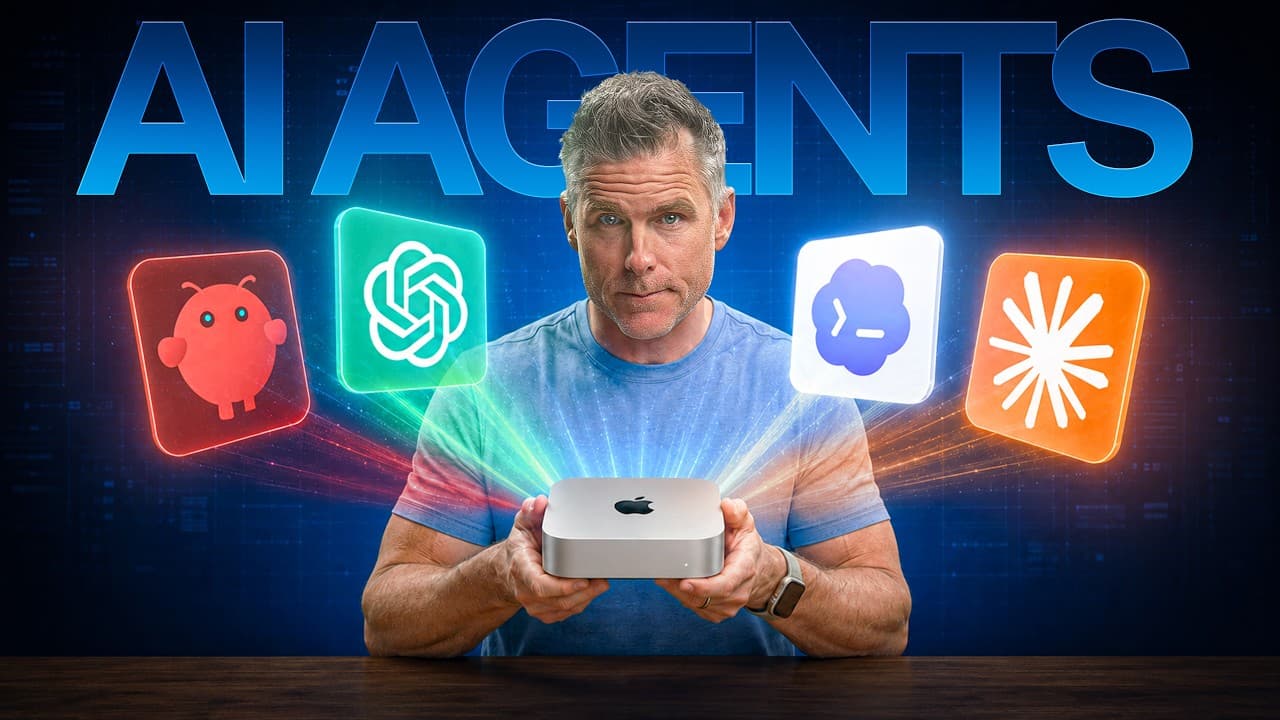
Building an AI agent involves defining a clear outcome, giving it a specific identity, equipping it with necessary tools, and narrowing its scope to avoid confusion. The process includes creating identity files, using reverse prompting, and gradually trusting the agent to operate autonomously. This strategic approach can significantly enhance productivity by delegating repetitive tasks to AI agents.
Transcript
I just read a study that by 2030, AI is going to create 170 million new jobs, but they won't be jobs where you just sit there and chat with AI. They'll be jobs where you build AI agents. And I get it, the AI space is moving crazy fast. I mean, what even is an AI agent? Not too long ago, I was right there with you. But after going deep myself and bu... Read More
Key Insights
- AI agents are designed to automate repetitive and rules-based tasks, freeing up human time for more complex activities.
- An AI agent differs from a chatbot by performing complete workflows autonomously, rather than just providing responses.
- Building an AI agent starts with defining a specific outcome, similar to setting clear job expectations for a new employee.
- Identity files — soul, identity, and user files — help an AI agent understand its role, behavior, and the context of its work.
- Equipping an agent with the right context and tools ensures it can perform its tasks effectively and efficiently.
- Narrowing the scope of an agent's tasks prevents confusion and maintains high performance by focusing on specialized roles.
- Trust in AI agents is built gradually by setting guardrails, approving initial actions, and expanding autonomy over time.
- Different AI models, such as Haiku, Sonnet, Opus, and Fable, offer varying capabilities and costs, suitable for different tasks.
Install to Summarize YouTube Videos and Get Transcripts
Explore YouTube Video Summarizer or Get YouTube Transcript Extractor
Questions & Answers
Q: What is the difference between an AI agent and a chatbot?
An AI agent performs complete workflows autonomously, acting like an employee that can execute tasks and make decisions based on given parameters. In contrast, a chatbot is more like a meeting where the user asks questions and receives answers, requiring more direct interaction and input from the user.
Q: How do you define the outcome for an AI agent?
Defining the outcome for an AI agent involves setting a clear, specific goal that the agent should achieve. This is similar to setting job expectations for an employee, where you outline the desired results rather than dictating every step. The agent then uses AI capabilities to figure out the best way to achieve the stated outcome.
Q: What are identity files in AI agent development?
Identity files consist of three components: the soul file, which defines the agent's personality and behavior; the identity file, which outlines its role and name; and the user file, which provides context about who the agent is working for. These files help the agent understand its tasks and operate effectively within its designated scope.
Q: How can AI agents be equipped with the right tools?
Equipping AI agents involves providing them with the necessary context, tools, and access to systems they need to perform their tasks. This includes capturing processes through methods like the camcorder method or reverse engineering from existing data. Proper equipping ensures the agent can execute its tasks efficiently and effectively.
Q: Why is it important to narrow the scope of an AI agent?
Narrowing the scope of an AI agent is crucial to prevent confusion and maintain high performance. By focusing on specialized roles, each agent can concentrate on specific tasks without being overwhelmed by multiple responsibilities. This approach ensures that agents perform their designated tasks efficiently and effectively.
Q: How do you build trust in AI agents?
Building trust in AI agents involves a gradual process of setting guardrails, approving initial actions, and progressively expanding their autonomy. Initially, the agent's actions are closely monitored, and over time, as it proves reliable, it is allowed to operate more independently, ultimately managing tasks autonomously.
Q: What are the different AI models used for agents?
Different AI models, such as Haiku, Sonnet, Opus, and Fable, offer varying capabilities and costs. Haiku is suitable for simple, high-volume tasks, Sonnet for day-to-day work, Opus for complex reasoning and management, and Fable for long-running and intricate tasks. Choosing the right model depends on the task's complexity and requirements.
Q: How can AI agents improve productivity?
AI agents improve productivity by automating repetitive and rules-based tasks, allowing users to focus on more complex and strategic activities. By handling entire workflows autonomously, agents free up human time, reduce errors, and enhance efficiency, ultimately contributing to more effective and streamlined operations.
Summary & Key Takeaways
-
AI agents automate tasks by performing entire workflows, unlike chatbots that only provide responses. They are particularly useful for repetitive and rules-based tasks, allowing users to focus on more complex activities. Building an AI agent involves defining clear outcomes, creating identity files, and equipping it with the necessary tools.
-
To create an effective AI agent, it's crucial to define its identity through soul, identity, and user files, which specify its behavior, role, and the context it operates within. This setup ensures the agent understands its tasks and can execute them efficiently, improving productivity.
-
Trusting an AI agent requires a gradual approach, starting with setting clear guardrails and approving initial actions. Over time, as the agent's reliability is established, its autonomy can be expanded, allowing it to handle more tasks independently and effectively.
Read in Other Languages (beta)
Share This Summary 📚
Summarize YouTube Videos and Get Video Transcripts with 1-Click
Try YouTube Summary with ChatGPT & Claude or YouTube Transcript Generator
Explore More Summaries from Dan Martell 📚
Summarize YouTube Videos and Get Video Transcripts with 1-Click
Try YouTube Summary with ChatGPT & Claude or YouTube Transcript Generator