Why Did the U.S. Government Buy 10% of Intel?
TL;DR
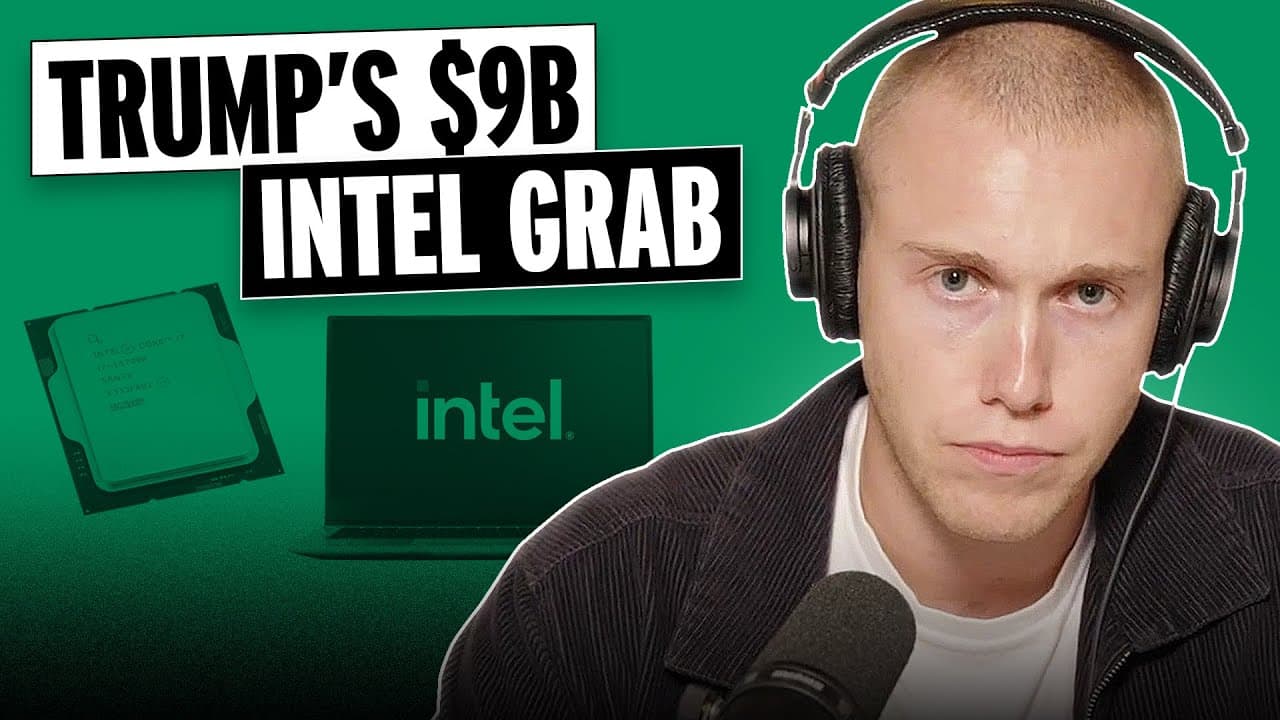
The U.S. government acquired a 10% stake in Intel worth nearly $9 billion, making it the chipmaker’s largest shareholder without receiving a board seat or governance rights. Economist Justin Wolfers argues that passive ownership alone does not change Intel’s management, strategy, operations, or procurement position, leaving the policy’s intended economic benefit unclear.
Transcript
Today's number 46. That's how many people are employed by the fire department of Antarctica. When asked what they do all day, a spokesperson replied, "More than McKenzie." Welcome to Profy Markets. I'm Edson. It is August 26th. Let's check in on yesterday's market vitals. The major indices all fell, retreating from last week's rally following Jerom... Read More
Key Insights
- The U.S. government’s nearly $9 billion purchase gives it a 10% stake in Intel and makes Washington the company’s largest shareholder. The arrangement provides no board seat or governance rights, so formal ownership does not give the government an announced role in managing Intel.
- Intel shares rose more than 6% following the announcement. The discussion suggests investors may be pricing in the possibility of preferential treatment or stronger political support, although no specific benefit, procurement commitment, bailout, or operational assistance was identified in the stated terms.
- Passive government ownership does not automatically change Intel’s chief executive, strategy, business lines, or position in federal procurement. Justin Wolfers characterizes the transaction as moving stock certificates from one owner’s safe to the Federal Treasury without changing the company’s underlying operations.
- Past U.S. interventions in strategic industries were presented as responses to crises. The examples include nationalizing railroads and communications systems during World War I, temporarily seizing steel mills to avert a strike, and placing Fannie Mae and Freddie Mac into federal conservatorship after the 2008 crisis.
- The stated case for acquiring Intel is unclear because the discussion identifies no immediate economic collapse requiring intervention. Elson notes that the AI economy is performing strongly and that Nvidia alone is described as being worth 44 times Intel, weakening the argument that Intel presents a broad economic emergency.
- Preferential treatment could provide Intel with a practical advantage if federal agencies bought its chips or the administration pressured private companies to use them. Wolfers notes that such actions would represent active intervention, despite statements that the government intends to remain a passive shareholder.
- Government ownership could reduce external oversight if the federal government replaces shareholders who might otherwise act as activist investors. Because officials say they will not actively influence Intel, Wolfers suggests the transaction may leave one fewer group scrutinizing the company’s board and decisions.
- The central policy question is what specific problem stock ownership solves. Wolfers argues that industrial policy should begin by identifying a defined problem and then selecting an appropriate intervention, while the Intel transaction appears to offer ownership without a clearly stated mechanism for improving the company.
Install to Summarize YouTube Videos and Get Transcripts
Explore YouTube Video Summarizer or Get YouTube Transcript Extractor
Questions & Answers
Q: Why did the U.S. government acquire 10% of Intel?
The discussion does not identify a clear, officially stated problem that the acquisition solves. Possible explanations raised include supporting a strategically important chipmaker, reducing reliance on foreign chip production, or positioning Intel for preferential treatment. However, the government reportedly receives no board seat or governance rights and says it will remain passive, leaving the practical purpose uncertain.
Q: What does the government’s Intel stake change for the company?
According to Justin Wolfers, passive ownership alone changes very little. Intel retains its chief executive, corporate strategy, lines of business, and existing position in the federal procurement process. Without management involvement, purchasing commitments, a bailout, or pressure on other companies to use Intel chips, the transaction mainly transfers shares into the Federal Treasury’s ownership.
Q: How much did the U.S. government invest in Intel?
The government took a 10% stake in Intel worth nearly $9 billion. That purchase made Washington the chipmaker’s largest shareholder. Despite the size of the position, the government will not receive a board seat or governance rights under the arrangement described, and officials reportedly characterize the federal government as a passive investor rather than an active manager.
Q: Why did Intel shares rise after the government investment?
Intel shares increased more than 6% after the announcement. The discussion suggests that markets may expect government ownership to bring political support or preferential treatment. Potential advantages could include favorable federal procurement or pressure on other businesses to adopt Intel products, but no such commitment was identified, and officials reportedly denied plans to use government leverage in that way.
Q: Is the Intel investment similar to previous U.S. interventions?
The United States has previously intervened in strategic industries, including nationalizing railroads and communications systems during World War I, temporarily seizing steel mills to avert a strike, and controlling Fannie Mae and Freddie Mac after the 2008 crisis. The distinction emphasized here is that those actions addressed perceived emergencies, while no comparable imminent collapse involving Intel is established.
Q: Could Intel receive preferential treatment from the government?
Preferential treatment is presented as a possibility, not an established fact. The government could purchase Intel chips for federal use or pressure companies such as Apple to select Intel products. Wolfers notes that these actions could materially support Intel, but they would conflict with statements that the government will remain passive and will not use its leverage to rescue the company.
Q: Why does Justin Wolfers criticize the Intel transaction?
Wolfers argues that the policy lacks a clear link between the action taken and a defined economic problem. Simply relocating ownership of stock does not alter Intel’s leadership, operations, strategy, or customers. If officials reject active management, procurement preferences, and a bailout, he sees no identified mechanism through which federal ownership alone improves Intel or benefits the broader economy.
Q: Does the Intel stake give the government control over management?
The arrangement described does not give the government a board seat or governance rights, and officials say the government intends to act as a passive investor. That means the announced stake does not formally change Intel’s chief executive or corporate strategy. Any meaningful control would require additional intervention beyond the ownership terms presented in the discussion.
Summary & Key Takeaways
-
The U.S. government acquired 10% of Intel for nearly $9 billion, becoming its largest shareholder while accepting no board seat or governance rights. Intel shares rose more than 6% after the announcement, possibly because investors expected preferential treatment, although the administration reportedly described the government as a passive investor.
-
Ed Elson questions why intervention is necessary when the economy and AI sector are performing well. He contrasts the Intel purchase with earlier government interventions involving railroads, steel mills, Fannie Mae, and Freddie Mac, arguing that those actions responded to crises while Intel’s circumstances do not present comparable imminent economic collapse.
-
Justin Wolfers argues that transferring Intel shares into federal ownership does not inherently help the company. Its chief executive, corporate strategy, business operations, and procurement status remain unchanged. Any practical benefit would require additional intervention, such as favored purchasing or pressure on customers, actions the administration says it will not pursue.
Read in Other Languages (beta)
Share This Summary 📚
Summarize YouTube Videos and Get Video Transcripts with 1-Click
Try YouTube Summary with ChatGPT & Claude or YouTube Transcript Generator
Explore More Summaries from The Prof G Pod – Scott Galloway 📚






Summarize YouTube Videos and Get Video Transcripts with 1-Click
Try YouTube Summary with ChatGPT & Claude or YouTube Transcript Generator