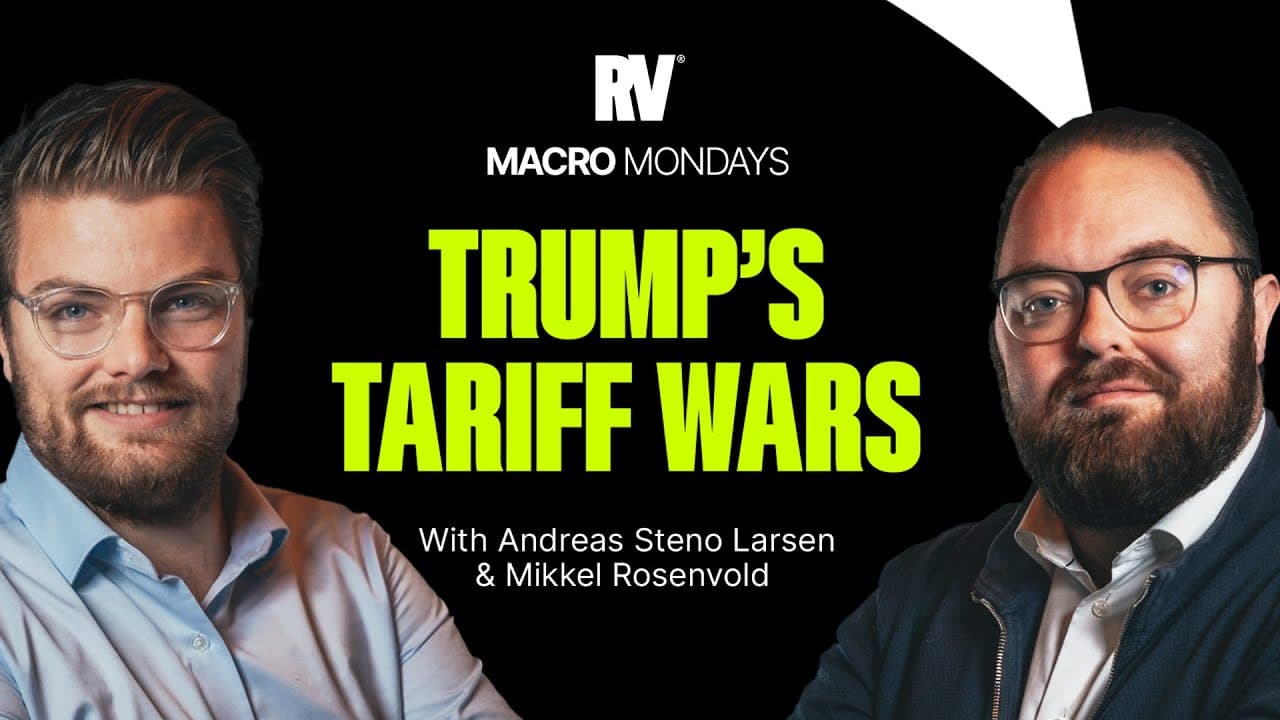
Can Tariffs REALLY Crash the Economy? Macro Monday
TL;DR
Tariffs are not presented as certain to crash the economy, though reciprocal measures could create market volatility and hurt some emerging markets more than larger economies. Macro Monday examines Japan’s diplomatic response, signs of a manufacturing rebound, dwindling Federal Reserve reverse-repo liquidity, weak Ethereum sentiment, and expectations for a softer dollar if inflation falls. Read on for the specific risks, signals, and potential opportunities discussed.
Transcript
y it's good to be here at the main blockchain event of this year you get to speak to the smartest people people like you trying to figure this out but also the people on stage they're the experts what more can you ask it's a brilliant brilliant event and you'll come away with lots of new ideas and a better understanding of this incredible exponenti... Read More
Key Insights
- Global crypto events like TOKEN2049 and Consensus Hong Kong are pivotal for networking and shaping the future of digital assets.
- Trump’s tariff policies are creating a pattern of market volatility, affecting both emerging and developed economies differently.
- There is a potential economic singularity by 2030, urging preparation for future economic changes.
- Kanye West’s comments on liquidity highlight the democratization of financial analysis, even among celebrities.
- Current sentiment on Ethereum is low, but a small positive trigger could lead to significant upward movement.
- The manufacturing sector is showing signs of a rebound, indicating a potential bullish trend in the economy.
- Geopolitical risks are decreasing, which could lead to more stable global markets.
- The dollar is expected to weaken soon, especially if upcoming CPI reports show lower inflation.
Install to Summarize YouTube Videos and Get Transcripts
Explore YouTube Video Summarizer or Get YouTube Transcript Extractor
Questions & Answers
Q: Can tariffs really crash the economy?
The discussion does not present an economic crash as inevitable. It argues that reciprocal tariffs may cause volatility and substantial pain for some emerging markets, while some of the world’s largest countries may have less to fear.
Q: How did Japan respond to Trump’s tariff plans?
Japan’s prime minister met with Donald Trump and calmly addressed concerns about the US trade deficit with Japan. He also agreed to buy more liquefied natural gas from the United States, an approach the hosts describe as a possible blueprint for reaching a deal.
Q: How could countries handle Donald Trump’s tariff negotiations?
The suggested approach is to engage directly, agree where possible, and focus on leaving the meeting with a workable deal. Japan is presented as an example because its prime minister appeared to build rapport with Trump without receiving an extensive to-do list.
Q: What does the Federal Reserve’s overnight reverse repo facility indicate?
The facility is described as being close to the zero lower bound, meaning that this source of Federal Reserve liquidity is nearly empty. The speakers say policymakers may therefore need to find another liquidity mechanism to support future liquidity conditions.
Q: What is the outlook for the manufacturing sector?
The manufacturing sector is showing signs of a rebound. The discussion treats that recovery as evidence of a potentially bullish economic cycle, with stronger production and demand supporting a broader upswing.
Q: Why is sentiment toward Ethereum low?
Ethereum sentiment is described as weak because market positioning and speculation have turned negative. However, the discussion suggests that even a small positive trigger could produce a significant upward move from such depressed sentiment.
Q: Why might the dollar weaken?
The dollar is expected to weaken if upcoming CPI data show lower inflation. The discussion connects a softer inflation report with Federal Reserve policy expectations and changing global economic conditions.
Q: What are TOKEN2049 Dubai and Consensus Hong Kong 2025?
They are global crypto events focused on networking, expert insights, partnerships, and digital assets. Consensus Hong Kong 2025 is scheduled for February 18 through February 20, while TOKEN2049 Dubai is promoted as a place to meet experts and develop new ideas about the crypto economy.
Summary & Key Takeaways
-
The discussion covers the impact of Trump’s tariffs on global markets, with a focus on how different countries might respond to reciprocal tariffs. There is an exploration of how these policies could ultimately lead to a reduction in global tariffs.
-
The conversation touches on the current economic cycle, highlighting signs of recovery in the manufacturing sector and the potential for a bullish market trend. There is also a focus on the impact of deregulation on financial sectors.
-
There is an analysis of current market sentiment, particularly regarding cryptocurrencies like Ethereum. The discussion also includes insights into geopolitical risks and their potential impact on markets, as well as expectations for the dollar and inflation.
Read in Other Languages (beta)
Share This Summary 📚
Summarize YouTube Videos and Get Video Transcripts with 1-Click
Try YouTube Summary with ChatGPT & Claude or YouTube Transcript Generator
Explore More Summaries from Real Vision 📚



Summarize YouTube Videos and Get Video Transcripts with 1-Click
Try YouTube Summary with ChatGPT & Claude or YouTube Transcript Generator