Chlorine - Periodic Table of Videos
TL;DR
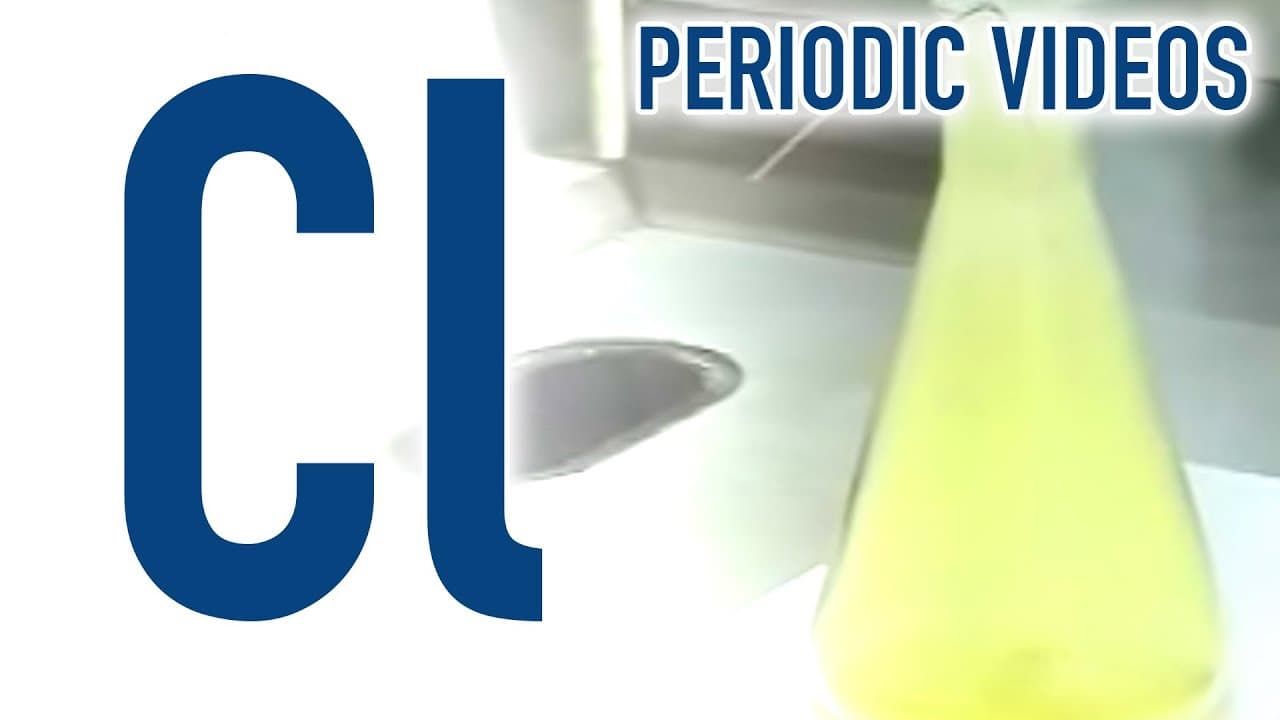
Chlorine is a greenish-yellow, highly reactive, poisonous gas made of Cl2 molecules and much heavier than air. The demonstration shows hot aluminium forming aluminium trichloride and iron wool forming iron chloride, with both reactions becoming intense and exothermic. Chlorine also reacts with water to form hydrochloric acid and was used as a chemical weapon during the First World War. Read on for its chemistry, hazards, production, and uses.
Transcript
So the last time we tried to film chlorine experiments we found that the chlorine cylinder itself had a slight problem, it was seized here. But the Stig has acquired another cylinder of chlorine. So you know what this means, it means that we feel duty-bound to increase the intensity of our chlorine video and show you some chemistry with chlorine. C... Read More
Key Insights
- 🫢 Chlorine gas is a dangerous compound due to its high reactivity and toxicity.
- 🔫 It was used as a chemical weapon during the First World War.
- 🤘 Chlorine gas can react with metals like aluminum and iron to form metal chlorides.
Install to Summarize YouTube Videos and Get Transcripts
Explore YouTube Video Summarizer or Get YouTube Transcript Extractor
Questions & Answers
Q: What is chlorine gas, and why is it dangerous?
Chlorine is a greenish-yellow gas consisting of two bonded chlorine atoms, written as Cl2. It is much heavier than air, incredibly reactive, and poisonous. It also reacts with water to form hydrochloric acid, which can attack the lungs and cause them to fill with fluid.
Q: Where is chlorine located on the periodic table?
Chlorine sits on the right-hand side of the periodic table among the halogens. Its group is called either group seven or group seventeen in the transcript. Chlorine strongly seeks another electron to obtain a noble-gas configuration.
Q: How was chlorine used as a chemical weapon during the First World War?
Chlorine gas was released so that it spread across battlefields and sank into trenches because it is denser than air. It could attack soldiers’ lungs and corrode metal fittings such as brass buttons and buckles. It was not a very effective weapon because a change in wind direction could blow it back toward those releasing it.
Q: What happens when aluminium reacts with chlorine?
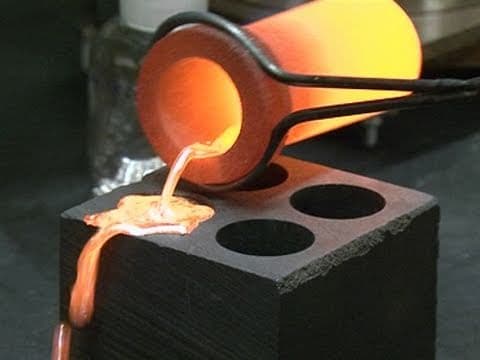
Hot aluminium reacts very rapidly with chlorine to form aluminium trichloride, AlCl3. The demonstration produced an intense reaction and a flame, while aluminium trichloride emerged from the flask and reacted with moisture in the air. All the aluminium was consumed.
Q: What happens when iron reacts with chlorine?
Heated iron wool reacts rapidly with chlorine to form iron chloride. The reaction is very exothermic, making the flask very hot. The transcript describes chlorine as able to react with most metals, though not all of them.
Q: Do all metals react with chlorine?
Most metals react with chlorine, but the transcript says lead does not. Sodium can burn in chlorine to make salt, while aluminium forms aluminium trichloride and iron forms iron chloride. These examples demonstrate chlorine’s strong reactivity.
Q: How is chlorine produced from sodium chloride?
Chlorine is made from sodium chloride solution by electrolysis, which passes an electric current through the solution. The process is very energy intensive. At one time, one percent of the UK’s electricity was used to make chlorine from sodium chloride.
Q: Where is chlorine found, and what is it used for?
Chlorine is common in sodium chloride found in the sea, dried salt lakes, and prehistoric salt deposits. The transcript identifies deposits in Cheshire in northern England and Salzburg in Austria. Industrially produced chlorine is used particularly to make PVC plastic.
Summary & Key Takeaways
-
Chlorine gas is a greenish-yellow gas made up of two chlorine atoms bonded together.
-
It is heavier than air and is incredibly reactive and poisonous.
-
Chlorine gas was used as a chemical weapon during the First World War, causing damage to the lungs and corroding metal.
Read in Other Languages (beta)
Share This Summary 📚
Summarize YouTube Videos and Get Video Transcripts with 1-Click
Try YouTube Summary with ChatGPT & Claude or YouTube Transcript Generator
Explore More Summaries from Periodic Videos 📚
Summarize YouTube Videos and Get Video Transcripts with 1-Click
Try YouTube Summary with ChatGPT & Claude or YouTube Transcript Generator