How to Use Trends to Grow a YouTube Channel
TL;DR
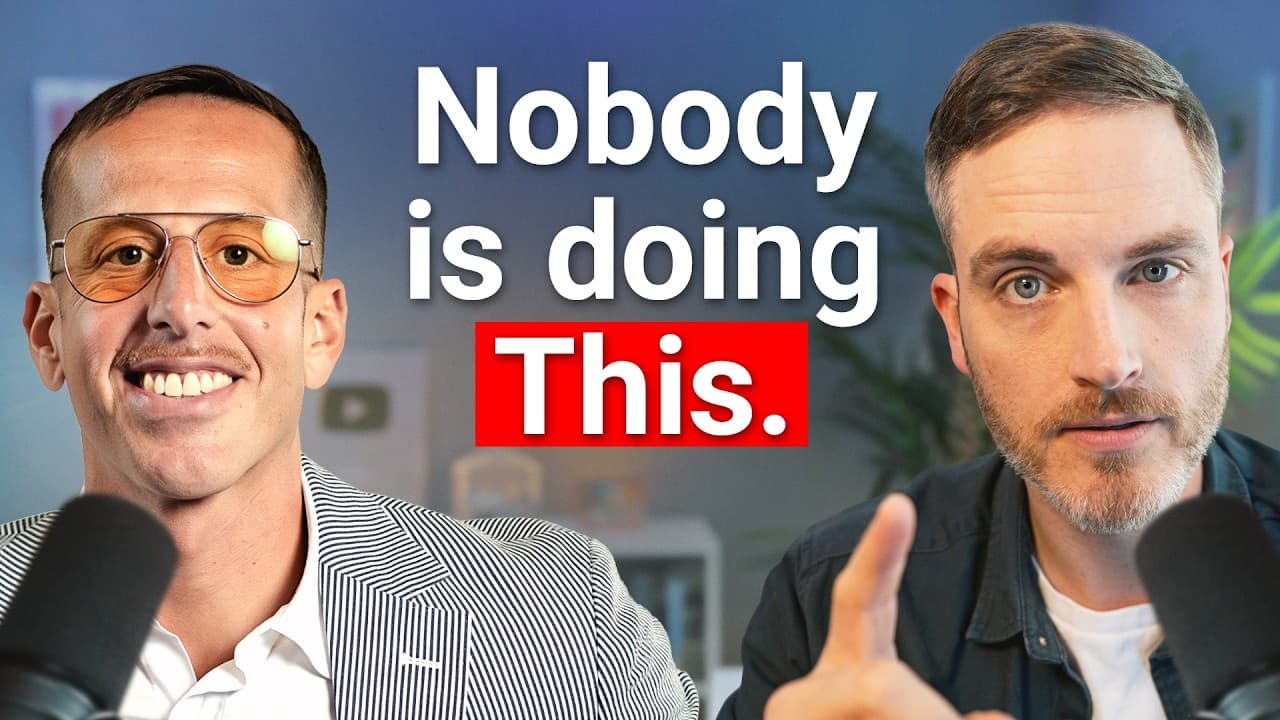
Find timely topics in your niche, publish while interest is rising, and make your version more useful than competing videos. Ben Azadi applied this approach to a video about foods RFK Jr. was looking to ban, spending roughly four hours on research and recording before the video eventually surpassed four million views.
Transcript
And once I started doing that consistently, Sean, the channel took off, right? I went from 300 to 400,000 views a month, which I was getting on average, to over a million. >> That's Ben Aotti, a New York Times bestselling author who's now running the second biggest channel in the entire health space on YouTube. But almost 7 years ago when he starte... Read More
Key Insights
- YouTube growth does not have to be slow when creators identify subjects with rising public interest and publish before competing coverage becomes crowded. Azadi contrasted the nearly seven months required for his first thousand subscribers with later months that brought more than 100,000 subscribers.
- Trend surfing is the practice of identifying a timely subject and becoming either one of its earliest publishers or the creator of its strongest available video. Azadi attributes his largest video's performance to choosing an important topic, publishing at the right moment, and getting ahead of similar videos.
- Azadi's RFK Jr. video required about three hours of article research and another 45 minutes of recording. The roughly four-hour production was not a rushed, ten-minute effort, and the finished video eventually accumulated more than four million views.
- A repeatable trend-monitoring system can include relevant articles, studies, TikTok, Instagram, other social feeds, and videos already receiving substantial attention. Azadi has a team member monitor emerging stories, but he says an individual creator can perform the same research independently.
- YouTube's homepage in incognito mode can reveal videos, concepts, formats, and titles being presented to a broad audience without the influence of the creator's personal watch history. Azadi uses this view to spot successful ideas that could fit topics he wants to cover.
- A useful response to a viral topic adds depth or a practical solution instead of merely repeating the original problem. After seeing a popular TikTok about microplastics, Azadi planned a deeper YouTube treatment that would also address how to remove or reduce the problem.
- Fasting timeline videos became Azadi's top-performing content because they connected a recurring area of audience interest with his established knowledge. His examples examined what happens inside the body at stages such as 24, 30, 48, 72, and 100 hours without food.
- Creator enthusiasm can strengthen the presentation of a strategically chosen topic. Azadi believes his fasting videos benefit from his animation and excitement because he has practiced and taught fasting since 2014, making the content both trend-aware and closely aligned with his interests.
Install to Summarize YouTube Videos and Get Transcripts
Explore YouTube Video Summarizer or Get YouTube Transcript Extractor
Questions & Answers
Q: How can creators use trends to grow on YouTube?
Creators can monitor rising topics in their niche, choose one that matches their knowledge, and publish while public interest is still building. The goal is to be among the first credible videos available or to make the strongest version of an existing idea. Azadi used this approach for a timely RFK Jr. topic, and that video eventually exceeded four million views.
Q: How did Ben Azadi get more than four million views?
Azadi published a video about foods RFK Jr. was looking to ban while discussion of RFK Jr. and Make America Healthy Again was attracting attention. He recognized the timing, researched relevant articles, prepared a script, and released the video before many similar videos appeared. He says the combination of topic importance, timing, and early publication drove the result.
Q: How long did Ben Azadi spend making his viral video?
Azadi estimated that the video took roughly four hours to create. He spent about three hours researching the foods RFK Jr. was reportedly looking to ban and assembling the script, followed by approximately 45 minutes of recording. He intentionally completed it quickly because he wanted to publish among the earliest videos addressing the timely subject.
Q: Where can YouTube creators find trending video ideas?
Creators can review articles, studies, TikTok videos, Instagram content, and other items appearing in their social feeds. Azadi also recommends checking the YouTube homepage in incognito mode, which removes the influence of personal watch history and can expose concepts, formats, and titles that YouTube is currently presenting to a broader audience.
Q: Why should creators browse YouTube in incognito mode?
Incognito mode provides a homepage that is not shaped by the creator's normal viewing history. According to the discussion, this can reveal videos that are performing well with broader audiences. Even when a displayed video covers a different subject, its concept, title, or format may inspire a relevant idea that the creator can adapt to a specific niche.
Q: How can creators improve on an already viral topic?
Creators can go deeper than the viral source and add a practical solution that the original content did not provide. Azadi described seeing a popular TikTok about microplastics in the body and everyday products. Because he already knew the subject, he planned a YouTube video that would explain both the problem and ways to remove the microplastics.
Q: Why did Ben Azadi's fasting videos perform well?
Azadi's fasting timeline videos connected recurring public interest with a subject he had taught and practiced since 2014. The videos explained what happens inside the body at different points during a fast, including 24, 30, 48, 72, and 100 hours. He also believes his visible excitement and animation helped make the presentations successful.
Q: Can a new creator achieve fast growth on YouTube?
Azadi argues that YouTube growth can accelerate when a creator learns to identify timely, potentially viral subjects. His first thousand subscribers took almost seven months, but his channel later experienced months with more than 100,000 new subscribers. His experience suggests that early positioning, strong execution, and fast publication can reduce reliance on slow, gradual growth.
Summary & Key Takeaways
-
Ben Azadi initially viewed YouTube as a slow-growth platform because gaining his first thousand subscribers took almost seven months. His perspective changed after seeing that timely videos could generate immediate results. He later experienced months with more than 100,000 new subscribers and concluded that creators can actively pursue faster growth.
-
A major breakthrough came from publishing a timely video about foods RFK Jr. was looking to ban. Azadi released it while public discussion around RFK Jr. and Make America Healthy Again was rising. Roughly three hours of research and 45 minutes of recording produced a video that eventually exceeded four million views.
-
Azadi now studies articles, research, social feeds, viral short-form videos, and YouTube's homepage in incognito mode to identify promising topics. He connects those trends to subjects he understands, then adds depth or a practical solution. His fasting timeline videos repeatedly performed well because they combined audience interest with genuine expertise and enthusiasm.
Read in Other Languages (beta)
Share This Summary 📚
Summarize YouTube Videos and Get Video Transcripts with 1-Click
Try YouTube Summary with ChatGPT & Claude or YouTube Transcript Generator
Explore More Summaries from Think Media Podcast 📚
Summarize YouTube Videos and Get Video Transcripts with 1-Click
Try YouTube Summary with ChatGPT & Claude or YouTube Transcript Generator