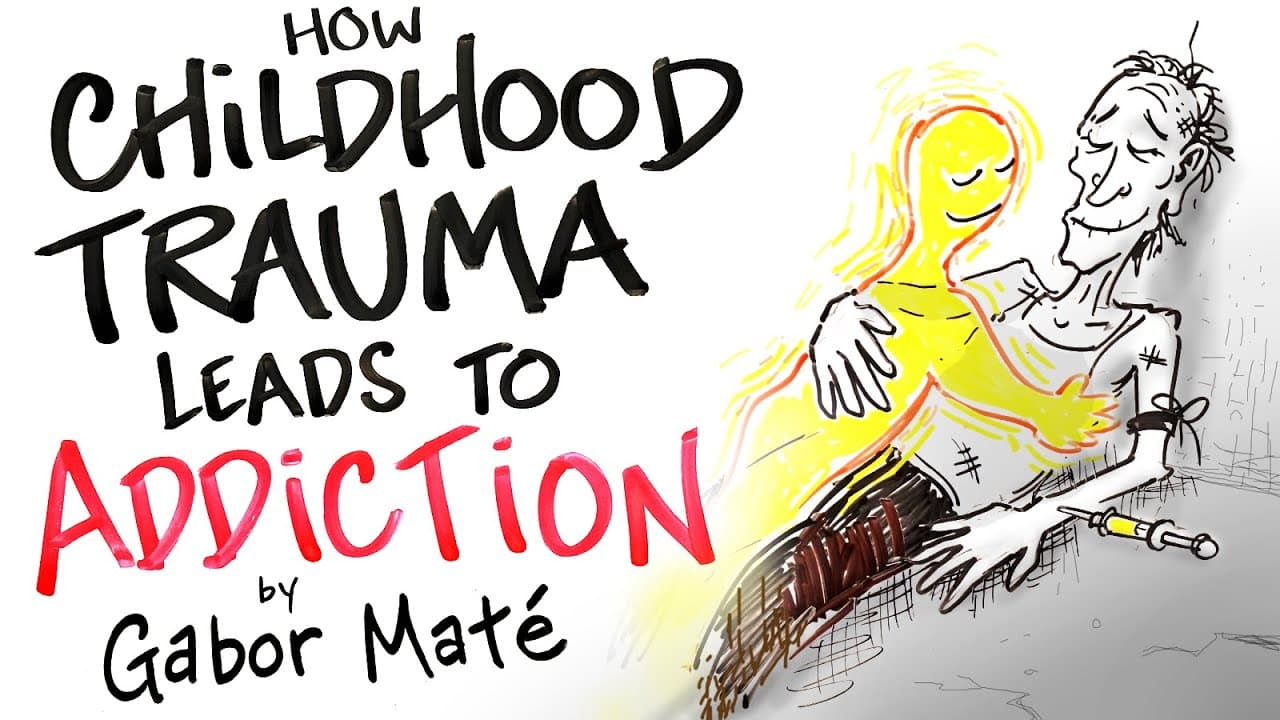
How Does Childhood Trauma Fuel Addiction and Recovery?
TL;DR
Addiction is driven by unresolved childhood trauma that disrupts attachment and authenticity, not merely genetics or a choice. Recovery involves recognizing how past hurts shape present behavior and rebuilding a connection to body and emotions to rediscover the self. The focus is on healing through reconnection rather than punishment or simple treatment.
Transcript
so an addiction is a complex psychological physiological process but which manifests in any behavior any behavior that a person enjoys that a person enjoys finds relief in and therefore craves in the short term but suffers negative consequences in the long term and doesn't give up despite the negative consequences. So craving pleasure relief in... Read More
Key Insights
- Attachment and authenticity are two fundamental survival needs; when one is threatened, individuals neglect the other leading to long term dysregulation.
- Addiction is not necessarily a genetic or purely biological disease but a response to trauma and disconnection, manifesting as cravings for short term relief with lasting negative consequences.
- Trauma is defined by internal experiences and disconnection rather than the external events themselves, shaping how people perceive themselves and others in the present moment.
- The endorphin system linked to attachment plays a key role in why addictive substances or behaviors feel like a warm hug or connection in the moment.
- Healing requires acknowledging the trauma and its current expressions, not just the original events, to restore present-mense awareness and regulation.
- Recovery involves restoring the connection to the body and emotions, thereby rediscovering one’s authentic self beyond the addiction.
- Addiction serves as a misguided attempt to solve a past problem, offering temporary relief while compounding future struggles if left unaddressed.
- The primary therapeutic aim should be reconnection rather than punishment, with a focus on rebuilding trust in self and others through self acceptance and emotional regulation.
Install to Summarize YouTube Videos and Get Transcripts
Explore YouTube Video Summarizer or Get YouTube Transcript Extractor
Questions & Answers
Q: How does the speaker describe addiction in relation to behavior rather than substances?
The speaker explains addiction as a complex process that can manifest in any behavior that provides short term relief and pleasure yet causes long term harm. It is not limited to substances like drugs or alcohol; it can involve activities such as sex, gambling, gaming, or work. The key point is the pattern of craving, relief, and negative consequences that persists despite harm, indicating that addiction can be a broader behavioral issue rooted in trauma and unmet needs.
Q: What is the speaker’s view on the genetic or primary brain disorder explanations of addiction?
The speaker challenges conventional views by arguing that addiction is not primarily a genetic brain disorder nor a simple choice. He suggests that while genetics may play a role, the core issue lies in childhood trauma and its lasting impact on emotion regulation and attachment. Recovery centers on reconnecting with oneself rather than labeling it as purely a genetic defect or a voluntary choice.
Q: Why are attachment and authenticity described as essential survival needs?
Attachment is described as essential for care and safety, ensuring that a child can survive with the support of others, while authenticity is essential for staying connected to one’s own feelings and gut responses, which historically aided survival. When authenticity threatens attachment, individuals suppress emotions, leading to dissociation from self and increased vulnerability to addiction as a misguided way to cope.
Q: How does early life anger teach us about later development of addiction, according to the talk?
The talk explains that a child who feels anger when tempted with a cookie may be met with a harsh parental response focusing on maintaining attachment. When anger is not allowed or acknowledged, the child learns to suppress authentic feelings to keep receiving love, which distorts self-connection and contributes to later addictive coping mechanisms.
Q: What does the speaker say about trauma versus traumatic events?
Trauma is not the event itself, but what happens inside a person as a result of those events. It involves disconnection from emotions, difficulty living in the present, and negative beliefs about oneself and others. These internal processes shape ongoing behavior and can underpin addiction as an attempt to manage unresolved pain.
Q: How is recovery framed in the interview?
Recovery is framed as reconnecting with the self through restoring connection to the body and emotions that were lost. It involves recognizing the present manifestations of past trauma and learning to live with authentic self-awareness. The aim is to rediscover the self and reduce reliance on addictive coping mechanisms through integration and self-acceptance.
Q: What role does the body play in the addiction and recovery process?
The body is central because authentic living requires being attuned to gut feelings and physical sensations. Trauma disrupts this attunement, so recovery emphasizes rebuilding a relationship with the body and emotions. This embodied reconnection helps regulate arousal, reduce cravings, and support sustainable changes away from addictive patterns.
Q: What is the ultimate goal of healing according to the speaker?
The ultimate goal is to recover the self by restoring a sense of authenticity and attachment balance. Healing aims to transform the effects of childhood trauma into present-mative self knowledge, enabling individuals to live with increased emotional regulation, stronger relationships, and a healthier sense of identity beyond addiction. This reconnection is the pathway to lasting recovery.
Summary & Key Takeaways
-
In childhood, two core needs are attachment and authenticity, which shape how a person survives and relates to themselves and others. When authenticity threatens attachment, people suppress feelings and lose touch with their gut reactions, contributing to later addictive behaviors.
-
Addiction is described as a coping mechanism that temporarily relieves distress but creates long term problems, and it is not treated effectively unless underlying traumas and their present manifestations are addressed.
-
Recovery is framed as rediscovery and reconnection with one’s body and emotions, enabling the individual to reclaim selfhood and reduce reliance on addictive behaviors as a substitute for unresolved pain.
Read in Other Languages (beta)
Share This Summary 📚
Summarize YouTube Videos and Get Video Transcripts with 1-Click
Try YouTube Summary with ChatGPT & Claude or YouTube Transcript Generator
Explore More Summaries from After Skool 📚


Summarize YouTube Videos and Get Video Transcripts with 1-Click
Try YouTube Summary with ChatGPT & Claude or YouTube Transcript Generator