How Do Beliefs Shape Human Behavior and Superstitions?
TL;DR
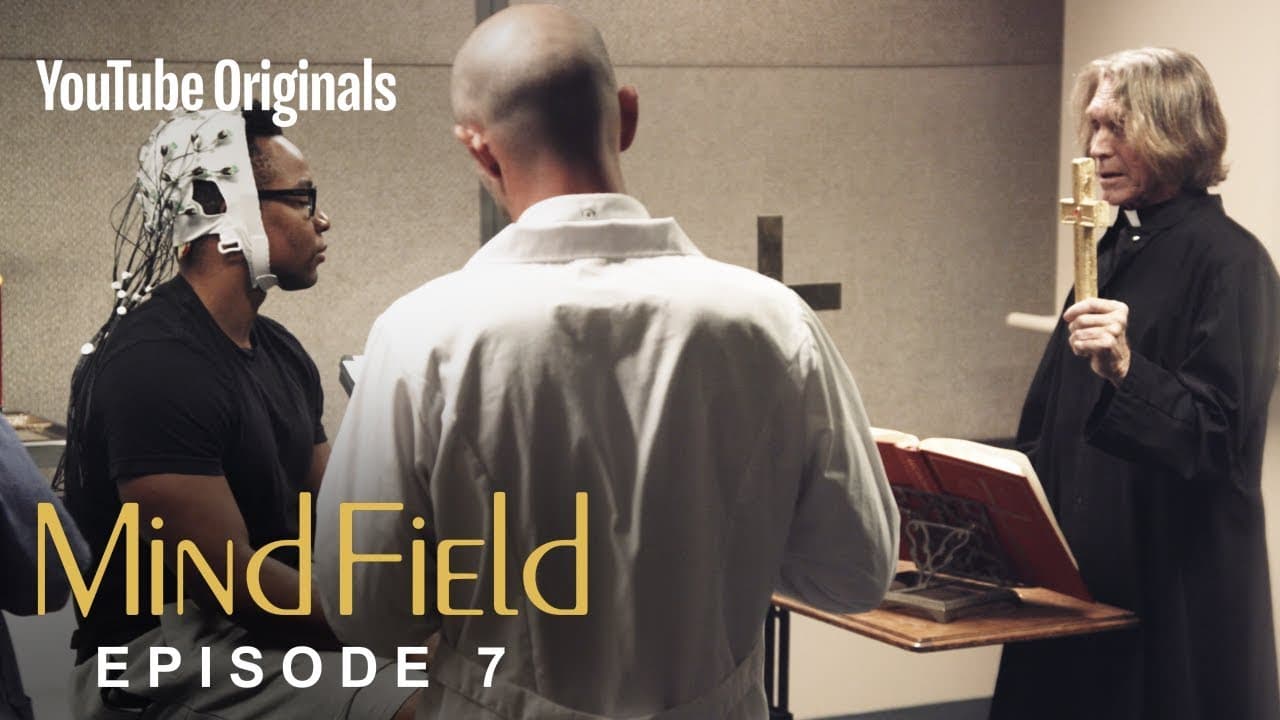
Beliefs significantly shape human behavior, making people more likely to create superstitions to feel a sense of control in uncertain situations. A replication of B.F. Skinner's experiment with humans, dubbed 'Victory Vault,' illustrates how individuals develop their own rituals even when evidence shows they lack control. Additionally, a reverse exorcism experiment demonstrated how belief and ritual can alter consciousness and create transformative experiences.
Transcript
Hey, Mind Field! Vanessa here. Just kidding. My name is actually Michael. That part when I said that I was Vanessa... that was a lie. So you're welcome. Humans love lies. More precisely, we love things that aren't entirely true-- because we have to. It's often all we have. Completely proving something can be difficult, if not impossible. So instead... Read More
Key Insights
- 💨 Humans have a natural inclination to form beliefs and superstitions as a way to gain a sense of control and navigate uncertainty.
- ❓ Skinner's superstitious behavior experiment with pigeons demonstrates that even animals can develop superstitious behaviors.
- 👯 The "Victory Vault" experiment reveals that people will create their own superstitious rituals or beliefs in order to control outcomes, even in the absence of evidence.
- 🛀 The reverse exorcism experiment shows that beliefs and external cues can induce altered states of consciousness and transform subjective experiences.
- 😌 The power of belief lies in its ability to shape perceptions and experiences, regardless of the objective reality.
- 😒 The use of religious and scientific symbolisms can enhance the effectiveness of rituals and reinforce beliefs.
Install to Summarize YouTube Videos and Get Transcripts
Explore YouTube Video Summarizer or Get YouTube Transcript Extractor
Questions & Answers
Q: How do humans form beliefs about the causes of their behavior?
Humans form beliefs about the causes of their behavior based on their observations and experiences. They rely on patterns and associations to create causal links between actions and outcomes.
Q: What is the significance of the Skinner Box and how does it relate to superstitions?
The Skinner Box, originally used to study animal behavior, shows that even animals like pigeons can develop superstitious behaviors when they believe that their actions control rewards. This suggests that humans, too, can develop superstitions in similar situations.
Q: How did the "Victory Vault" experiment demonstrate the formation of superstitions?
In the "Victory Vault" experiment, participants created their own superstitious rituals or beliefs to try and control the money being dispensed. This showed that people are inclined to invent beliefs that they think influence outcomes, even when there is no actual causal connection.
Q: What was the purpose of the reverse exorcism experiment?
The reverse exorcism experiment aimed to explore the power of belief by inducing altered states of consciousness through a fake ritual. The goal was to see if participants could be made to believe they were possessed by a spirit, highlighting the influence of beliefs and external cues on subjective experiences.
Summary & Key Takeaways
-
The episode explores the concept of belief and how humans form beliefs about the causes of their behavior.
-
A replication of B.F. Skinner's superstitious behavior experiment is conducted with humans instead of pigeons, revealing that people develop their own superstitions and rituals.
-
A reverse exorcism experiment is performed, showcasing the power of belief and how external cues and rituals can induce altered states of consciousness.
Read in Other Languages (beta)
Share This Summary 📚
Summarize YouTube Videos and Get Video Transcripts with 1-Click
Try YouTube Summary with ChatGPT & Claude or YouTube Transcript Generator
Explore More Summaries from Vsauce 📚
Summarize YouTube Videos and Get Video Transcripts with 1-Click
Try YouTube Summary with ChatGPT & Claude or YouTube Transcript Generator