Sustainable Silicon Fireside Chat
TL;DR
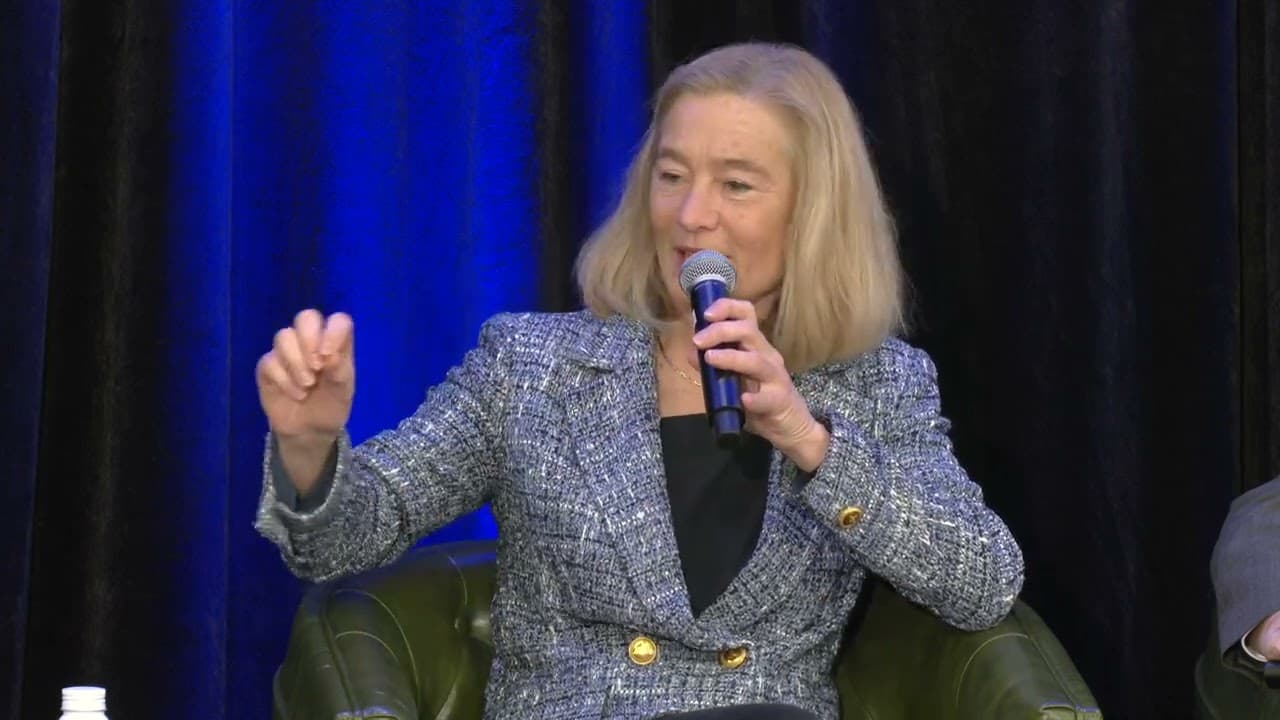
Global experts discuss the challenges of sustainability in the semiconductor industry and the need for collaboration across countries.
Transcript
welcome everyone to today's event I'm Mark Dugen the Tron director of the Stanford Institute for economic policy research also known as seper for those new to our orbit Seer has been supporting Economic Policy research here at Stanford for four decades we make a tremendous investment not only in our own faculty but in the next generation of Economi... Read More
Key Insights
- 😒 Silicon-based semiconductor production has significant environmental challenges, including the use of harmful chemicals and high water and energy consumption.
- 🪛 Creating awareness about the industry's environmental impact is crucial for driving action towards sustainability.
- 🇺🇸 Cooperative efforts between countries, such as Flanders, the Netherlands, and the United States, can lead to innovative solutions for sustainability in the semiconductor industry.
- 🪛 Promoting diversity and inclusion in the industry is essential for driving innovation and addressing workforce shortages.
- 💦 The Netherlands has experience in water management, which can contribute to sustainable processes in the semiconductor industry.
- 🥺 Engaging with citizens and involving them in sustainability initiatives can lead to lasting change.
- 👨🔬 Collaboration between industries, universities, and governments is necessary to drive research, innovation, and practical solutions.
Install to Summarize YouTube Videos and Get Transcripts
Explore YouTube Video Summarizer or Get YouTube Transcript Extractor
Questions & Answers
Q: Why is creating awareness about the environmental impact of semiconductor production important?
Creating awareness is crucial because many people are unaware of the pollution caused by semiconductor production. By raising awareness, we can generate a call for action and prioritize sustainability.
Q: How can Flanders and the Netherlands work together to make the semiconductor industry more sustainable?
Both countries can complement each other's strengths and fill in the missing elements in the semiconductor value chain. By collaborating and leveraging their experience in technology, water management, and sustainable materials, they can drive innovation and sustainability in the industry.
Q: How can diversity and inclusion be promoted in the industry?
Involving citizens, reaching out to diverse groups, and emphasizing STEM education can help encourage more diverse profiles in the industry. Collaborative programs, engagement with schools, and practical examples from companies can inspire students and individuals to pursue careers in technology.
Q: How can collaboration between the United States and European countries be enhanced?
The exchange of staff and students, sharing experiences, and fostering partnerships between universities can strengthen collaboration. Programs that promote the exchange of students and the development of networks can facilitate learning from each other's experiences.
Summary & Key Takeaways
-
The production of silicon-based semiconductors is harmful to the environment, using harmful chemicals, gases, and a significant amount of water and energy.
-
The success of the industry relies on business, engineering, and geopolitics.
-
Cooperation and awareness are essential in addressing the sustainability challenges faced by the industry.
Read in Other Languages (beta)
Share This Summary 📚
Summarize YouTube Videos and Get Video Transcripts with 1-Click
Try YouTube Summary with ChatGPT & Claude or YouTube Transcript Generator
Explore More Summaries from Stanford Institute for Economic Policy Research (SIEPR) 📚





Summarize YouTube Videos and Get Video Transcripts with 1-Click
Try YouTube Summary with ChatGPT & Claude or YouTube Transcript Generator