What Is Async IO in Python and How Does It Work?
TL;DR
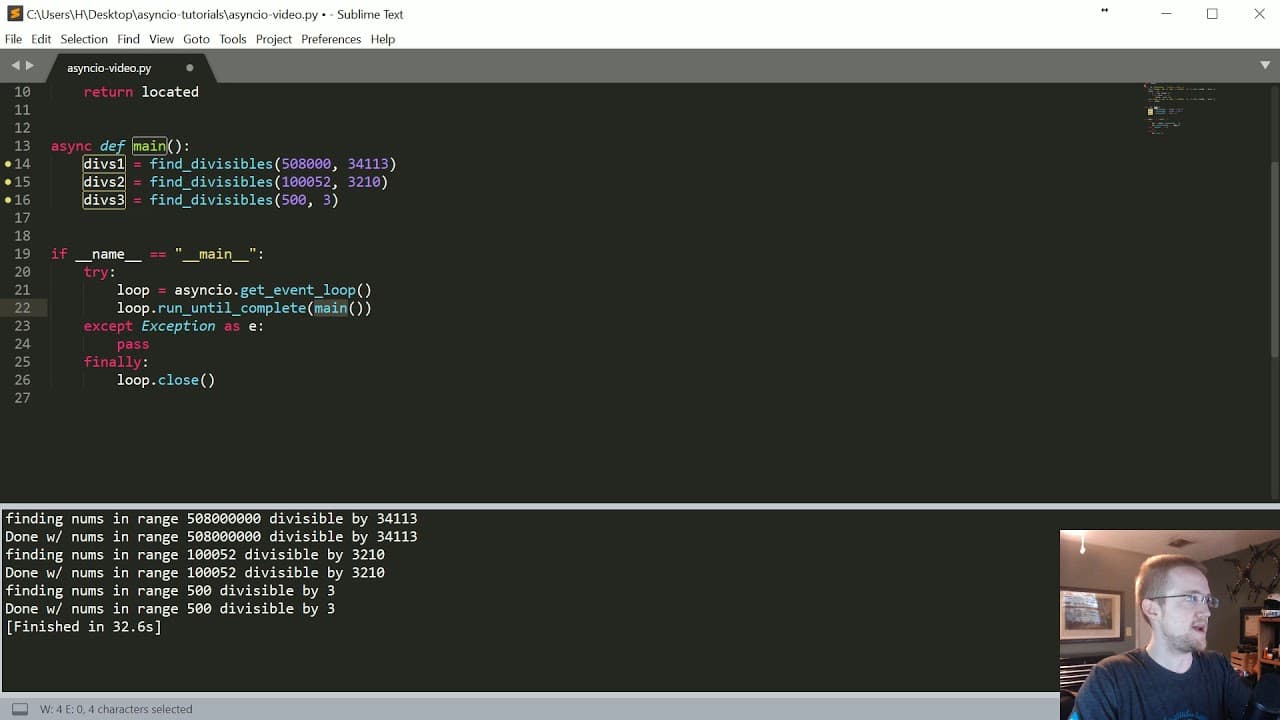
Async IO in Python allows asynchronous programming, enabling multiple tasks to run concurrently without waiting for each task to finish. This feature is particularly useful for web applications, as it prevents the entire page from freezing while waiting for server responses. To implement Async IO, use the 'async' keyword to define coroutines and the 'await' keyword to handle task completion effectively.
Transcript
what's going on everybody and welcome to another intermediate Python tutorial in this tutorial what we're going to be talking about is async IO or a sync EO depending on which way you want to say it I won't judge other people will and what async IO is for is for asynchronous programming and probably the best way to kind of understand concurrency in... Read More
Key Insights
- 👻 Async IO allows for asynchronous programming, which can improve the efficiency of handling tasks.
- 🥶 By using co-routines and the "await" keyword, multiple tasks can be handled concurrently without waiting for each to complete.
- 🕸️ Async IO is commonly used in web development to prevent entire pages from hanging when loading elements.
- 🥶 The "async" keyword is used to denote a function as a co-routine, and the "await" keyword is used to wait for the completion of a task.
- 📦 The async IO package in Python offers a variety of functions and methods to facilitate asynchronous programming.
- ❓ It is important to await the completion of tasks in async IO to avoid errors and ensure proper execution.
Install to Summarize YouTube Videos and Get Transcripts
Explore YouTube Video Summarizer or Get YouTube Transcript Extractor
Questions & Answers
Q: What is async IO used for?
Async IO is used for asynchronous programming, allowing tasks to be handled concurrently without waiting for each to complete. It is commonly used for handling web pages that need to load multiple elements.
Q: How does async IO prevent a web page from hanging?
Async IO allows elements of a web page to load asynchronously. If one element is taking a long time to load, other elements can still be loaded, preventing the entire page from hanging.
Q: How do you create a co-routine in Python?
To create a co-routine, you use the "async" keyword before "def" when defining a function. This signifies to Python that the function is a co-routine and can be used with async IO.
Q: What is the purpose of the "await" keyword in async IO?
The "await" keyword is used to wait for the completion of a task in async IO. It allows other tasks to continue running while the awaited task is being processed.
Summary & Key Takeaways
-
Async IO is used for asynchronous programming, which allows for tasks to be handled concurrently without waiting for each to complete.
-
This can be useful for handling web pages that need to load multiple elements, as it prevents the entire page from hanging if one element is taking a long time to load.
-
Async IO can be implemented by using the "async" keyword before "def" to create co-routines and using the "await" keyword to wait for the completion of a task.
Read in Other Languages (beta)
Share This Summary 📚
Summarize YouTube Videos and Get Video Transcripts with 1-Click
Try YouTube Summary with ChatGPT & Claude or YouTube Transcript Generator
Explore More Summaries from sentdex 📚





Summarize YouTube Videos and Get Video Transcripts with 1-Click
Try YouTube Summary with ChatGPT & Claude or YouTube Transcript Generator