What's left to explore? - Nathan Wolfe
TL;DR
The speaker explores the concept of biological dark matter, which is unclassified genetic information that may hold the key to discovering new forms of life.
Transcript
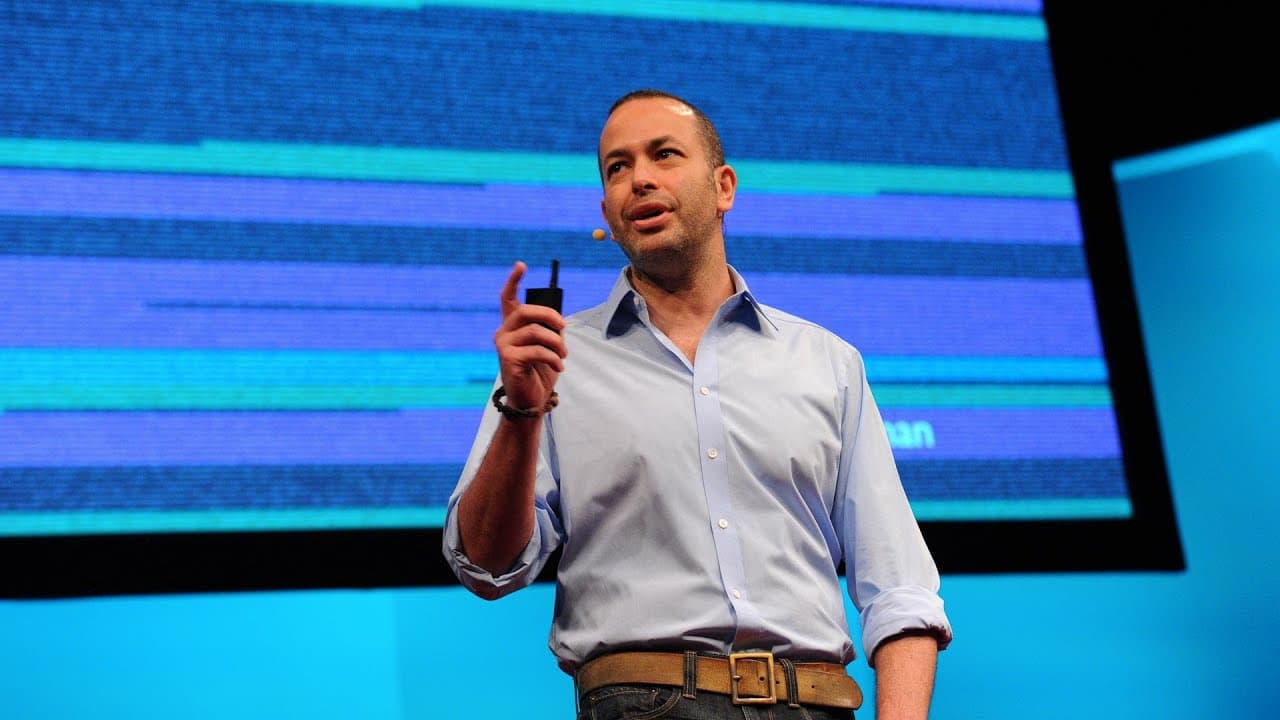
[Applause] recently I visited Beloit Wisconsin and I was there to honor a great 20th century Explorer Roy Chapman Andrews during his time at the American Museum of Natural History Andrews led a range of expeditions to charted regions like here in the GOI desert he was quite a figure he was later it said the basis of the Indiana Jones character and ... Read More
Key Insights
- 🤗 Roy Chapman Andrews and Martinus Beijerinck were significant explorers who opened up new worlds of exploration.
- 💁 Viruses, discovered by Beijerinck, represent a major portion of the genetic information on Earth.
- 👻 Deep sequencing techniques allow the exploration of biological dark matter.
- 💁 Biological dark matter may contain unidentified life forms and has potential practical applications.
- 👨🔬 It is crucial for future explorers to not limit themselves to what is already known and to search for unknowns in different fields.
- ❓ There is still much to explore on Earth, even if continents and mammals have been discovered.
- 🥳 Biological dark matter exists in various parts of the body, with different percentages.
Install to Summarize YouTube Videos and Get Transcripts
Explore YouTube Video Summarizer or Get YouTube Transcript Extractor
Questions & Answers
Q: What is biological dark matter?
Biological dark matter refers to unclassified genetic information that does not match any known organism. It is a form of life that remains undiscovered and unexplained.
Q: How much biological dark matter exists in our bodies?
Depending on the body part, the percentage of biological dark matter varies. In the nose, it is around 20%, the gut contains up to 40-50%, and in the blood, it is approximately 1-2%.
Q: How is biological dark matter discovered?
Biological dark matter is identified through deep sequencing techniques that analyze genetic information. Researchers compare the genetic sequences to known organisms and classify the unknown portions as dark matter.
Q: What are the potential applications of biological dark matter?
Studying biological dark matter could lead to the discovery of new forms of life, identification of the causes behind diseases like cancer, understanding outbreaks, and advancements in molecular biology.
Summary & Key Takeaways
-
The speaker recalls a lecture given to middle school students in Beloit, Wisconsin, where he was asked where to explore.
-
He discusses the story of Martinus Beijerinck, who discovered viruses and opened up a whole new world of exploration.
-
The speaker introduces the concept of biological dark matter, unclassified genetic information that could contain unidentified forms of life.
Read in Other Languages (beta)
Share This Summary 📚
Summarize YouTube Videos and Get Video Transcripts with 1-Click
Try YouTube Summary with ChatGPT & Claude or YouTube Transcript Generator
Explore More Summaries from TED-Ed 📚

Summarize YouTube Videos and Get Video Transcripts with 1-Click
Try YouTube Summary with ChatGPT & Claude or YouTube Transcript Generator