What Did Michel Foucault Say About Power and Progress?
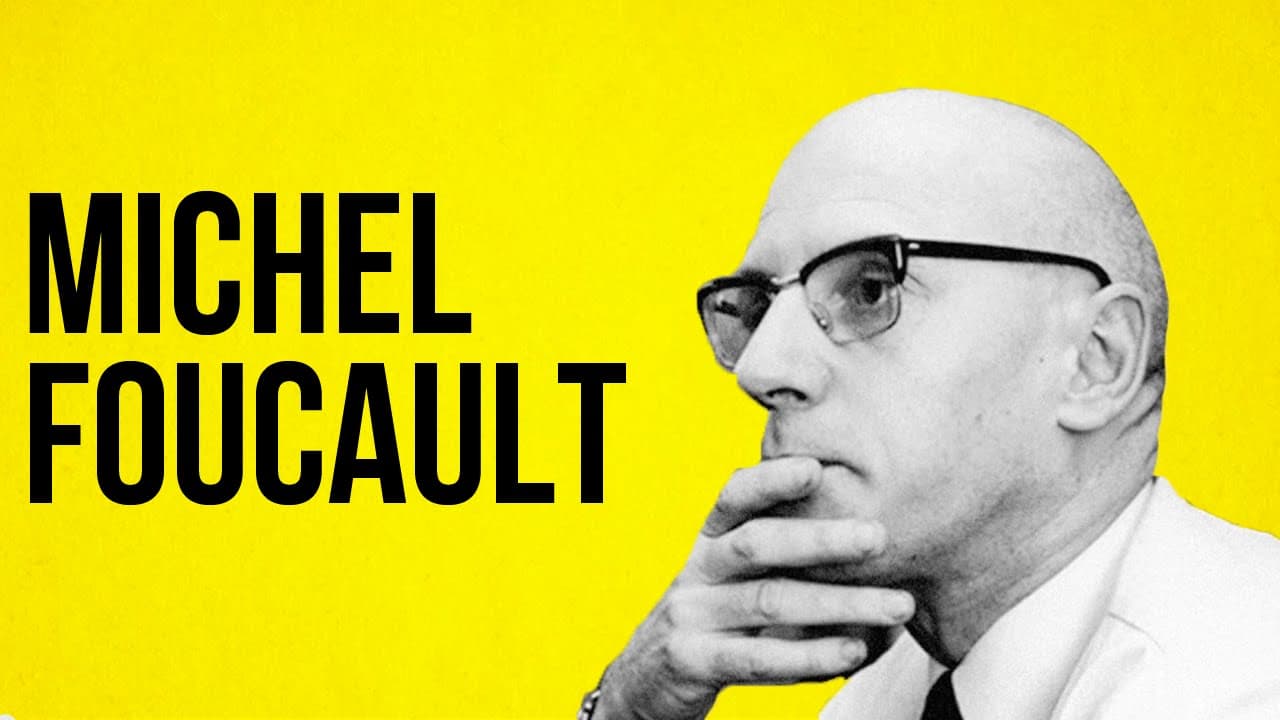
TL;DR
Michel Foucault argued that modern advancements in areas like mental health and medicine often conceal underlying oppressive structures. In works such as 'Madness and Civilization,' he challenged the notion of progress by highlighting how historical perspectives can inform and improve contemporary society. His philosophy encourages critical examination of institutions by learning from history rather than accepting present conditions as inherently better.
Transcript
Michel Foucault was a French 20th century philosopher and historian who spent his career forensically criticizing the power of the modern bourgeois capitalist state, including its police, law courts, prisons, doctors and psychiatrists. His goal was to work out nothing less than how power worked and then to change it in the direction of a marxist-an... Read More
Key Insights
- Michel Foucault critiqued modern institutions like the state, law, and medicine, aiming to reveal the underlying power structures and advocate for a Marxist-anarchist utopia.
- Despite his privileged upbringing, Foucault's personal struggles with identity and mental health shaped his revolutionary outlook and intellectual pursuits.
- His encounter with Nietzsche's work shifted his focus to using history as a tool to address contemporary issues, rather than for mere academic interest.
- In 'Madness and Civilization,' Foucault argued that the Renaissance offered a more humane perspective on mental illness compared to modern medicalization and institutionalization.
- Foucault's 'The Birth of The Clinic' criticized the dehumanizing 'medical gaze' that reduces patients to mere biological entities, ignoring their holistic humanity.
- In 'Discipline and Punish,' he contended that modern prisons, by hiding punishment from public view, create a more insidious form of state control than past public executions.
- His 'History of Sexuality' series challenged the notion of sexual liberation, suggesting that modernity's scientific approach to sex stifles spontaneity and imagination.
- Foucault's work encourages a critical examination of contemporary institutions by revisiting historical practices, not out of nostalgia, but to inspire better solutions today.
Install to Summarize YouTube Videos and Get Transcripts
Explore YouTube Video Summarizer or Get YouTube Transcript Extractor
Questions & Answers
Q: What was Michel Foucault's main philosophical focus?
Michel Foucault focused on critiquing the power structures of modern institutions, such as the state, law, and medicine. He aimed to uncover how these systems exert control over individuals and to propose alternatives that align with a Marxist-anarchist vision. His work sought to challenge the assumed progress of modernity by revisiting historical practices.
Q: How did Foucault's personal experiences influence his work?
Foucault's personal experiences, including his privileged upbringing and struggles with identity and mental health, deeply influenced his work. His confrontation with societal norms, particularly regarding sexuality and mental health, informed his critique of institutional power and his pursuit of a more inclusive and humane society. These experiences shaped his revolutionary outlook and intellectual pursuits.
Q: What impact did Nietzsche's work have on Foucault?
Nietzsche's work, particularly the essay 'On the Uses and Abuses of History for Life,' had a profound impact on Foucault. It liberated him intellectually, shifting his focus from studying history for its own sake to using it as a tool to address contemporary issues. This perspective led Foucault to become a philosophical historian, aiming to derive lessons from the past to improve the present.
Q: What argument does Foucault make in 'Madness and Civilization'?
In 'Madness and Civilization,' Foucault argues against the notion that modern treatment of mental illness is more humane than in the past. He contends that during the Renaissance, the mad were seen as possessing a unique wisdom and were treated with more dignity. In contrast, modern approaches medicalize and institutionalize mental illness, stripping away individual humanity and freedom.
Q: How does Foucault critique the medical profession in 'The Birth of The Clinic'?
In 'The Birth of The Clinic,' Foucault critiques the medical profession by introducing the concept of the 'medical gaze.' He argues that this gaze reduces patients to mere biological entities, focusing on organs rather than treating individuals as whole human beings. This dehumanizing perspective, according to Foucault, undermines the humanity and individuality of patients in the medical system.
Q: What is the central theme of 'Discipline and Punish'?
The central theme of 'Discipline and Punish' is the critique of modern punitive systems. Foucault argues that contemporary prisons, by hiding punishment from public view, create a more insidious form of state control compared to past public executions. This shift, he suggests, makes power appear kind while actually reinforcing oppressive structures, stifling resistance and dissent.
Q: How does Foucault view modern society's approach to sexuality?
Foucault views modern society's approach to sexuality as overly scientific and restrictive. In his 'History of Sexuality' series, he argues that the focus on medicalizing and labeling sexual behavior stifles spontaneity and imagination. He contrasts this with historical cultures that embraced an 'erotic art,' emphasizing pleasure and creativity over scientific understanding.
Q: What lasting contribution did Foucault make to philosophy and history?
Foucault's lasting contribution lies in his approach to history as a tool for life enhancement. He encouraged critical examination of contemporary institutions by revisiting historical practices, not out of nostalgia, but to inspire better solutions today. His work challenges us to question dominant ideas and power structures, making history philosophically rich and relevant to modern life.
Summary & Key Takeaways
-
Michel Foucault was a French philosopher who critiqued modern institutions and their power dynamics, aiming for a more egalitarian society. He challenged the notion of progress in areas like mental health, medicine, and sexuality, advocating for a historical perspective that informs present-day improvements.
-
Foucault's personal experiences and intellectual journey led him to question the assumed advancements of modern society. His works, such as 'Madness and Civilization' and 'Discipline and Punish,' argue against the perceived humaneness of contemporary systems, revealing their underlying oppressive structures.
-
Through his philosophical exploration, Foucault sought to make history a tool for life enhancement, encouraging us to question dominant ideas and institutions. His legacy lies in inspiring critical thinking and challenging the status quo to foster a more informed and equitable world.
Read in Other Languages (beta)
Share This Summary 📚
Summarize YouTube Videos and Get Video Transcripts with 1-Click
Try YouTube Summary with ChatGPT & Claude or YouTube Transcript Generator