How to foul up 3 at the end of a close basketball game?
TL;DR
Foul up three late in the game to potentially prevent a tying or winning shot, but do so with a plan and confidence. Consider timeouts, who has the ball, free throw shooting, and inbound capability while preparing specialized endgame sequences. Preparation with your personnel to execute these plays is essential.
Transcript
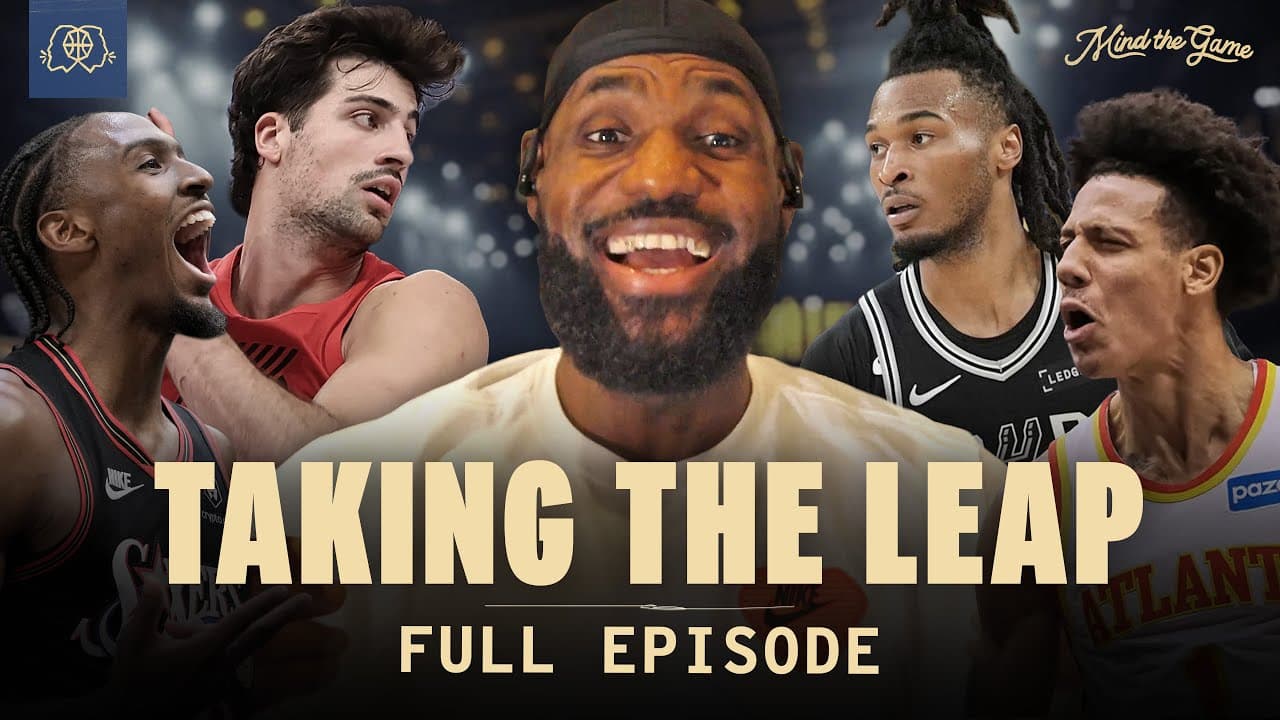
Coming up on this episode of Mind the Game. A lot of fans don't love the the fouling of three. >> Listen, our our our league is a three-point shooting league. So, why not if you have an opportunity to win or close the percentage of you winning a game possibly take it away. >> Let's talk about guys who have made a leap this year. >> The first guy I'... Read More
Key Insights
- The league is a three point shooting league, so fouling to affect the outcome is a common late game tactic.
- Fouling up three should be done with a clear plan and understanding of the last possible possessions and timeouts available.
- The inbound passer and free throw shooters are key factors in deciding when to foul and how to execute the play.
- A successful endgame foul requires decisive, practiced execution rather than hesitation.
- Teams should practice bring the ball in from different spots like baseline, sideline, or behind the basket to adapt to pressure.
- There are multiple foul techniques depending on whether the ball is near half court or already in the paint area, and the goal is to prevent a three point shot.
- Preparation includes knowing who handles the ball, who takes the ball out, and how to trap or pressure the shooter if needed.
- Practicing endgame plays reduces reliance on in-game improvisation, which can lead to mistakes under pressure.
Install to Summarize YouTube Videos and Get Transcripts
Explore YouTube Video Summarizer or Get YouTube Transcript Extractor
Questions & Answers
Q: A real search query question about the video (e.g. 'How to...', 'What is...', 'Why does...', 'When should...'). Question 1
How should a team decide when to foul a three at the end of a game and what factors influence that choice? The players emphasize that the league is a three point shooting league, so fouling to take away a shot is a common tactic, but the decision depends on timeouts, who has the ball, and inbound capabilities. It is critical to evaluate the remaining time, the number of timeouts, and the opponent’s ability to advance the ball or make free throws. This decision should be made with confidence and a clear plan rather than hesitation.
Q: What is the best way to foul in late game scenarios according to the discussion?
The best way to foul in late game scenarios is to fouls before the ball crosses half court and to target a downward dribble, so the defender makes contact when the ball is moving. If the ball is near the three point line, bear hug or other controlled contact can be used to prevent a potential game tying shot. The key is to be decisive, avoid fouling before entering the ball and to adapt to the moment based on timeouts and the score.
Q: Who are some players LeBron highlights as taking a leap this season?
LeBron calls out Tyrese Maxey and Jalen Johnson as players taking a leap this season, highlighting Maxey as a strong point guard in Philadelphia and Johnson as a versatile forward in Atlanta who is developing into a high ceiling talent with two way impact. The discussion also mentions Deni Avdija and Stephon Castle as notable up and coming players.
Q: What defensive changes or principles are discussed regarding modern NBA basketball?
The conversation mentions how NBA defenses have evolved and how teams use various defensive schemes and offensive sets to counter actions like drop coverage, requiring teams to study and practice a wide package of plays for late game situations. It emphasizes understanding and training in multiple defensive and offensive concepts to stay ahead.
Q: What elements are considered crucial for endgame inbounds and getting the ball in?
Crucial elements for endgame inbounds include determining who takes the ball out, whether it's on the baseline, sideline, or behind the basket, and having players ready to execute under pressure. The speakers stress the importance of a well practiced inbounds package that can function with or without timeouts and when players may be injured or fouled out.
Q: What is said about inbounder reliability and playmaking under pressure?
The inbounder is highlighted as an essential component that can simplify or complicate late game actions. A great inbounder can facilitate smoother plays and help reduce pressure on the rest of the team. The coaches encourage training that builds confidence in inbound passes and allows teammates to trust each other in critical moments.
Q: How does the discussion describe the importance of practice time for endgame situations?
The speakers emphasize that endgame plays require deliberate practice, including five minutes dedicated to walk-throughs with players on the baseline and rehearsed scenarios for up, down, and sideline inbound plays. Rehearsing under realistic pressure helps ensure players can execute when time is tight and the game is on the line.
Q: What are the considerations for foul technique when the ball is in transition versus in the half court?
Foul technique differs by context: in transition, foul earlier and away from half court to avoid giving up an easy drive, while in the half court a defender can foul when the ball is caught in the paint or above the three point line. The emphasis is to use contact strategically and decisively to limit the opponent’s scoring opportunities while avoiding dangerous penalties.
Summary & Key Takeaways
-
Endgame fouling of a three is discussed as a common late game tactic because the league relies on three point shooting, making it a viable option when time and score permit. The importance of a practiced endgame sequence is emphasized, including who takes the ball out and where to foul.
-
A broad set of factors determine when and how to foul, such as timeouts remaining, inbound setup, and the opponent’s free throw shooting ability. Teams should rehearse multiple scenarios for baselines and sideline inbounds and ensure players understand roles.
-
Preparation, personnel, and detailed endgame plans are highlighted as critical. Coaches and players must practice under pressure, including how to execute finetuned keeps and resets on multiple fronts to prevent chaos and improve execution when a late foul is needed.
Read in Other Languages (beta)
Share This Summary 📚
Summarize YouTube Videos and Get Video Transcripts with 1-Click
Try YouTube Summary with ChatGPT & Claude or YouTube Transcript Generator
Explore More Summaries from Mind the Game 📚



Summarize YouTube Videos and Get Video Transcripts with 1-Click
Try YouTube Summary with ChatGPT & Claude or YouTube Transcript Generator