Why Is Europe Falling Behind in the AI Race?
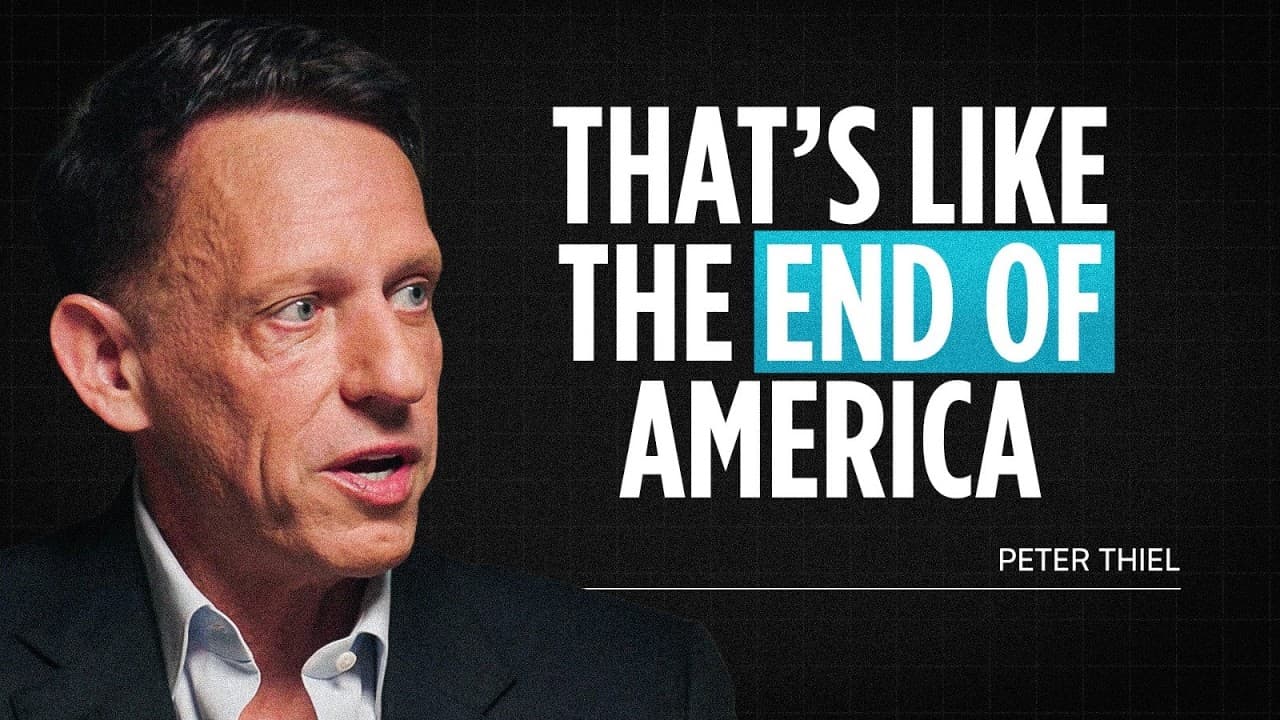
TL;DR
The core claim is that AI could restart growth, but only if Western policy keeps up with rapid development. Europe trails the US and China, and without decisive adoption and policy, Western democracies may face higher polarization and slower progress. The discussion emphasizes the geopolitical and societal stakes of AI progress.
Transcript
How's funeral? Let's switch to English now. Peter, you have discussed a lot over the last years the problem that in your view the west did not deliver enough progress uh enough change in technology. Um you even spoke about stagnation. Uh that is a topic uh and a term that almost nobody would use these days. It's pretty much the opposite. People are... Read More
Key Insights
- Stagnation is a real concern across traditional engineering fields while digital progress advanced, creating a widening gap that AI could potentially close.
- AI has the potential to accelerate growth beyond what the internet achieved, but this hinges on governance, safety, and global cooperation rather than unchecked acceleration.
- The US is portrayed as the leading force in AI deployment, with Europe lagging and China as a fast follower, shaping a three-way dynamic in the AI race.
- There is skepticism about slowing AI progress through delayed regulation alone, as stagnation without progress could destabilize society and erode the intergenerational compact.
- Global cooperation on AI policy is questioned as impractical, suggesting that a formal, worldwide governance structure may be a risky solution.
- Public sentiment and media narratives around AI are influenced by both Western concerns and non-Western strategies, affecting policy and adoption.
- The discussion links AI progress to democracy, arguing that without continuous advancement and positive use cases, political systems may face heightened polarization and public distrust.
- The potential existential risk of AI is acknowledged in probabilistic terms, but the speaker argues for balancing precaution with the need for productive innovation.
Install to Summarize YouTube Videos and Get Transcripts
Explore YouTube Video Summarizer or Get YouTube Transcript Extractor
Questions & Answers
Q: A real search query question about the video (e.g. 'How to...', 'What is...', 'Why does...', 'When should...'). Question 1
What is Peter Thiel’s stagnation thesis and how does AI relate to it? The stagnation thesis posits that progress slowed since the 1970s especially in the world of atoms while digital advances continued, creating a mismatch between different domains of technology. AI could potentially reactivate growth by bridging this gap, but achieving that requires careful governance, investment, and international cooperation rather than accepting a slow or zero progress path.
Q: What concerns are raised about AI risks and governance?
Thiel notes multiple dimensions of AI risk, including the possibility that extremely capable systems could escape human control in some scenarios. He cautions that even a small probability of existential risk should motivate precaution, but cautions against halting progress entirely, arguing that a stagnation scenario would be harmful to society and the intergenerational promise of better living standards.
Q: Why is Europe described as behind in the AI race?
The discussion describes Europe as extremely behind the US in AI activity, with slower corporate urgency and less acceleration toward AI adoption. This lag is contrasted with rapid progress seen in the US and a fast-following China, which influences global competitiveness and raises concerns about long term geopolitical and economic leadership for Europe.
Q: How does Thiel view the US versus Europe in AI momentum?
Thiel portrays the US as the place where AI is happening now, with strong momentum and corporate urgency to transform businesses for the AI age. Europe, in contrast, has inertia and a tendency to postpone action, which could widen the technology gap and affect national competitiveness and political influence in global AI policy.
Q: What role do geopolitics and China play in the AI discussion?
China is described as a fast follower that can quickly adopt and integrate AI technologies, creating a competitive pressure on Western industries. The speaker stresses recognizing China as a serious rival while also cautioning against blaming China alone for Western shortcomings, emphasizing that Western policies and attitudes contribute to the dynamic as well.
Q: How does AI relate to democracy and polarization according to the talk?
The conversation links AI progress and its governance to democratic resilience, arguing that stagnation or uncontrolled acceleration could intensify polarization or undermine the social contract. A functioning democracy may depend on productive innovation and transparent, thoughtful policy to manage AI's societal impacts and preserve public trust.
Q: What about governing AI globally, is one world governance feasible?
The speakers discuss the difficulty of universal governance and express skepticism about a global authority that can enforce cooperation without creating new risks. They suggest that while coordination is desirable, achieving it across diverse political systems is challenging, and alternative arrangements or bilateral strategies may be more practical than a single world government.
Q: Does the discussion touch on the demographics of AI leadership and market dynamics?
Yes, the talk highlights that the US is currently leading in AI deployment and transformation, while Europe lags, influenced by corporate urgency and policy choices. This has implications for jobs, education, and economic leadership, as well as the strategic balance among major powers in shaping the future of technology and society.
Summary & Key Takeaways
-
Thiel argues the West has stagnated since the 1970s in atoms rather than bits, and AI could reverse that trend if properly managed.
-
Europe is described as dramatically behind the US in AI development, with urgency lacking in Europe compared to American corporate momentum.
-
The conversation connects technological progress to democracy, polarization, and geopolitical rivalry, suggesting that orderly progress and cooperation are essential for the West to stay competitive.
Read in Other Languages (beta)
Share This Summary 📚
Summarize YouTube Videos and Get Video Transcripts with 1-Click
Try YouTube Summary with ChatGPT & Claude or YouTube Transcript Generator
Explore More Summaries from MDMEETS - Essential Talks with Mathias Döpfner 📚

Summarize YouTube Videos and Get Video Transcripts with 1-Click
Try YouTube Summary with ChatGPT & Claude or YouTube Transcript Generator